
Fertilization
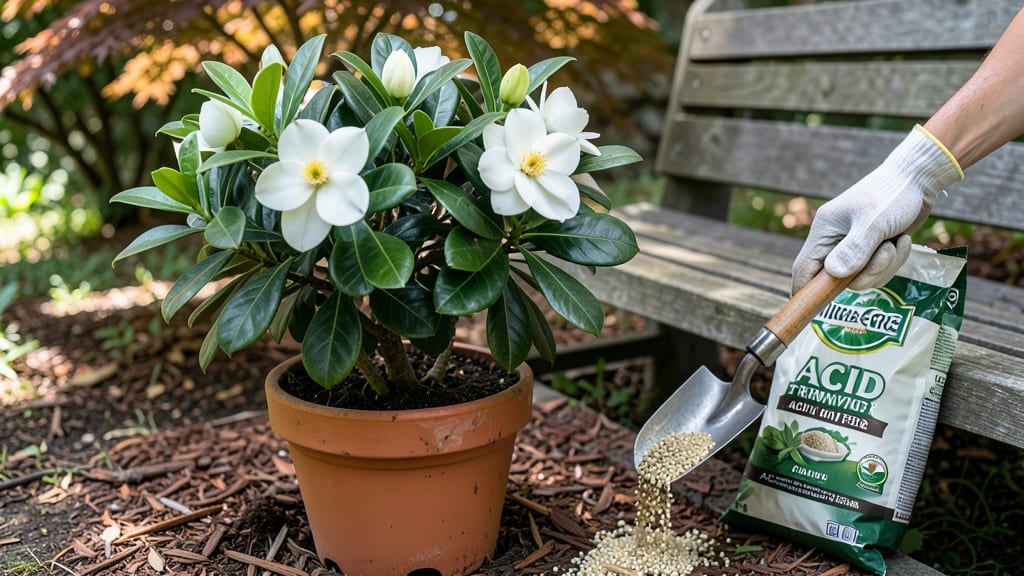
Fertilizing gardenias with acid fertilizer is the secret to those fragrant blooms you’ve been dreaming of—these acid-loving plants simply won’t thrive without it.
Picture this: your gardenia’s leaves turn yellow, buds drop before opening, and no amount of watering seems to help. The issue isn’t just thirst—it’s a pH problem. Gardenias 🌸 crave soil between 4.5 and 6.0, and without the right acid fertilizer, they’ll fight you every step of the way.
But here’s the good news: the fix is simpler than you think. Whether you’re using sulfur-based granules, peat moss, or even homemade citrus blends, we’ll walk you through the best options, how often to apply them, and what to watch for when your plant starts to perk up.
By the end, you’ll know exactly how to keep your gardenia’s soil happy, its roots fed, and its blooms coming back year after year—no more guesswork, just lush, fragrant success.

How acid fertilizers work: pH science for gardenia growth
Gardenias are famously finicky about their soil conditions, and their acid-loving nature is the secret to unlocking those coveted white blooms. When soil pH rises above 6.0, gardenias struggle to absorb essential nutrients like iron and phosphorus, leading to yellow leaves and sparse flowering.
Acid fertilizers work by lowering soil pH through chemical reactions—like sulfur oxidizing into sulfuric acid—that create the perfect 4.5-6.0 pH range these shrubs crave.
At the heart of the process is the nutrient availability at low pH. Gardenias thrive when micronutrients like iron, manganese, and zinc become soluble in acidic soil. Generic fertilizers often fail because they don’t account for this pH dependency—your gardenia might be starving even if the fertilizer bag says "balanced."
That’s why acid-specific formulas (like iron sulfate or peat-based blends) are non-negotiable for serious gardenia growers.
The NPK ratio in acid fertilizers is carefully balanced to support blooming. For gardenias, look for ratios like 6-6-6 or 8-3-9, where the first number (nitrogen) fuels foliage growth, and the second (phosphorus) triggers bud formation.
The third number (potassium) strengthens disease resistance—critical for plants stressed by incorrect pH levels. Without this balance, your gardenia will either flop as a leafy monster or refuse to bloom entirely.
| Fertilizer Type | Key Ingredient | pH Impact | Best For |
|---|---|---|---|
| Iron Sulfate | Iron + Sulfur | Lowers pH quickly (3.0-4.5) | Chlorotic leaves, fast correction |
| Elemental Sulfur | Sulfur granules | Gradual pH drop (4.5-6.0) | Long-term soil acidification |
| Peat-Based Fertilizer | Sphagnum peat | Maintains 4.5-5.5 pH | Container gardenias, slow release |
| Chelated Iron | Iron + organic chelators | Neutral pH impact | Iron deficiency correction |
| Citrus Fertilizer | Citric acid blend | Mild pH adjustment (5.0-6.0) | Organic gardens, foliar feed |
Commercial acid fertilizers outperform homemade solutions because they’re engineered for precision. For example, iron sulfate not only acidifies soil but also delivers iron directly to roots, curing yellowing leaves in weeks.
Meanwhile, elemental sulfur releases acid slowly over months, making it ideal for long-term soil management. These products also include buffering agents to prevent pH swings that can shock gardenia roots.
Think of acid fertilizers as a two-part system: they lower pH and supply nutrients. Generic fertilizers might raise pH over time (due to liming ingredients), while acid-specific formulas keep your gardenia’s soil in the sweet spot of 4.5-5.5.
This dual action explains why your gardenia might look healthy with regular fertilizer but still refuse to bloom—it’s not getting the right chemistry.
When applying acid fertilizers, timing matters. Spring and early summer are prime windows to adjust pH before the blooming season. Start with a soil test to avoid over-acidifying (pH below 4.5 can damage roots).
For established gardenias, mix 1 tablespoon of granular acid fertilizer into the top 2 inches of soil every 6-8 weeks. Water thoroughly to activate the pH-lowering process—this isn’t just feeding, it’s reprogramming your soil’s chemistry.
One common mistake is assuming all acid fertilizers work the same. Iron sulfate is best for quick fixes (like chlorotic leaves), while peat moss blends are better for container gardenias where soil volume is limited.
Always check the label for NPK ratios and pH range—a 6-6-6 acid fertilizer won’t cut it if your gardenia needs phosphorus for blooms. Pro tip: Pair your acid fertilizer with a slow-release organic matter (like compost) to maintain soil structure while adjusting pH.
Gardenias don’t just like acidic soil—they depend on it for survival. Without the right acid fertilizer, they’ll signal distress through yellowing leaves, leaf drop, or no flowers. But when the pH is perfect, you’ll see glossy dark leaves, strong stems, and an explosion of fragrant blooms.
The science behind acid fertilizers isn’t just about numbers—it’s about creating the exact conditions your gardenia evolved to thrive in.
Remember: patience is key. It can take 4-6 weeks for soil pH to stabilize after applying acid fertilizer. Monitor your gardenia’s response and adjust gradually. With the right chemistry, your gardenia won’t just survive—it’ll become the showstopper of your landscape. 🌸
Top 5 acid fertilizers for gardenias (ranked by effectiveness)
Choosing the right acid fertilizer for gardenias can mean the difference between sparse blooms and lush, fragrant flowers. These acid-loving plants demand soil pH between 4.5 and 6.0, and the wrong fertilizer can actually harm them.
Below, I’ve ranked the top 5 acid fertilizers based on bloom revival speed, soil longevity, and ease of use—so you can pick the perfect match for your gardenia’s needs.
For quick reference, here’s how they stack up in key areas like bloom revival and soil acidification. The best choice depends on whether you prefer organic or synthetic options, your budget, and how fast you want to see results.
Chelated iron is my top pick for rapid bloom revival—it’s highly soluble and delivers immediate iron uptake, which gardenias crave for vibrant foliage and blooms. Apply it every 4-6 weeks during the growing season, and you’ll see a noticeable difference in just 2-3 weeks. The downside? It’s pricier than organic options but worth it for quick results.
If you prefer organic options, pine bark fines are a fantastic choice. They slowly release acidity over time, making them ideal for long-term soil health. Mix 2-3 cups into the top 6 inches of soil annually, and your gardenia’s roots will thank you.
The trade-off? It takes 6-8 weeks to see full effects, but the benefits last for years.
For those on a budget, cottonseed meal is a powerhouse. It’s packed with nitrogen and sulfur, which gardenias love, and it’s affordable. Work 1 pound per 100 sq ft into the soil in early spring, and reapply every 3-4 months.
Just be cautious—it can over-acidify if overused, so always test your soil first.
Lastly, elemental sulfur is a classic for soil acidification, but it’s a slow burner. Sprinkle 1-2 pounds per 100 sq ft and water it in well. It can take 2-3 months to lower pH, but once it does, the effects are long