
Watering
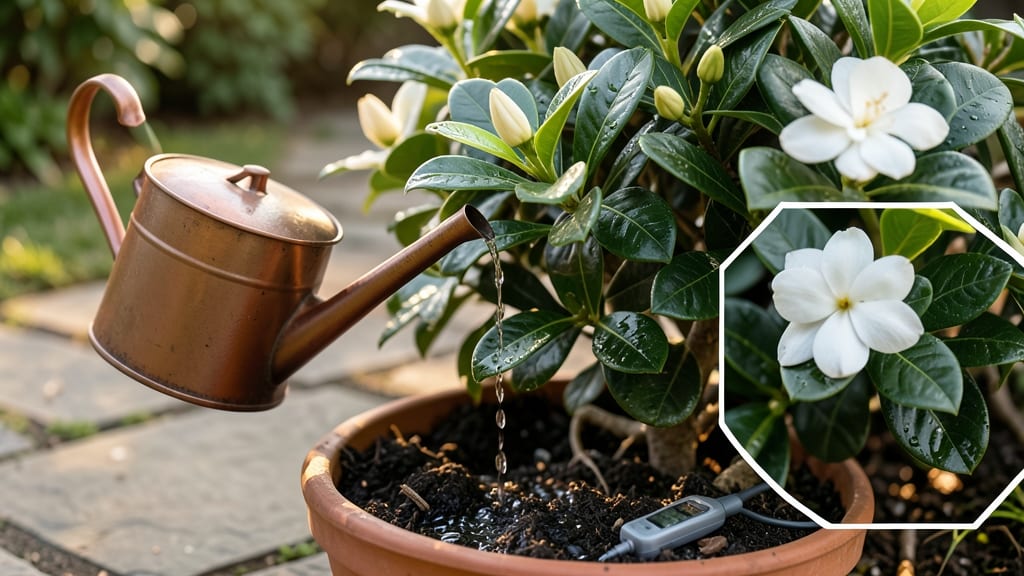
Gardenias need about 1-1.5 inches of water per week to keep their roots happy and blooms lush—but too much or too little can turn your fragrant 🌸 into a sad, droopy mess.
Picture this: You water your gardenia every day, thinking it’s thirsty, only to watch its leaves yellow and drop off. Or maybe you’ve been too shy to check the soil, and now your plant is wilting despite your best efforts.
The truth? Gardenias are finicky about moisture, and the key to their success lies in a consistent, deep watering schedule that matches their needs—not yours.
Here’s the game-changer: In-ground gardenias in Zone 6a thrive with deep waterings every 3-5 days in spring and fall, while potted plants may need daily checks in summer heat.
I’ll break down exactly how often to water, how to tell if your plant is thirsty (or drowning), and the simple tweaks that make all the difference—so you can enjoy those intoxicating blooms without the guesswork.
Ready to master the art of gardenia watering? You’ll learn when to water, how to adjust for heatwaves or drought, and the tools that take the guesswork out of keeping your 🌸 thriving—no green thumb required.
Gardenia watering schedule by season: how often to water for peak blooms
Gardenias thrive when their watering needs match the season—but most gardeners either drown their roots or leave them parched. The key is consistent moisture without soggy soil, especially since gardenias hate waterlogged roots.
As a gardener who’s nursed dozens of gardenias to full bloom, I’ve learned that seasonal adjustments are everything. In summer, your gardenia might need watering every other day, while winter slows its thirst to bi-weekly.
Your gardenia’s watering schedule depends on two critical factors: whether it’s potted or in-ground and the current seasonal climate. Potted gardenias dry out faster because containers lack the moisture-retention benefits of garden soil.
Meanwhile, in-ground plants have deeper root access to water. For both, soil moisture checks are non-negotiable—stick your finger 2-3 inches into the soil. If it feels dry, it’s time to water.
🌸 Pro Tip: Always water at the base of the plant, not the leaves, to prevent fungal diseases like powdery mildew. Use a slow, deep watering method to encourage strong root growth.
In spring, your gardenia is waking up from dormancy, so aim for every 2-3 days for potted plants and every 3-5 days for in-ground. The goal is to encourage new growth without oversaturating the soil.
Watch for yellowing leaves, which signal overwatering, or crispy edges, a sign of thirst. Mulching with pine bark helps retain moisture while keeping roots cool.
When summer heat arrives, gardenias drink like a thirsty traveler. Potted gardenias may need daily watering during heatwaves, while in-ground plants tolerate every 2-3 days.
The key is deep watering—soak the soil until water drains from the bottom of pots or seeps 6 inches into garden soil. Morning watering is best to reduce evaporation and fungal risks.
As fall temperatures drop, gardenias slow their growth, so cut back to every 3-5 days for pots and every 5-7 days for in-ground. This is also the time to reduce fertilization, as the plant focuses on root strengthening.
Look for brown leaf tips, which often mean overwatering, or slow growth, a sign of underwatering.
Winter is your gardenia’s dormant season, so water sparingly. Potted plants need bi-weekly watering, while in-ground gardenias can go monthly or less. The soil should stay slightly moist but never soggy.
Overwatering in winter leads to root rot, while underwatering causes brittle leaves. If your gardenia is indoors, use a humidifier to mimic tropical conditions.
One of my biggest mistakes was ignoring the drainage holes in gardenia pots. Without them, water pools at the bottom, causing root rot. Always use pots with drainage holes and a well-draining soil mix (like 60% peat moss, 30% perlite, and 10% sand).
For in-ground plants, amend the soil with compost and pine fines to improve drainage
5 Signs your gardenia is thirsty (or drowning) and how to fix it
Gardenias thrive on consistency, but their glossy leaves and fragrant blooms can quickly fade if you miss the watering balance. Too little water, and they’ll droop dramatically; too much, and you’ll risk root rot.
I’ve learned the hard way that gardenias send clear visual cues—here’s how to decode them before it’s too late.
First, check the soil moisture by sticking your finger 1-2 inches deep. If it feels dry, your gardenia is thirsty. But if it’s soggy, you’ve overdone it. The key is balanced hydration—never letting the roots sit in water while ensuring they never dry out completely.
Let’s break down the 5 critical signs and how to fix them fast.
- 1-2 inches deep weekly for in-ground gardenias (adjust for heat/drought).
- Daily checks for potted gardenias—soil dries out faster in containers.
- Morning watering only—avoid evenings to prevent fungal diseases.
- Deep soaks (1-2 gallons) to encourage strong root growth.
- Reduce winter watering to every 10-14 days—dormant plants need less.
If your gardenia’s leaves start curling at the edges, it’s a classic sign of underwatering. The tips will crisp and turn brown, while the center stays green. To fix this, give it a deep watering right away and mulch around the base to retain moisture.
For potted gardenias, place the pot in a tray of water for 10-15 minutes to hydrate thoroughly.
Yellowing leaves that feel mushy to the touch signal overwatering or poor drainage. This is often accompanied by a sour smell from the soil—your gardenia’s roots are suffocating. Emergency action: Stop watering immediately and repot the plant in fresh, well-draining soil mixed with perlite or sand.
For in-ground plants, improve drainage by adding organic compost and creating a slight mound around the base.
Drooping stems that don’t bounce back after watering? This could mean root-bound stress or severe dehydration. Gently lift the plant (if potted) to check for roots circling the pot. If so, repot into a slightly larger container with fresh acidic, peat-based soil.
For in-ground plants, trim any yellowed leaves and water deeply to revive the roots. In extreme cases, a root hormone treatment can help stimulate regrowth.
Brown spots on leaves with a yellow halo often indicate fungal issues from overwatering or high humidity. Prune affected leaves immediately and space out waterings to allow the soil to dry slightly between sessions.
Improve airflow by thinning dense foliage and avoid overhead watering. A copper fungicide spray can also prevent further spread if the problem persists.
Finally, if your gardenia’s buds drop before opening, it’s usually due to environmental stress, including inconsistent watering. Keep the soil evenly moist (not soggy) and ensure the plant gets morning sunlight and afternoon shade.
For container gardenias, move them to a shadier spot during peak summer heat to reduce stress. With the right care, your gardenia will reward you with abundant, fragrant blooms all season long. 🌸