
Pests
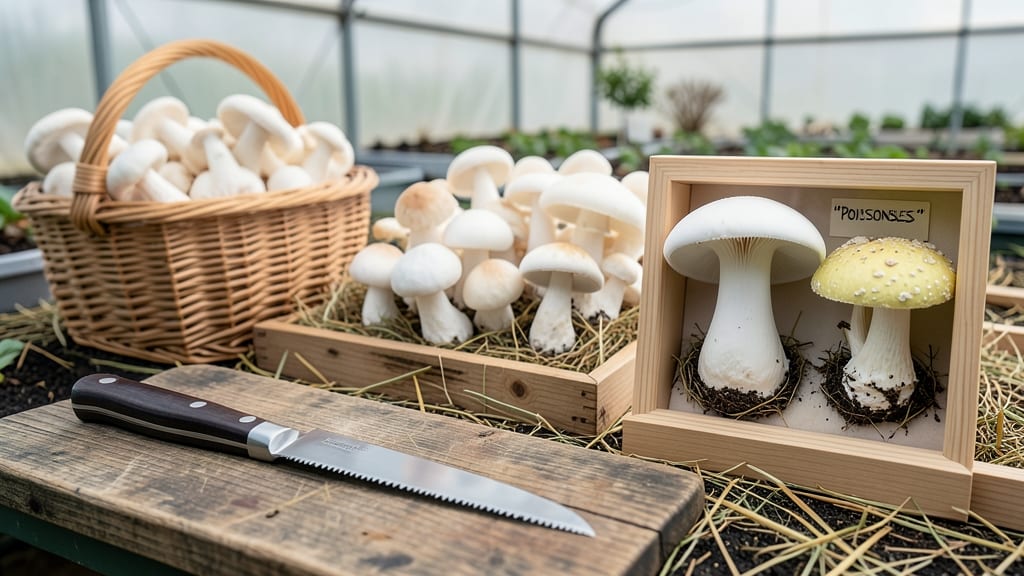
The garden mushrooms you buy from store kits or cultivated varieties are not poisonous, but wild mushrooms can be extremely dangerous—some species contain deadly toxins. Always confirm your source and never consume wild mushrooms unless you're an expert.
The garden mushrooms you buy from store kits or cultivated varieties are not poisonous, as they're carefully grown in controlled environments, ensuring they're free from contaminants. 🌱 The real danger lies with wild mushrooms, where even experienced foragers can mistake deadly lookalikes like the death cap (Amanita phalloides) for edible varieties.
I always recommend sticking to commercial sources unless you've completed specialized mycology training—your health isn't worth the risk.
What's interesting is how cultivation practices eliminate risks. Commercial growers use sterilized substrates and specific mushroom strains that have been tested for safety over decades. Wild mushrooms, on the other hand, grow in unpredictable conditions where toxins can develop as natural defense mechanisms.
This biological difference is why wild mushroom poisoning cases still occur today despite modern medical knowledge.
💡 In This Article
- How Store-Bought vs Wild Mushrooms Differ in Safety
- Safe Mushroom Cultivation Tips for Home Gardens
How store-bought vs wild mushrooms differ in safety
The key difference between store-bought and wild mushrooms lies in their cultivation and biological makeup. Commercial mushrooms like Agaricus bisporus (button mushrooms) are grown in controlled environments with sterilized substrates, ensuring they're free from toxins. These varieties are bred specifically for safety, with decades of research confirming their edibility.
Wild mushrooms, however, grow in unpredictable conditions where they may develop natural toxins like amatoxins or gyromitrin as defense mechanisms against predators.
Wild mushrooms contain some of the most dangerous toxins known to science. For example, the death cap (Amanita phalloides) contains amatoxins that destroy liver and kidney cells, with a fatality rate of 30-50% even with treatment.
Another deadly species, Galerina marginata, produces similar toxins and is often mistaken for edible wild mushrooms. These toxins aren't present in commercial varieties because they're not part of the cultivated strain's genetic makeup or growing conditions. 🌿 The controlled environment eliminates the need for these chemical defenses.
Commercial growers use specific mushroom strains that have been selected for safety and flavor. These strains are cultivated on pasteurized substrates like composted straw, which prevents contamination from wild fungi or bacteria.
Wild mushrooms, however, grow on decaying wood, animal dung, or soil where they may absorb heavy metals or other contaminants. This biological difference means that even mushrooms that look identical to safe varieties in the wild can be dangerous due to their growing conditions.
Another critical factor is the presence of mycorrhizal relationships in wild mushrooms. Many wild species form symbiotic relationships with tree roots, which can introduce additional compounds that may not be present in cultivated varieties.
For example, some wild mushrooms contain psilocybin or other psychoactive compounds that are absent in commercial mushrooms. This makes wild species inherently riskier, as their chemical composition can vary widely based on their environment.
Visual identification is where most mistakes happen. Many deadly mushrooms have edible lookalikes that differ only in subtle ways, such as the color of the gills or the shape of the cap.
For instance, the deadly Galerina marginata can be confused with the edible Galerina marginata var. augusta, which requires microscopic examination to distinguish. This level of detail is why experts recommend against foraging unless you've completed specialized mycology training and have access to proper identification tools.
Even experienced foragers can make deadly mistakes. In one well-documented case, a group of experienced mushroom hunters in Oregon mistook a cluster of deadly Amanita bisporigera for edible chanterelles, resulting in severe poisoning.
The symptoms—nausea, vomiting, and liver failure—didn't appear until 48-72 hours after ingestion, highlighting how delayed the effects of some mushroom toxins can be. This is why commercial sources are always the safest option for home cooks.
Understanding these biological and cultivation differences is crucial for anyone considering growing mushrooms at home. While store-bought mushrooms are safe, wild varieties require expert knowledge to handle responsibly. Always prioritize safety by sticking to commercially grown options unless you're absolutely certain of your identification skills. 💫