
Vegetables
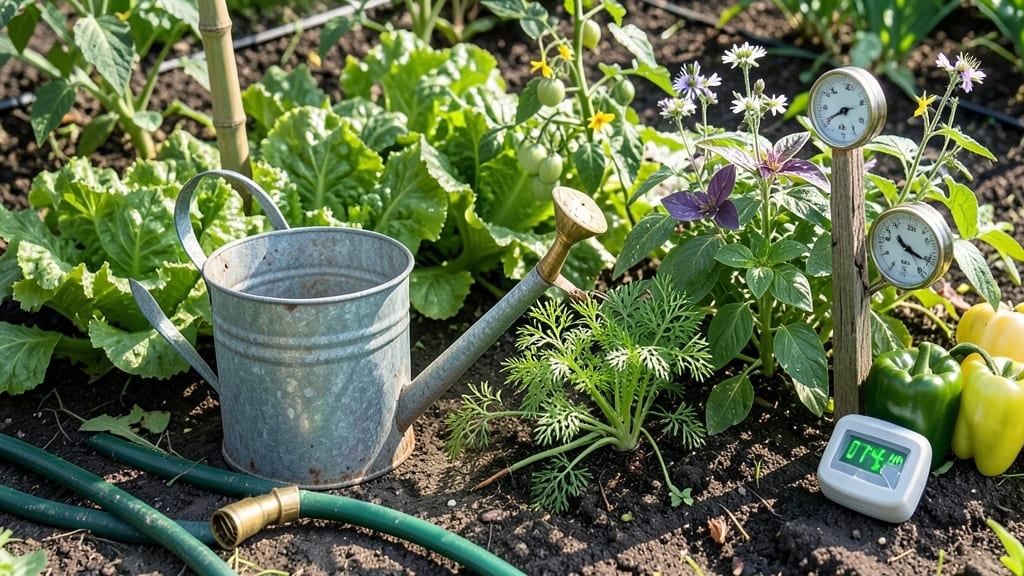
Watering your vegetable garden at the best time of day makes all the difference between thriving 🥬 plants and wasted effort.
Watering your vegetable garden at the wrong time can mean wasted water, fungal diseases, and stunted growth—yet most gardeners don’t realize how critical timing really is.
Think about it: midday watering sends moisture straight up into the air, where it evaporates before your plants can use it. Meanwhile, evening water leaves leaves damp overnight, inviting fungal infections like powdery mildew.
In this guide, I’ll show you the science-backed windows for watering—when to water for maximum absorption, how to adjust for your climate, and the one mistake that ruins even the best-intentioned watering routine.
Optimal watering times for vegetable gardens: science-backed cool-hour windows
When I first started gardening, I wasted gallons of water by watering my tomatoes and peppers at noon—only to watch the moisture evaporate within hours. What I didn’t realize then was that watering timing directly impacts root absorption, fungal prevention, and even flavor development in your veggies.
Science shows that cool-hour windows (early morning and late evening) are the sweet spot for maximizing efficiency and plant health.
The key lies in understanding how plants and water interact during different parts of the day. During peak sunlight hours (10 AM–4 PM), temperatures rise, causing evaporation rates to skyrocket—up to 30% more water loss compared to cooler times.
Meanwhile, watering at night creates the perfect conditions for foliar diseases like powdery mildew and blight, as damp leaves stay wet overnight. The solution? Stick to the 5–8 AM or 5–8 PM windows for the best results.
Why these times work:
- Morning watering (5–8 AM) lets roots absorb moisture before the heat sets in, reducing waste.
- Evening watering (5–8 PM) avoids midday evaporation but must finish before nightfall to prevent fungal growth.
- Root zone focus: Watering deeply at these times encourages roots to grow 1–2 inches deeper per week.
Let’s talk about regional adjustments. In arid climates (like the Southwest U.S.), I’ve seen gardeners successfully water as late as 6 PM—but only if they use drip irrigation to target roots directly.
In temperate zones (e.g., Midwest), sticking to 6–8 AM is ideal. For coastal or tropical areas, where humidity lingers, watering by 5 PM is safer to prevent fungal outbreaks.
One of my biggest mistakes was ignoring the soil type when adjusting watering times. Clay soil holds moisture longer, so you might only need watering every 2–3 days in the morning. Sandy soil, however, drains quickly—meaning you’ll need to water twice daily (morning and late afternoon) to keep roots hydrated.
Always check soil moisture by sticking your finger 2 inches deep; if it’s dry, it’s time to water.
For container gardens, the rules shift slightly. Pots dry out faster, so I water my herbs and peppers in containers at 7–8 AM to give roots the full day to absorb moisture.
Avoid evening watering in pots—it leads to root rot within 48 hours. Pro tip: Use self-watering containers with a reservoir to maintain consistent moisture without manual evening watering.
If you’re growing leafy greens like lettuce or spinach, morning watering is critical—they wilt quickly in heat. For root vegetables (carrots, potatoes), deep evening watering (before 6 PM) helps prevent cracking. Fruiting plants (tomatoes, cucumbers) thrive with morning watering to boost fruit flavor and
What happens when you water at the wrong time: common mistakes & plant stress
Watering your vegetable garden at the wrong time can trigger a cascade of problems that even experienced gardeners often overlook. When you water during the hottest part of the day, you’re essentially setting your plants up for leaf scorch and evaporative stress, while also wasting precious water.
I’ve seen firsthand how a simple timing mistake can turn a thriving tomato plant into a crispy, wilted mess in just a few hours.
The biggest culprit is midday watering, especially between 10 AM and 4 PM, when the sun is strongest. This causes water droplets to act like tiny magnifying glasses, burning delicate leaves and creating entry points for fungal spores like early blight in tomatoes or powdery mildew on cucumbers.
Even worse, the water evaporates almost instantly, leaving your plants thirsty again by evening.
Another hidden danger is watering too late in the evening, especially after sunset. While this might seem like a good way to keep moisture levels high, it creates the perfect conditions for fungal blooms and root rot.
Damp foliage sits overnight, giving pathogens like Phytophthora (a soil-borne fungus) the opportunity to thrive. I’ve had to pull out entire rows of basil because I ignored this rule during a humid summer stretch.
🌱 Here’s how to spot early signs of watering-related stress: Look for yellowing leaves (especially on older foliage), brown edges on leaf tips, or stunted growth where new shoots refuse to emerge.
If you notice white powdery patches on leaves or black spots with yellow halos, your watering schedule is likely contributing to disease pressure.
Watering between 10 AM and 4 PM causes:
- Leaf burn from water droplets acting like magnifying glasses
- 30-50% water waste due to rapid evaporation
- Fungal outbreaks (early blight, powdery mildew) from prolonged leaf wetness
Solution: Stick to early morning (5-8 AM) or late evening (5-8 PM) when temperatures drop.
Even well-intentioned gardeners sometimes make the mistake of overwatering because they assume plants need more moisture than they actually do. When soil stays soggy for days, it cuts off oxygen to roots, leading to root rot and nutrient deficiencies.
I’ve seen peppers drop their flowers entirely because their roots were suffocating in waterlogged soil. The key is to water deeply but infrequently, ensuring moisture reaches the root zone (typically 6-12 inches down) rather than just wetting the surface.
One of the most frustrating consequences of poor watering timing is blossom end rot in tomatoes and peppers. This condition—characterized by black, sunken spots on the fruit—is often blamed on calcium deficiency, but inconsistent watering (especially during dry spells) is the real culprit.
When plants experience moisture fluctuations, they can’t absorb calcium properly, leading to this cosmetic but yield-killing problem.
If you’ve ever wondered why your vegetables taste bland or grow slowly, check your watering habits first. Plants under hydration stress divert energy away from flavor development and growth to survive.
For example, cucumbers and zucchini need consistent moisture to develop their signature sweetness—skip the right timing, and you’ll end up with watery, tasteless produce. The good news? Fixing your watering schedule can turn around a struggling garden in just a few weeks.