
Container Gardens
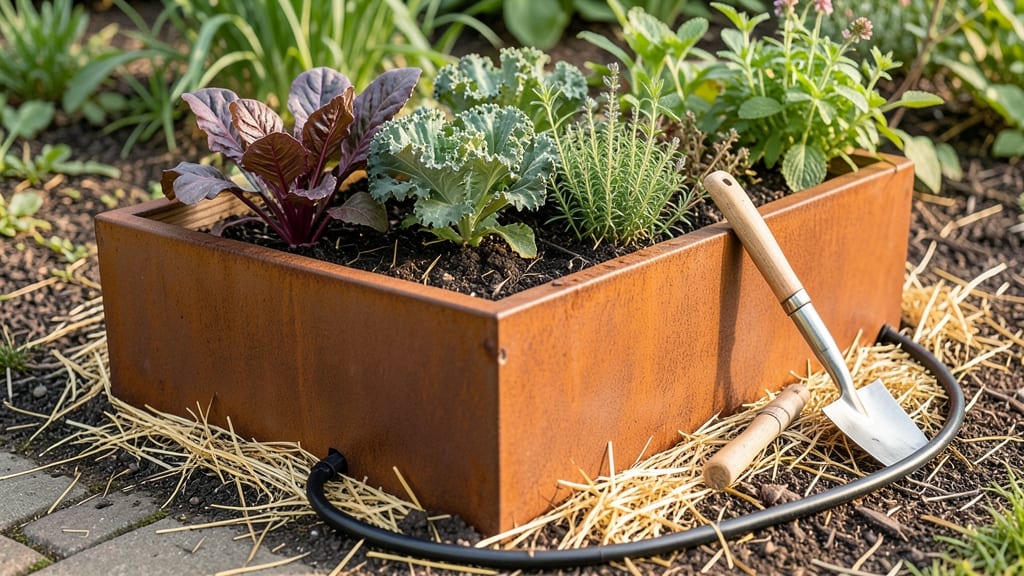
Corten steel raised garden beds resist rust and weathering naturally due to their weathering steel composition, requiring minimal maintenance while offering durability for years. Their rustic appearance enhances garden aesthetics while supporting healthy plant growth in elevated soil beds.
These garden beds work by developing a protective patina—a stable layer of iron oxide—that shields the metal from further corrosion. 🔥 Unlike regular steel, corten steel doesn't need paint or sealant to last decades outdoors, making it ideal for gardeners who want low-maintenance, long-lasting structures.
The natural rustic look also adds a modern, industrial charm to any yard while keeping soil elevated to prevent weeds and improve drainage.
Their durability comes from the alloy's copper and chromium content, which accelerates the patina formation process. This means they won't degrade like untreated steel, yet they still develop that signature weathered appearance over time.
For DIY enthusiasts, corten steel panels are surprisingly easy to work with—just ensure proper drainage holes and secure connections to prevent warping from moisture buildup.
💡 In This Article
- How Corten Steel Resists Rust and Corrosion Over Time
- DIY Assembly Tips for Corten Steel Garden Beds
How corten steel resists rust and corrosion over time
Corten steel's rust resistance stems from its unique chemical composition, which includes copper (0.25-0.55%) and chromium (0.50-1.25%) added to carbon steel. These elements accelerate the formation of a stable iron oxide patina—a protective layer that develops naturally when exposed to moisture and oxygen.
Unlike regular steel, which corrodes uniformly and continues to degrade, corten steel's patina actually self-heals over time, sealing the surface and preventing further oxidation. This process typically takes 1-3 years to fully stabilize, depending on environmental conditions.
The patina itself is a complex mixture of iron oxides, hydroxides, and carbonates that creates a dense, tightly adhering barrier. Think of it like a natural sealant that hardens with exposure to rain, humidity, and temperature fluctuations.
In tests, corten steel has shown 5-10 times longer lifespan than untreated carbon steel in outdoor applications, with some installations lasting 30+ years without significant structural compromise.
The patina also gives corten steel its signature deep reddish-brown hue, which darkens and becomes more uniform over time—adding to its aesthetic appeal.
This self-protecting mechanism works best in environments with regular moisture exposure, which is why corten steel thrives in garden settings. The alternating wet-dry cycles actually strengthen the patina, whereas dry climates can slow its development.
For comparison, galvanized steel relies on a zinc coating that eventually wears away, exposing the base metal to corrosion, while painted steel requires frequent touch-ups. Corten steel's natural resistance eliminates these maintenance needs entirely, making it ideal for raised beds where longevity matters most.
However, there are key factors that can affect performance. Salty or industrial environments may accelerate corrosion, though corten steel still outperforms standard steel. Coastal areas, for instance, might see slightly faster patina formation due to salt in the air, but the protective layer remains effective.
Another consideration is thickness—panels 1/4 inch or thicker develop more durable patinas than thinner sheets, which can warp or corrode more quickly. For garden beds, 3/8-inch thick panels strike a balance between durability and workability.
One common misconception is that corten steel's rust means it's failing. In reality, the active rusting phase (first 1-2 years) is when the protective layer forms—this is normal and even desirable. Once established, the patina prevents further degradation, unlike the flaky rust that forms on untreated steel.
This dual benefit of durability and aesthetics makes corten steel uniquely suited for garden structures where both function and appearance matter.
For gardeners comparing options, corten steel's maintenance-free nature and natural weathering set it apart from alternatives. While galvanized steel offers initial rust resistance, its zinc coating can degrade and leave white rust stains. Painted steel requires regular touch-ups, and untreated steel will corrode within 3-5 years in outdoor conditions.
Corten steel's 30+ year lifespan with zero upkeep makes it the clear winner for those prioritizing low-maintenance gardening solutions.