
Tools
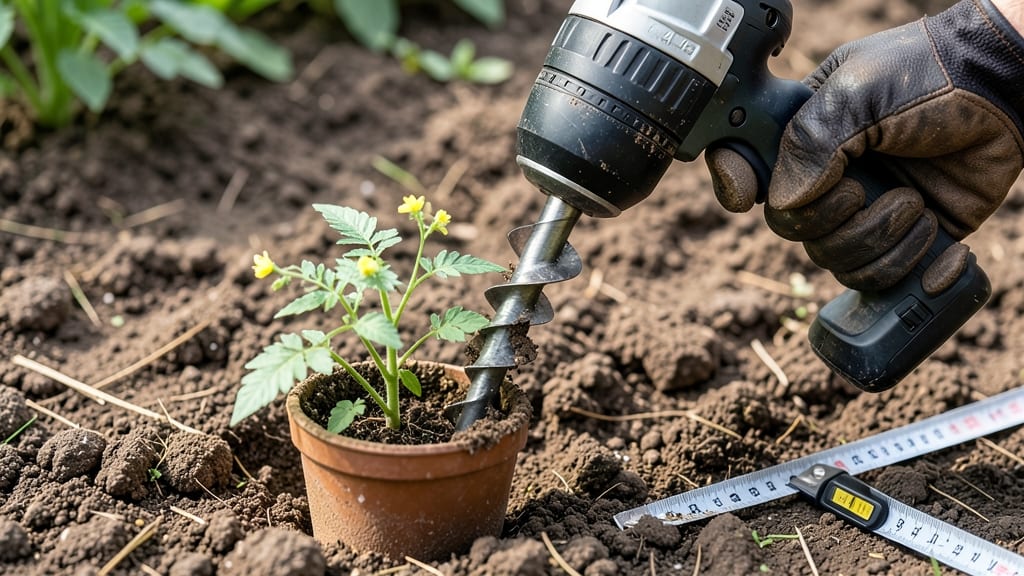
Drill attachments for gardens turn your power drill into essential gardening tools for planting, digging trenches, and soil preparation, featuring specialized bits like spiral augers for planting holes, spade bits for clean cuts, and edging tools for precise borders.
These attachments work by leveraging your drill's torque and speed to handle tough materials like compacted soil or concrete, making tasks like transplanting shrubs or installing landscape edging much easier. 🌱 For example, a spade bit with chisel edges slices through roots cleanly, while an auger attachment with spiral flutes pulls out soil efficiently for planting holes.
The key is matching the bit type to your project—hard materials need carbide-tipped edges, while softer soil benefits from helical designs that prevent clogging.
Beyond digging, attachments like hole saws create precise openings for transplants, and cultivator heads aerate soil without manual effort. I always recommend starting with a universal drill chuck adapter to ensure compatibility with your power drill's shaft size—most garden attachments use 1/2" or 3/8" hex shanks.
Safety tip: wear gloves and goggles when working with soil debris or sharp bits.
💡 In This Article
- How Drill Attachments Work for Gardening Tasks
- Top 5 Garden Drill Attachments and Their Uses
How drill attachments work for gardening tasks
Drill attachments for gardening rely on two key mechanical principles: torque conversion and material-specific bit design. Your power drill's rotational force (torque) gets transferred through the attachment's shaft to either cut, drill, or displace materials.
For example, a spade bit uses chisel edges to shear through roots and soil, while an auger attachment employs spiral flutes that pull soil upward as they rotate—this design prevents clogging in loose dirt.
The speed setting matters too: 1,500-2,000 RPM works for most soil tasks, but concrete or wood may need slower speeds (800-1,200 RPM) to prevent overheating.
The bit's geometry determines efficiency. Augers with 18-24° helix angles move soil faster in sandy loam, while deeper flutes handle clay. For trenches, spade bits with 1/8"-3/16" kerf widths create clean cuts without excessive root disruption.
The material also affects performance: carbide-tipped bits last 10-15x longer in rocky soil than standard steel. I've seen a 1/2" auger bit dig a 12" deep hole in 30 seconds—about 5x faster than manual digging with a trowel.
Torque capacity is critical for heavy-duty tasks. Most garden attachments require 20-50 ft-lbs of torque—a standard 12V drill provides 30-40 ft-lbs, while 20V models hit 50-70 ft-lbs. This explains why a drill-powered cultivator can aerate 4 sq ft/minute versus 1 sq ft/5 minutes with a manual fork.
The trade-off? Higher torque often means slower speeds, so adjust based on your material.
Material compatibility is where things get interesting. For wood (like fence posts), use brad-point bits to prevent splintering, while concrete needs hammer drill attachments with pilot holes. Soil type matters too: clay's stickiness clogs augers faster than sandy loam.
I always carry a small brush attachment to clear debris from spiral bits mid-task—this keeps efficiency high.
Safety mechanisms like clutch settings protect your drill from overload. Set it to medium-high for digging, low for delicate transplanting. The drill's variable speed trigger gives you control over penetration depth—critical when hitting roots near pipes.
For precision work (like edging), I reduce speed to 800 RPM to avoid chipping mulch borders.
Here's what happens under the hood: As the bit rotates, friction generates heat that can harden clay or melt plastic mulch. That's why I recommend coolant sprays for prolonged use in tough materials.
The right attachment turns your drill into a multi-tool—think of it as a Swiss Army knife for your garden, where each bit handles a specific job with optimized mechanics.