
Tools
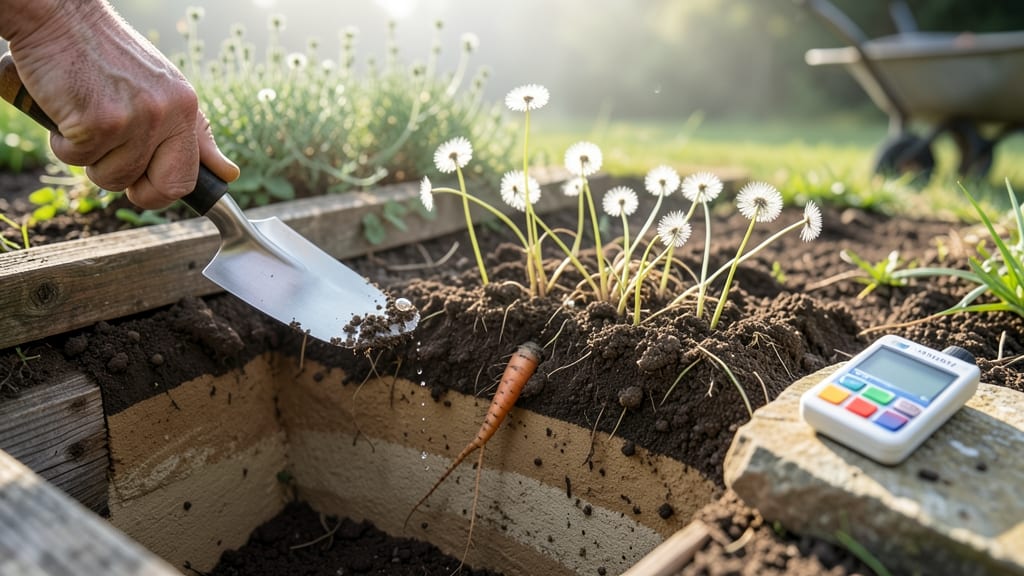
Understanding garden soil layers reveals how organic decay and mineral processes create distinct zones—nutrient-rich topsoil, drainage-focused subsoil, and deeper layers for water storage—that each support plant roots differently.
Soil isn't just dirt—it's a living ecosystem with three primary layers that work together to support plant life.
The top layer, called topsoil, is where most plant roots thrive due to its high organic matter content, while the middle layer, or subsoil, stores minerals and regulates water flow. 🌱 Deeper layers act as a reservoir for moisture and nutrients, ensuring plants have what they need even during dry spells.
Each layer plays a unique role in maintaining a healthy garden, from supporting microbial life to preventing erosion.
For gardeners, recognizing these layers helps in making informed decisions about planting and soil amendments. For instance, adding compost to topsoil boosts fertility, while improving subsoil drainage with sand or gypsum can prevent root rot.
Understanding your soil's profile allows you to create the ideal growing conditions for your plants, whether you're cultivating vegetables, flowers, or shrubs.
💡 In This Article
- How Soil Horizons Develop Over Time
- Optimizing Each Soil Layer for Healthy Gardens
How soil horizons develop over time
Soil formation begins with the breakdown of organic matter and rock fragments through a process called weathering. In the topmost layer, known as the O horizon, fallen leaves, twigs, and other plant debris accumulate.
Microorganisms like bacteria and fungi decompose this material, transforming it into humus—a dark, nutrient-rich substance that fuels plant growth. This process can take decades, with each layer gradually developing its unique characteristics through the interplay of biological activity and physical forces.
The next layer, the A horizon or topsoil, forms as decomposed organic material mixes with minerals from the parent rock below. Over time, water percolates through this layer, carrying dissolved nutrients downward in a process called leaching.
Meanwhile, minerals like iron and aluminum accumulate in the B horizon or subsoil, creating a denser layer that stores nutrients and regulates water flow. This horizon often appears reddish or yellowish due to iron oxide buildup, a telltale sign of its mineral-rich nature.
Below these layers lies the C horizon, composed of partially weathered parent material like broken rock fragments and mineral deposits. This layer acts as a transition zone, gradually breaking down into finer particles that contribute to the upper horizons.
The deepest layer, the R horizon, consists of unweathered bedrock, serving as the foundation for all soil development above. Together, these layers create a vertical profile that supports plant life while adapting to environmental conditions over centuries.
What most people don't realize is how climate and vegetation shape these layers. In tropical regions, rapid decomposition creates thick O and A horizons, while arid climates produce thinner layers with higher mineral content.
For example, a forest soil might have a 6-inch-thick topsoil layer rich in organic matter, whereas desert soil could have only a 2-inch layer with more sand and less organic material. These variations explain why some plants thrive in one region but struggle in another.
Microorganisms play a critical role in this process. Earthworms, for instance, aerate the soil by tunneling through it, while mycorrhizal fungi form symbiotic relationships with plant roots, enhancing nutrient absorption. Without these biological interactions, soil formation would stall, leaving plants without essential nutrients.
The balance between decomposition, mineral accumulation, and water movement creates the layered structure we rely on for gardening and agriculture.
Understanding these processes helps gardeners appreciate why soil health matters. When you till or amend soil, you're directly influencing how these layers develop. For example, adding compost to topsoil speeds up decomposition, while proper drainage prevents waterlogging in subsoil.
The deeper you dig into soil science, the more you realize how interconnected these layers truly are—each one dependent on the others for stability and fertility. 🌍