
How To
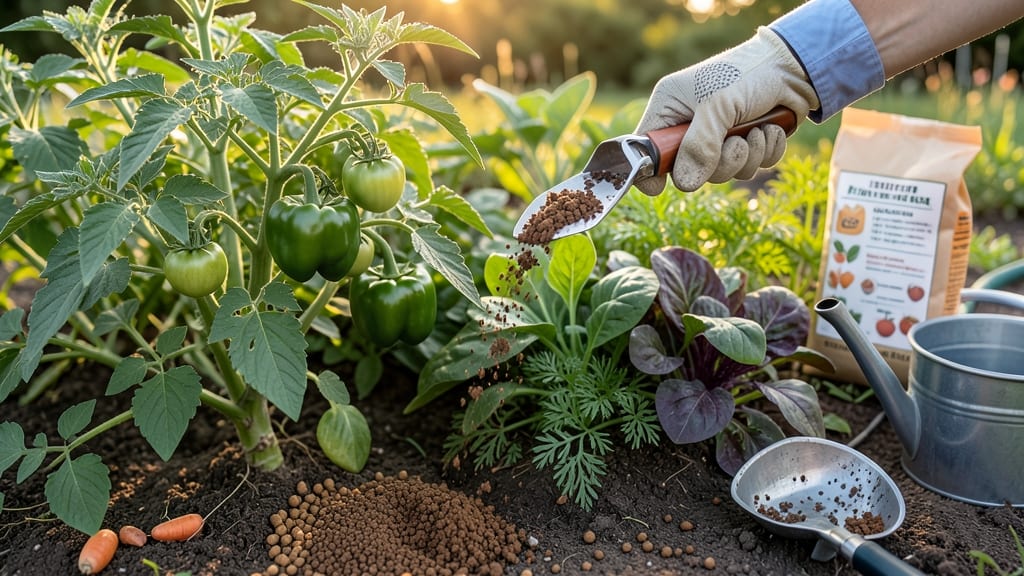
To fertilize a vegetable garden properly, you’ll need a schedule that matches your soil’s needs and your plants’ growth stages—because overdoing it burns roots while underdoing it stunts yields.
Picture this: You’re watering your 🥬 garden after a long week, and suddenly the leaves on your tomatoes turn crispy at the edges. That’s the classic sign of too much fertilizer—salts building up in the soil faster than roots can handle it.
The fix? A soil-test-based plan that adjusts for what your plants actually need, not what the package says.
Most gardeners guess wrong, either feeding too little (and watching their zucchini stay small) or too much (and watching their lettuce bolt early). The secret is timing: a spring boost for leafy greens, a mid-summer top-up for fruiting plants, and a fall pause to let roots harden before winter.
I’ll break down exactly when to feed based on your soil’s test results and the type of vegetables you’re growing.
By the end, you’ll know not just how often to fertilize, but also what signs to watch for—like nitrogen-hungry leaves turning yellow or phosphorus-starved stems turning purple—and how to tweak your schedule for organic compost vs. fast-acting synthetic blends. Let’s get those veggies thriving without the guesswork.

Soil test results decode: fertilizing frequency by nutrient deficiency
Your soil test results reveal the N-P-K ratios (nitrogen, phosphorus, potassium) that dictate how often—and what type—of fertilizer your vegetable garden needs. Nitrogen (N) fuels leafy greens, phosphorus (P) boosts root and flower development, and potassium (K) strengthens disease resistance.
Ignoring these ratios can lead to over-fertilizing (burned roots) or under-fertilizing (stunted growth). Let’s decode your numbers into a plant-specific schedule that prevents waste and maximizes yields.
For example, leafy greens like lettuce thrive with high nitrogen (N) every 3-4 weeks, while root crops like carrots need phosphorus-rich feedings only once at planting. Tomatoes, however, demand a balanced approach—extra nitrogen early, then phosphorus and potassium as they fruit.
Your soil test’s deficiency flags (e.g., yellowing leaves = nitrogen, purple stems = phosphorus) are your roadmap to adjusting frequency and ratios.
📊 Here’s your actionable nutrient schedule:
If your soil test shows low nitrogen, focus on leafy crops like spinach or kale and feed them every 3 weeks with a high-N fertilizer (e.g., blood meal or fish emulsion).
For phosphorus deficiencies, amend the soil with bone meal at planting, then side-dress tomatoes or carrots mid-season. Potassium shortages? Use wood ash or a potassium sulfate supplement every 6 weeks during fruiting stages.
Pro tip: Organic fertilizers (like compost or manure) release nutrients slowly, so you’ll need to apply them more frequently (every 2-3 weeks) compared to synthetic granules, which can last 6-8 weeks. Always water deeply after fertilizing to prevent root burn and flush excess salts from synthetic products.
For container gardens, halve the recommended amounts since roots have less soil volume to absorb nutrients.
Monitor your plants weekly: new growth means you’re on track, while yellowing or wilting signals it’s time to adjust. Over-fertilizing is just as harmful as under-fertilizing—so when in doubt, test your soil again after 3 months to refine your schedule.
Let’s say your basil is growing lanky and pale. That’s a classic nitrogen deficiency—switch to a 10-0-0 fertilizer and feed every 2 weeks until leaves darken to a rich green. Conversely, if your peppers have purple stems, they’re craving phosphorus.
Apply a 5-10-5 blend at planting, then again when flowers appear. Potatoes with weak stems? Boost potassium with a 0-0-50 supplement during tuber formation.
Remember: Soil tests change over time, especially after heavy rains or harvests. Re-test annually and adjust your fertilizing frequency accordingly. With this nutrient-specific schedule, you’ll avoid guesswork and grow vegetables that are healthier, faster, and more abundant—without wasting a single bag of fertilizer.
🌱
Seasonal fertilizing calendar: when to feed for maximum growth
Timing your vegetable garden's fertilizer applications is like hitting a golf swing—too early or late, and you miss the green. The key is feeding plants at their growth stages, not just by the calendar.
For example, leafy greens like spinach need nitrogen-heavy feeds early, while tomatoes thrive with phosphorus boosts during flowering. Let’s break down the perfect schedule for your climate zone (we’ll focus on USDA Zone 6a as our baseline).
Most gardeners make two critical mistakes: over-fertilizing in summer (which burns roots) or skipping feeds entirely in spring (when plants need the most energy). The solution? A 4-phase feeding system tied to plant life cycles.
Start with a pre-planting boost, follow with seedling support, then mid-season maintenance, and finish with harvest prep. Organic fertilizers like compost tea release nutrients slowly, while synthetic options deliver quick fixes.
- Early Spring (March-April): Apply pre-planting fertilizer (organic or balanced 10-10-10) 1-2 weeks before sowing. Focus on nitrogen for leafy crops.
- Late Spring (May): Feed seedlings with a light nitrogen boost (half-strength) to prevent legginess. Avoid phosphorus-heavy feeds here.
- Early Summer (June-July): Shift to balanced fertilizer (10-10-10) during flowering/fruiting stages. Tomatoes and peppers need extra potassium now.
- Mid-Summer (August): Use low-nitrogen, high-phosphorus feeds for root crops (carrots, beets) or potassium-rich options for fruiting plants.
- Late Summer (September): Reduce feeding to harden off plants before frost. Stop fertilizing 6 weeks before first frost to improve storage quality.
- Fall/Winter (October-February): No fertilizing—let soil rest. Use this time to add compost for next year’s growth.
Your climate zone shifts these timelines slightly. In warmer zones (7b+), move summer feedings 2-3 weeks earlier, while cooler zones (5a-) may need to delay until after the last frost.
For example, in Zone 5a, hold off on early spring feeds until soil reaches 50°F to prevent nutrient runoff. Always water fertilizer in early morning to reduce leaf burn from salt buildup.
Watch for warning signs like crispy leaf edges (too much salt) or yellowing between veins (nitrogen deficiency). Organic fertilizers like fish emulsion or kelp meal release nutrients slowly, so you’ll feed every 3-4 weeks, while synthetic granules can be applied every 6-8 weeks.
For example, my tomato plants get a kelp tea spray every 2 weeks during fruiting, but my broccoli only needs a compost top-dressing once in spring.
Pro tip: Side-dress heavy feeders like corn and squash with aged manure mid-season instead of top-dressing. This delivers nutrients directly to roots where they’re needed most. And remember—less is more in late summer.
Over-fertilizing now encourages soft, tender growth that’s prone to pests and frost damage. Let your plants harden off naturally by reducing feeds as daylight shortens.
Start with a soil test to customize this schedule. If your soil tests high in phosphorus (common in many regions), skip the bone meal and focus on nitrogen for leafy crops. The goal? Healthy soil = fewer fertilizers needed. Happy growing—your tomatoes will thank you at harvest time! 🍅