
Watering
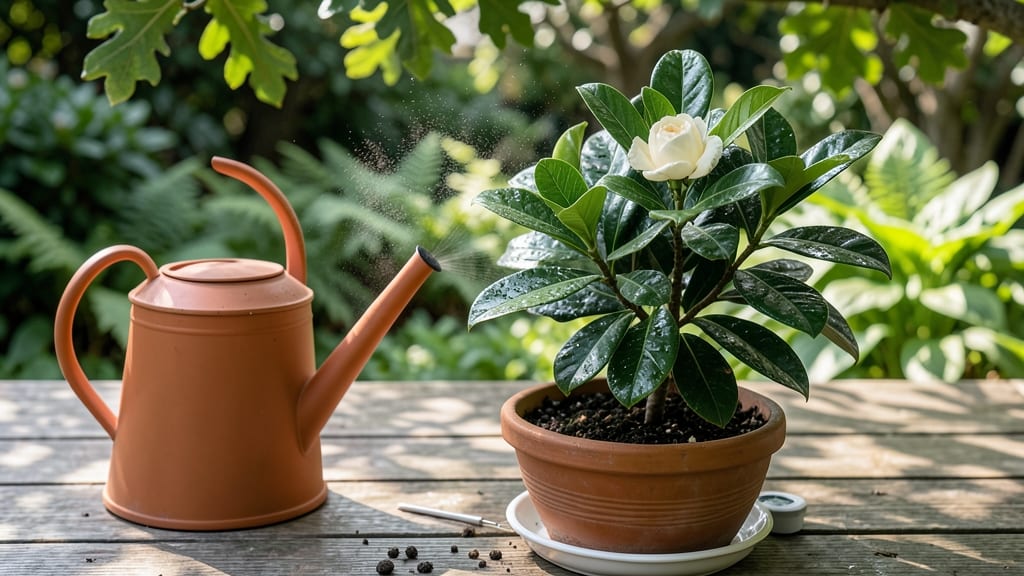
To water a gardenia plant properly, focus on keeping the soil consistently moist without letting it sit in soggy conditions — the key to those fragrant blooms and glossy leaves.
Struggling to keep your gardenia plant blooming? The secret isn’t just about how often you water—it’s about how you water. Too much or too little moisture can turn your fragrant gardenia 🌸 into a sad, wilted shadow of its former self.
Gardenia plants thrive when watered deeply but infrequently, especially in well-draining soil. Overwatering leads to root rot, while underwatering causes leaf drop and stunted growth. The trick is balancing moisture levels so the roots stay happy without drowning.
In this guide, I’ll break down the perfect watering schedule by season, how to check soil moisture like a pro, and what to watch for when your gardenia is thirsty or drowning. You’ll learn to read your plant’s signals and adjust your routine for lush, blooming success.
The perfect watering schedule for gardenia plants (by season)
Gardenia plants thrive on consistent moisture, but their watering needs shift dramatically with the seasons. Unlike drought-tolerant succulents, gardenias demand regular hydration—yet soggy soil spells disaster. The key is balancing frequency, depth, and seasonal adjustments to keep your plant lush and blooming.
I’ve learned this the hard way: my first gardenia nearly died from overwatering in winter and underwatering in summer heat. Let’s fix that together.
Seasonal changes affect everything from root activity to evaporation rates. In spring, gardenias wake up from dormancy and need gentle encouragement to establish roots. By summer, they crave deep, frequent watering to combat heat stress. Fall slows growth, while winter demands near-dormancy care.
Each phase requires a tailored approach—not a one-size-fits-all rule. Below, I’ll break down the ideal schedule, including soil moisture checks and adjustments for containers vs. in-ground plants.
Before diving into seasonal tips, here’s a quick watering checklist for gardenias year-round:
- Use room-temperature water (cold water shocks roots)
- Water at soil level (avoid wetting leaves to prevent fungal diseases)
- Ensure pots have drainage holes (no exceptions!)
- Mulch with 2-3 inches of organic mulch (retains moisture and regulates temperature)
Spring watering is all about striking a balance. As temperatures rise from 50°F to 70°F, your gardenia will show new leaves and buds—clear signs it’s ready for increased moisture. Start by watering every 3-5 days, but adjust based on rainfall. A simple test: stick your finger 1-2 inches into the soil. If it feels dry, water deeply until moisture reaches 6 inches down. This encourages root expansion without waterlogging. Pro tip: Group gardenias with other thirsty plants like hydrangeas to create a microclimate that retains humidity.
Summer is when gardenias really drink up water. With temperatures often exceeding 80°F, evaporation speeds up, and roots struggle to absorb moisture quickly enough.
Here’s my summer survival strategy: - Water in the early morning (6-8 AM) to reduce fungal risks - Aim for 1.5-2 gallons per watering for mature plants - Check soil moisture daily in heatwaves—if the top 2-3 inches are dry, it’s time - Mulch with 3 inches of pine bark to lock in moisture and cool roots
Fall signals a gradual slowdown in gardenia growth, but don’t cut watering too soon. As daytime highs drop below 70°F, reduce frequency to weekly waterings, but maintain deep soaks. The goal is to keep roots actively growing until the first frost.
Watch for yellowing leaves—a sign of overwatering as roots prepare for dormancy. In USDA Zone 7 and below, start tapering water by late October to prevent root rot in cold, wet soil.
Winter care is where most gardenia owners go wrong. Many assume less water = less risk, but gardenias still need minimal moisture to survive. In mild winters (Zones 8-10), water every 2-3 weeks, while cold climates (Zones 6-7) may only need monthly waterings.
The key is to keep soil slightly moist but never soggy. A hydrometer
Signs your gardenia is overwatered or underwatered (and how to fix it)
Your gardenia’s health starts with moisture balance—too much or too little water sends distress signals through its leaves and roots. I’ve seen yellowing leaves and drooping stems that scream for help, but spotting the difference between overwatering and underwatering can be tricky.
The key is checking both the soil moisture and the plant’s physical cues. Let’s decode what your gardenia is really telling you.
First, stick your finger 1-2 inches deep into the soil. If it feels soggy or muddy, you’re likely overwatering. On the flip side, if the soil is bone-dry or pulling away from the pot edges, your gardenia is thirsty.
Both extremes stress the plant, but the fixes couldn’t be more different. Let’s break down the symptoms and solutions so you can revive your gardenia’s lush, fragrant glory.
How to Water a Gardenia Plant: Overwatering vs. Underwatering
Overwatering
- 🌱 Yellow leaves (especially lower ones)
- 🌱 Mushy stems or blackened roots
- 🌱 Foul-smelling soil (root rot)
- 🌱 Wilting despite wet soil
Underwatering
- 🌱 Brown, crispy leaf edges
- 🌱 Dry, brittle soil pulling from pot
- 🌱 Drooping leaves that don’t bounce back
- 🌱 Slow growth or no new blooms
When your gardenia’s leaves turn yellow and mushy, it’s often a cry for help from root rot. I’ve had to rescue gardenias by repotting them in fresh, peat-based soil mixed with perlite to improve drainage.
Always use a pot with drainage holes—this simple step can save your plant from drowning. If the roots smell rotten or look slimy, trim the affected areas with sterilized scissors before repotting.
On the other hand, brown, crispy leaf edges are a classic sign of underwatering. Unlike wilting from overwatering, these leaves feel paper-dry to the touch. The fix? Deep watering—give your gardenia 1-2 gallons of water until it flows freely from the drainage hole.
For potted gardenias, I water until the soil is thoroughly saturated, then let excess water drain away completely. This mimics their natural habitat’s consistently moist but not soggy conditions.
Don’t ignore wilting leaves—they’re your gardenia’s way of saying, “I need balance!” If the wilting happens after watering, you’re likely overwatering. But if the soil is dry and leaves stay limp even after watering, it’s underwatering. A quick test: Gently tug on a leaf.
If it snaps easily, the plant is severely dehydrated. If it bends but doesn’t break, it’s just thirsty. Adjust your watering schedule accordingly, and your gardenia will perk up within days.
Remember, gardenias thrive on consistency. I’ve found that morning watering (before 10 AM) gives roots time to absorb moisture without inviting fungal infections. And always check the soil moisture before watering—your finger is the best tool!
With these fixes, your gardenia will reward you with glossy leaves and abundant blooms all season long.