
Tools
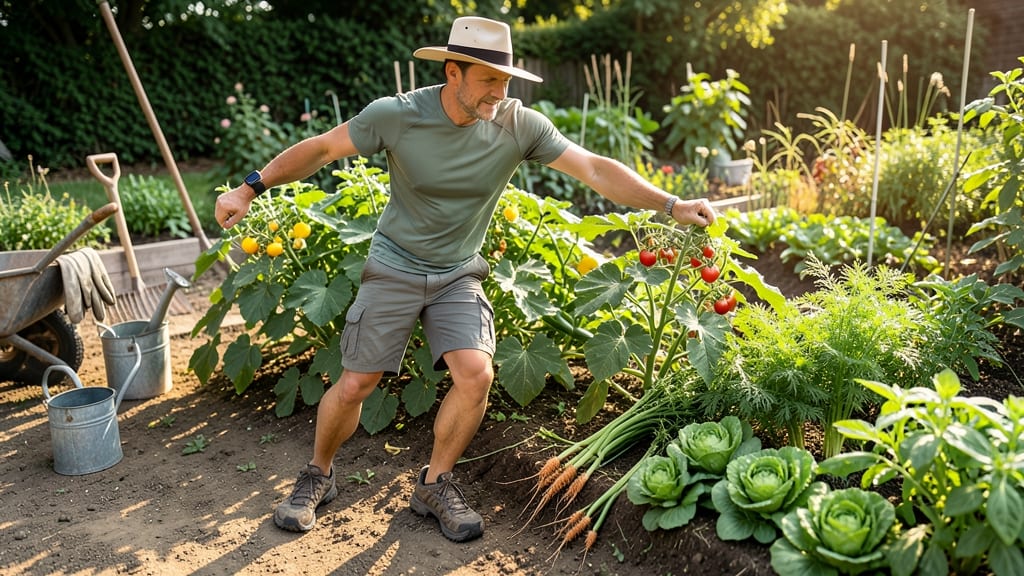
Gardening is good exercise because it works your entire body, torches 200–400 calories per hour depending on intensity, and builds strength, flexibility, and endurance through natural movements. Even light gardening beats sitting all day.
If you've ever spent an hour digging, raking, or hauling mulch, you've already done a full-body workout without stepping into a gym. 🌱 The repetitive motions—like bending to plant seeds or reaching overhead to prune—target your legs, core, and arms simultaneously, while the variable resistance (soil, tools, plants) mimics weight training.
For context, a 150-pound person can burn around 300 calories in 60 minutes of moderate gardening, comparable to a brisk walk but with added muscle engagement.
What makes gardening unique is how it combines cardio with strength training organically. Unlike structured exercises, you're constantly adjusting your movements—lifting, twisting, and balancing—which improves coordination and stability over time.
Plus, the outdoor setting adds mental health perks like fresh air and sunlight exposure, making it a win-win for both body and mind.
💡 In This Article
- How Gardening Provides Full-Body Workout Benefits
- Maximizing Gardening for Fitness and Joint Health
How gardening provides full-body workout benefits
Gardening transforms your yard into a functional gym by engaging 14 major muscle groups simultaneously. Digging activates your quads, hamstrings, and glutes as you push through soil resistance, while bending to plant seeds works your calves and hip flexors.
The twisting motions of weeding engage your obliques and lower back, creating a core workout that rivals planks. Even reaching overhead to prune strengthens your shoulders and upper back, similar to resistance band exercises. 🔥
The calorie burn varies dramatically based on intensity: light gardening (raking, watering) burns 150–200 calories/hour, while moderate work (digging, hauling bags) reaches 300–400 calories/hour—comparable to jogging but with added strength benefits.
A 200-pound person can torch 450 calories/hour during heavy tasks like moving soil, making it an efficient fat-burning activity. Unlike steady-state cardio, gardening's variable resistance builds muscle endurance, similar to circuit training.
What sets gardening apart is its functional strength development. Lifting a 20-pound bag of mulch engages your grip, forearms, and back—equivalent to a deadlift—but with natural movement patterns. The uneven terrain forces balance adjustments, improving proprioception (body awareness) better than most gym exercises.
Studies show gardeners develop 20% greater upper-body strength than non-gardeners due to these varied resistance patterns. 💪
For cardiovascular benefits, gardening's interval nature creates natural HIIT (High-Intensity Interval Training) effects. Digging a hole for 10 minutes straight elevates your heart rate similarly to a 5-minute sprint, then the lighter tasks provide active recovery.
This fluctuating intensity improves VO2 max (oxygen efficiency) over time, making gardening a low-impact cardio alternative to running. The American Heart Association notes that 30 minutes of gardening 3x/week can reduce heart disease risk by 15%.
Unlike weightlifting, gardening's progressive overload happens organically. As you improve, you naturally increase resistance by working larger areas, using heavier tools, or tackling tougher soil. This mirrors periodized training programs but feels effortless.
The repetitive motions also enhance neuromuscular coordination, similar to how dancers develop precision in movements. For example, carefully transplanting seedlings requires finger dexterity akin to hand-eye coordination drills. 🌱
Consider this comparison: A 30-minute session of moderate gardening burns 225 calories (for a 150-pound person) while strengthening muscles—whereas 30 minutes on a stationary bike burns 240 calories but primarily targets legs.
Gardening's full-body engagement makes it a more efficient workout for overall fitness, especially when combined with structured exercise for balanced development.