
How To
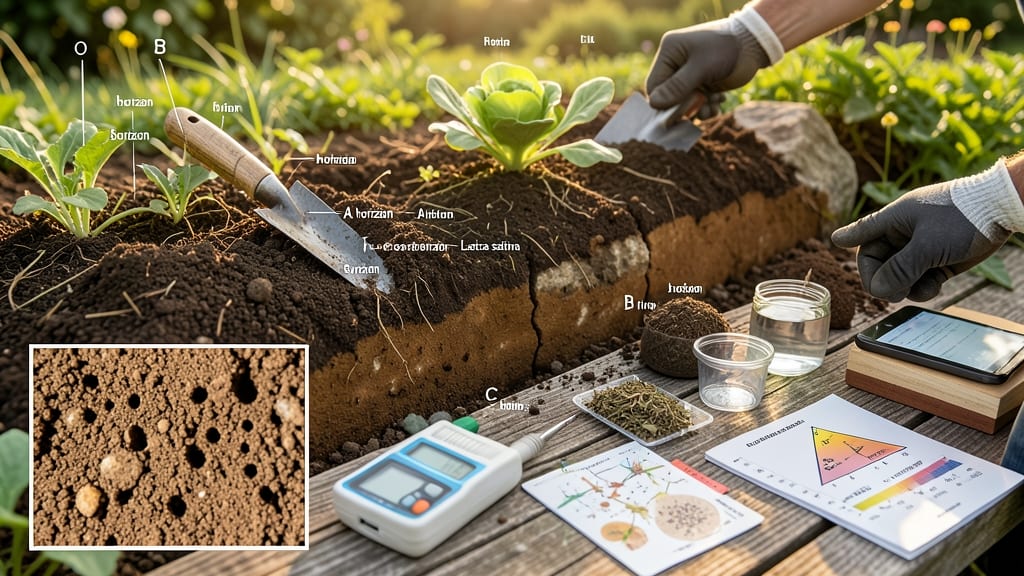
Soil science for gardeners focuses on understanding soil composition, structure, and fertility to optimize plant growth, balancing organic matter, pH levels, and nutrient availability for healthy root development and yield. Healthy soil supports thriving gardens through proper drainage, aeration, and microbial activity.
Mastering soil science starts with recognizing how your garden's foundation directly impacts what grows in it.
The right mix of sand, silt, and clay determines drainage and root space, while organic matter feeds beneficial microbes and retains moisture. 🌱 For example, clay soils hold nutrients but can suffocate roots if not amended, while sandy soils drain too quickly.
Testing your soil's pH and nutrient levels—like checking for nitrogen or phosphorus deficiencies—helps you tailor amendments, whether it's compost for organic matter or lime to adjust acidity. Even small adjustments can transform struggling plants into thriving ones.
Most gardeners overlook the hidden ecosystem in their soil: microbes break down organic material, making nutrients accessible to plants. This biological activity is why healthy soil often outperforms chemically fertilized soil in the long run.
I always recommend starting with a simple DIY pH test kit and observing how your plants respond to changes—like adding worm castings for micronutrients or peat moss to improve structure. The goal isn't perfection but balance, so your garden can support both roots and the life that feeds them.
💡 In This Article
- How Soil Composition Affects Plant Growth
- Practical Soil Testing and Amendments for Gardeners
How soil composition affects plant growth
Soil isn't just dirt—it's a dynamic ecosystem where particle size dictates everything from water flow to root expansion. The three primary components are sand (0.05-2mm), silt (0.002-0.05mm), and clay (<0.002mm), each with distinct properties.
Sand drains water quickly but offers little nutrient retention, while clay holds moisture and nutrients too tightly, often suffocating roots. The ideal balance comes from loam soil, which typically contains 40% sand, 40% silt, and 20% clay, providing both aeration and moisture retention.
Think of it like a sponge: too coarse, and water runs through; too fine, and roots drown.
Organic matter—like decomposed leaves, compost, or worm castings—plays a critical role by improving soil structure and fertility. It can make up 5-10% of healthy garden soil and acts like a supercharger for microbial life.
These tiny organisms break down organic material into nutrients plants can absorb, while also creating aggregates (clumps) that improve aeration. For example, a 1% increase in organic matter can boost water retention by 20,000 gallons per acre, making drought-prone gardens far more resilient.
The dark, crumbly texture of well-amended soil is a dead giveaway—it feels rich and alive, almost like a moist loaf of bread.
pH balance is another game-changer, as it directly affects nutrient availability. Most plants thrive in a slightly acidic to neutral range (6.0-7.0), but blueberries, for instance, demand acidic soil (4.5-5.5) to access iron and aluminum.
A soil pH of 5.0 or below can lock out essential nutrients like phosphorus, even if they're present in the soil. Testing pH is simple: use a DIY test kit or send a sample to a lab.
If your soil is too alkaline, add elemental sulfur; if too acidic, apply lime (calcium carbonate). The goal is harmony—like tuning an instrument to play in the right key.
Texture also influences how roots explore their environment. Sandy soils with low clay content (<15%) may see roots growing 30% faster initially, but they'll struggle to anchor plants during storms. Conversely, clay-heavy soils (35%+ clay) can restrict root growth by 50% if not amended.
The solution? Mix in compost or peat moss to improve drainage in clay or organic matter to boost water-holding capacity in sand. Even a 5-gallon bucket of compost per 100 square feet can transform struggling soil into a thriving ecosystem.
Consider the difference between growing tomatoes in loamy soil versus pure sand: in loam, roots spread easily, accessing water and nutrients efficiently, while in sand, they must work harder to find moisture, leading to stunted growth.
The same plant can yield 3x more fruit in the right soil conditions. This is why professional gardeners obsess over soil composition—it's the foundation of everything that grows above ground. 🌱