
Landscaping
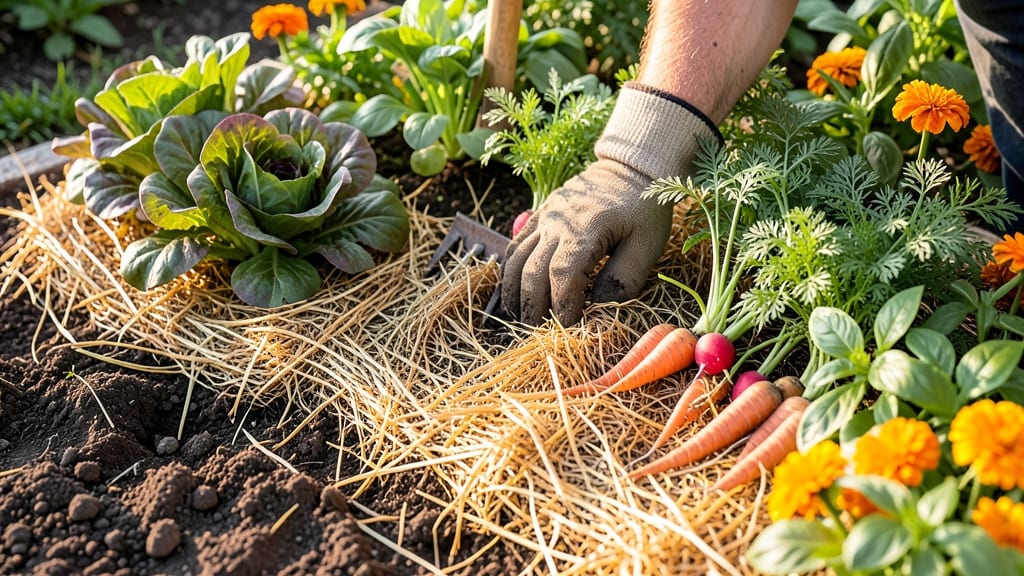
Using straw mulch for garden beds helps control weeds by blocking sunlight, preserves soil moisture by cutting evaporation, and stabilizes soil temperature while breaking down to add organic material back to the earth. Apply a 2–4 inch layer of clean straw for optimal results.
Straw mulch works like a natural blanket for your garden, shielding the soil from extreme temperatures while keeping it consistently damp. 🌱 Unlike synthetic mulches, straw gradually decomposes over time, adding essential nutrients to the soil—think of it as slow-release fertilizer.
The key is choosing the right type: oat straw breaks down faster, while wheat straw holds up better in wet climates. Just avoid piling it directly against plant stems to prevent rot.
This method also outshines alternatives like wood chips, which can alter soil pH over time, or plastic mulches that trap heat and block water. Straw strikes the perfect balance for most gardeners, especially in vegetable beds where moisture retention is critical.
For best results, refresh the layer annually in spring or after heavy rains.
💡 In This Article
- How Straw Mulch Improves Soil Health and Plant Growth
- Best Practices for Applying Straw Mulch in Garden Beds
How straw mulch improves soil health and plant growth
Straw mulch acts like nature's insulation system for your garden. When spread over beds, it creates a protective layer that moderates soil temperature by absorbing heat during the day and slowly releasing it at night.
This stabilization prevents drastic swings that can stress plants, especially in hot climates where soil temperatures can exceed 90°F—a threshold that damages root systems.
The mulch's fibrous structure also traps moisture near the roots, reducing evaporation rates by up to 70% compared to bare soil, which is why gardens using straw often require 30-50% less watering during dry spells.
The real magic happens underground as straw decomposes. Unlike wood chips that can create acidic conditions or leaves that mat down into dense layers, straw breaks down into a fine, crumbly compost that improves soil structure.
This process releases beneficial microbes that break down organic matter, creating a thriving ecosystem for plant roots. Studies show straw mulch increases microbial activity by 20-30% compared to unmulched soil, which directly translates to better nutrient uptake for your plants.
The decomposition also adds carbon to the soil, improving its ability to hold water and nutrients.
One often-overlooked benefit is erosion control. Straw's fibrous network acts like a net, catching raindrops and slowing their impact on the soil surface. This prevents the fine particles from washing away, which is especially valuable in sloped gardens or areas with heavy rainfall.
The mulch's loose structure also allows air and water to penetrate to the roots while keeping the surface cool—ideal for heat-sensitive crops like lettuce or spinach that bolt when exposed to high temperatures.
Comparing straw to other organic mulches reveals its unique advantages. Wood chips, while excellent for long-term moisture retention, can tie up nitrogen as they decompose, requiring additional fertilizer. Leaf mulch, on the other hand, compacts easily and may harbor pests or diseases.
Straw strikes a balance: it decomposes at a moderate rate (typically 6-12 months depending on climate), doesn't alter soil pH significantly, and remains lightweight enough to work with in raised beds or containers.
For vegetable gardens, the benefits extend to pest control. The loose straw layer disrupts the life cycle of many weeds by blocking their access to sunlight, while its coarse texture makes it difficult for slugs and snails to hide.
The mulch also creates a barrier that prevents soil-borne diseases from splashing onto plant leaves during watering. This multi-functional approach is why straw remains a favorite among organic gardeners who prioritize both yield and sustainability.
To maximize these benefits, choose straw that's been baled without seed heads—this prevents unwanted volunteer plants from sprouting in your beds. The ideal thickness of 2-4 inches provides enough coverage without smothering plants or creating a breeding ground for fungi.
When applied correctly, straw mulch isn't just a temporary solution; it's an investment in your soil's long-term health that pays dividends in stronger plants and higher yields.