
Companion Plants
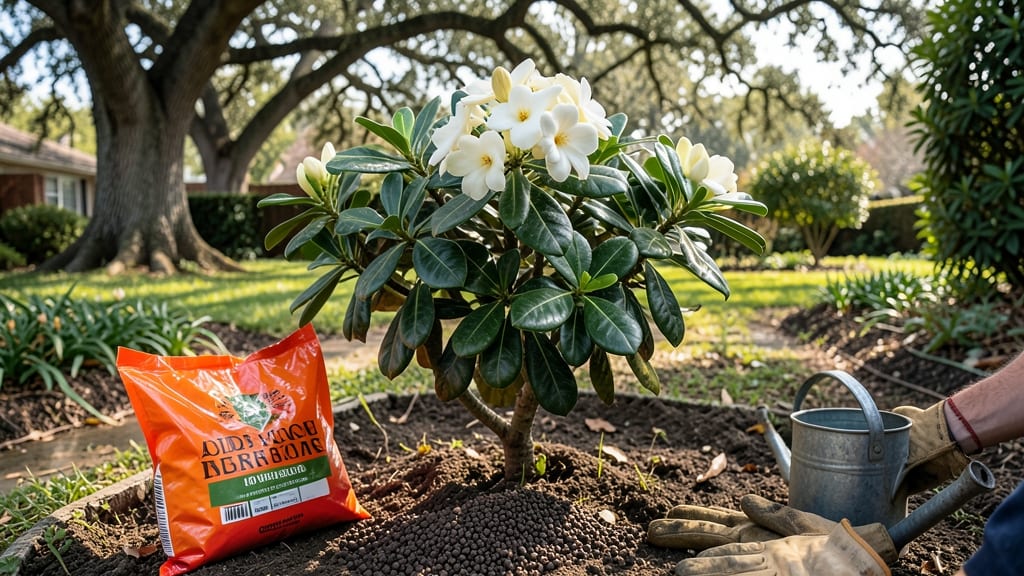
To feed gardenias properly, you'll need acidic soil (pH 5.0–6.0), a balanced fertilizer like 10-10-10 or 8-3-9, and seasonal adjustments—spring nitrogen for growth and summer phosphorus for blooms. Organic options like composted pine needles or fish emulsion enhance fragrance and vitality.
Gardenias are finicky about their diet, and their soil pH is the foundation of their health. 🌱 The ideal acidic range (5.0–6.0) ensures they absorb critical nutrients like iron and magnesium, which prevent those dreaded yellow leaves.
I’ve found that testing your soil every spring keeps pH issues from sneaking up—especially if you’re in a region with alkaline soil. For extra fragrance, a monthly dose of fish emulsion during blooming season works wonders, but don’t overdo it; gardenias hate soggy roots.
Seasonal feeding is where most gardeners trip up. In spring, focus on nitrogen to fuel leaf growth, while summer calls for phosphorus to trigger those iconic white blooms. 🌸 A trick I learned?
Mix coffee grounds into the soil in fall—they’re a natural acidifier and slow-release fertilizer. Just avoid synthetic fertilizers in winter unless your plant looks exhausted, as they can stress roots when growth slows.
💡 In This Article
- Optimal Soil pH and Nutrient Requirements for Gardenias
- Seasonal Feeding Schedule for Gardenia Care
Optimal soil pH and nutrient requirements for gardenias
Gardenias demand acidic soil because their root systems struggle to absorb essential nutrients like iron and magnesium when the pH rises above 6.0. At this level, these micronutrients become chemically locked in the soil, leading to chlorosis—those telltale yellow leaves with green veins.
The ideal range of 5.0–6.0 keeps iron in its soluble ferrous form (Fe²⁺), which roots can uptake efficiently. 🌿 For example, a pH of 5.5 ensures maximum iron availability, while 6.5 reduces absorption by 90%.
This is why gardenias in alkaline soils often show stunted growth or fail to bloom despite regular feeding.
Micronutrient deficiencies manifest in specific ways: iron deficiency causes interveinal chlorosis (yellowing between veins), while magnesium deficiency turns older leaves yellow with brown spots. Gardenias also need trace amounts of zinc and manganese, which become scarce in alkaline conditions.
A soil test can reveal exact deficiencies, but a quick fix is applying chelated iron or Epsom salt (magnesium sulfate) every 4–6 weeks during growing season. Organic options like composted pine needles (pH ~4.5) or sulfur granules gradually lower pH over 2–3 months.
Nutrient ratios matter just as much as pH. Gardenias thrive on a balanced fertilizer like 10-10-10 (equal nitrogen, phosphorus, potassium), but their blooms need extra phosphorus.
During peak flowering (late spring to summer), switch to a 5-10-10 formula to encourage bud formation. 🌸 The key is consistency: over-fertilizing with nitrogen (e.g., 20-5-5) promotes lush foliage at the expense of flowers, while phosphorus-heavy feeds (like bone meal) trigger blooming.
Always water thoroughly after feeding to prevent root burn.
Organic enthusiasts often turn to fish emulsion (5-1-1 ratio) or seaweed extract, which provide micronutrients and growth hormones. A diluted solution (1 tbsp per gallon) applied monthly during bloom season enhances fragrance and flower count.
However, avoid high-nitrogen organics like blood meal in summer—they’ll send your gardenia into a leafy frenzy instead of blooming. For a DIY boost, steep citrus peels in water for 2 weeks, then use the acidic tea as a foliar spray or soil drench.
One common mistake is assuming "more is better." Gardenias are sensitive to salt buildup from fertilizers, which damages roots over time. Always flush the soil with 2–3 inches of water every 2 weeks to leach excess salts. 💧 In containers, this is especially critical—drainage holes and well-aerated mixes prevent suffocation.
For container gardenias, repot every 2–3 years into fresh acidic potting mix to replenish nutrients and prevent compaction.
Here’s a quick reference for micronutrient signs and fixes:
- Yellow leaves with green veins: Iron deficiency → Apply chelated iron or Epsom salt
- Brown leaf edges: Magnesium deficiency → Work in Epsom salt or composted leaves
- Stunted growth: Zinc/manganese deficiency → Use seaweed extract or sulfur
- No blooms: Phosphorus deficiency → Switch to 5-10-10 fertilizer
The secret to fragrant, healthy gardenias lies in this delicate balance: acidic soil + micronutrient precision + seasonal feeding. Master these, and your gardenia will reward you with glossy leaves and intoxicating blooms year after year. 🌸