
Picking
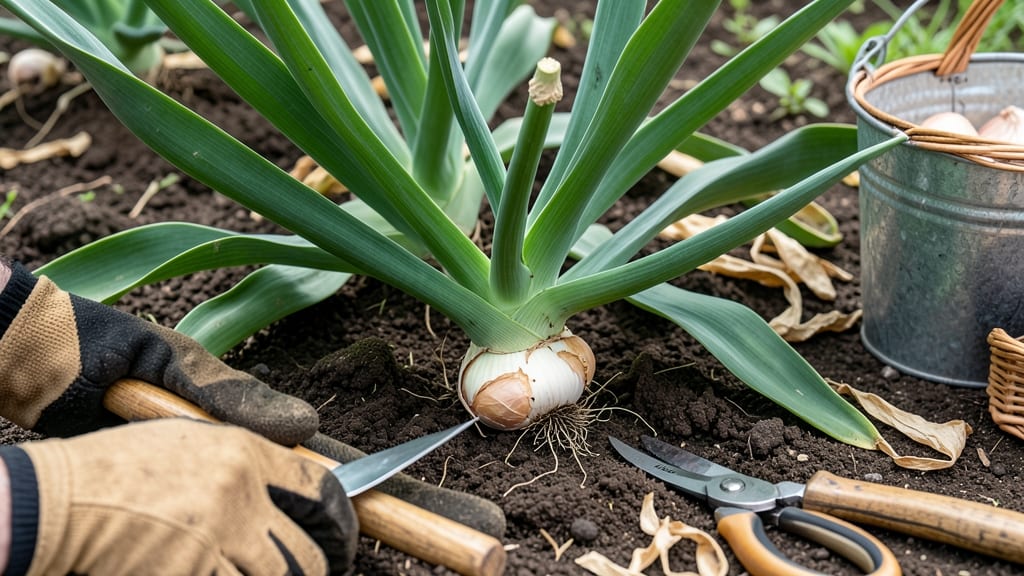
To pick garlic from your garden at the perfect time means the difference between plump, flavorful bulbs and shriveled disappointment.
Garlic lovers know fresh homegrown bulbs taste nothing like store-bought—but timing your harvest wrong can mean shriveled cloves or wasted effort. Mastering the perfect moment transforms your garden from decent to extraordinary.
Most gardeners wait until late June or July when the lower leaves turn brown and crispy, but climate and variety play a big role. In USDA Zone 6a, where garlic thrives, the ideal window is just before the tops fully flop over.
Below, I’ll walk you through the three key signs your garlic is ready, regional timing adjustments, and how to store your harvest for maximum flavor and shelf life.
3 Visual signs your garlic is ready for harvest (with photos)
Knowing exactly when to pick garlic from your garden can mean the difference between plump, flavorful bulbs and sad, shriveled cloves. The key lies in watching for three visual cues that signal your garlic is ready for harvest.
These signs work for both hardneck and softneck varieties, though timing may shift slightly based on your climate zone.
First, let's clarify the most common mistake gardeners make: waiting until the top leaves turn brown. That's too late! Instead, focus on the bottom leaves, which are the true indicators of maturity.
When these leaves start browning and dying back, your garlic is sending energy to bulb development—exactly what you want for a great harvest.
Here’s a quick reference to help you spot these signs in your garden. The summary-table below breaks down the three key visual indicators, along with what they mean for your harvest timing:
The first sign to watch for is when the bottom leaves turn brown and crispy. This is your garlic’s way of telling you it’s redirecting energy from leaf growth to bulb development.
For hardneck varieties, this usually happens in late spring (May-June), while softneck varieties may take until early summer (June-July).
Next, check for the formation of a papery white wrapper around the bulbs. This protective layer develops as the bulb matures, and it’s a clear signal that your garlic is ready.
Gently dig around the base of the plant—if you can see a well-formed bulb with this wrapper, it’s time to harvest. The wrapper helps prevent bruising and keeps the cloves fresh during storage.
Finally, compare the size of your bulbs to a quarter or golf ball. Mature garlic bulbs should be about 2-3 inches wide. If they’re smaller, they may not have fully developed, and you risk storing underdeveloped cloves.
Larger bulbs are great, but if they’re oversized, they might split or have poor storage life.
For hardneck varieties, harvest when about 50-60% of the leaves have turned brown.
These types often bolt (send up a flower stalk) if left too long, which reduces bulb quality. Softneck varieties, on the other hand, can handle a slightly later harvest, as they don’t bolt and tend to store longer.
One common mistake is waiting until the top leaves turn brown. By then, the bulbs may have already started to dry out or split. Instead, focus on the bottom leaves and the bulb size.
If you’re unsure, do a test dig: gently lift one bulb to check its size and wrapper development. If it’s ready, harvest the rest within a few days.
Timing your harvest correctly ensures your garlic stores well and retains its bold flavor. Once harvested, let the bulbs cure in a dry, shaded area for 2-4 weeks before storing. This drying process helps prevent mold and extends shelf life.
Remember, garlic is a patient plant. It doesn’t rush to maturity, so take your time observing these signs. The more you practice, the easier it becomes to recognize the perfect moment to pick garlic from your garden—leading to a bounty of homegrown bulbs that rival any store-bought variety. 🧄
When to harvest garlic by climate zone: a month-by-month guide
Harvesting garlic at the right time ensures plump, flavorful cloves that store beautifully. Since garlic grows best in cool climates and needs 6-8 months to mature, timing depends on your USDA zone and planting season.
Most gardeners plant in fall for a summer harvest, but spring planting works in warmer zones.
Northern climates (zones 3-6) typically harvest in late June to July, while Southern zones (7-10) may harvest as early as May or late April.
Early varieties like 'Silverskin' mature faster than 'Rocky Mountain' hardnecks. Pay attention to leaf browning and bulb firmness—these are your best indicators.
In USDA zones 3-5, plant garlic in October for a late June harvest. Watch for 50% of lower leaves turning brown—this signals maturity. Northern gardeners should harvest before July 15 to avoid heat stress, which causes bulbs to split.
Zones 6-7 can plant in November and harvest in mid-June. Here, hardneck varieties like 'German White' thrive, while softnecks (e.g., 'Artichoke') mature slightly later. If your area has unpredictable springs, use row covers to protect emerging shoots.
Warmer zones (8-10) often plant in January-February for an April-May harvest. However, heat waves can trigger premature bolting. Choose heat-tolerant varieties like 'California Early' and harvest as soon as bottom leaves brown. Avoid waiting for full papery skins—Southern heat reduces storage life.
Regardless of zone, never harvest after tops fully yellow—this means the bulb has overmatured. Dig carefully with a fork to avoid damaging cloves. Cure harvested garlic in a dry, shaded area for 2-3 weeks before storing. Proper timing turns your garlic harvest from ho-hum to heroic!