
Plants
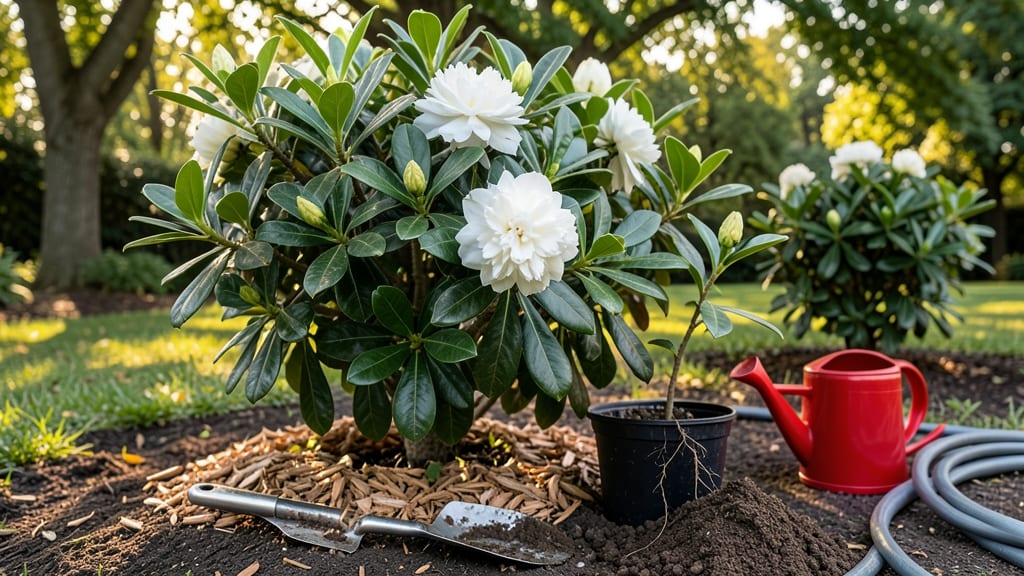
You can plant gardenia outside successfully in USDA Zones 7-11, where winter temperatures remain above 10°F (-12°C), protecting its delicate foliage and vibrant blooms from frost damage. Opt for sheltered locations with partial shade and well-draining soil to maximize growth.
Gardenias thrive outdoors in warmer climates because their tropical origins make them sensitive to chilling temperatures below 50°F (10°C). 🌸 In colder regions, gardeners often grow them as container plants that can be moved indoors during winter months.
The key to outdoor success lies in selecting protected spots—like near south-facing walls or under deciduous trees—that shield the plant from harsh winds while still allowing sunlight to reach the leaves.
Beyond temperature, gardenias demand consistently moist, acidic soil with a pH between 5.0 and 6.0. Mulching with organic matter helps maintain soil moisture and temperature stability, while regular pruning after blooming encourages denser growth.
For gardeners in marginal zones, overwintering strategies like wrapping plants in burlap or using frost cloths can extend the outdoor growing season.
💡 In This Article
- USDA Zones for Outdoor Gardenia Growth
- Best Outdoor Planting Locations for Gardenias
USDA zones for outdoor Gardenia growth
Gardenias belong to the tropical and subtropical plant family, meaning their natural resilience stops at 10°F (-12°C). Below this threshold, the plant's cell membranes begin to rupture due to ice crystal formation, causing irreversible damage to leaves and buds.
The science lies in their origin: native to Southeast Asia and Australia, gardenias evolved in climates where winter rarely dips below 50°F (10°C). 🌿 Even brief exposure to 28°F (-2°C) can kill the plant outright, while temperatures between 10-28°F (-12 to -2°C) often result in defoliation and stunted growth.
USDA Zones 7-11 represent the sweet spot because they guarantee winter lows stay above 10°F (-12°C). For example, Zone 7 (like parts of Virginia and North Carolina) averages winter lows of 0-10°F (-18 to -12°C), but gardenias can survive if protected.
Zone 10 (Florida, Southern California) sees winter lows of 30-40°F (-1 to 4°C), creating ideal conditions. The critical factor isn't just the zone number but the minimum winter temperature—gardenias need this consistency year-round to avoid stress.
In marginal zones (like Zone 6), gardeners use strategic winter care. The most effective method is wrapping the plant in burlap or frost cloth once temperatures drop below 40°F (4°C), which creates a 5-10°F (3-6°C) warmer microclimate around the foliage.
Another technique is planting near south-facing foundations or brick walls, which absorb daytime heat and radiate it back at night—a phenomenon called "thermal mass." This can raise nighttime temperatures by 3-5°F (2-3°C), often enough to protect gardenias from light frosts.
What most people overlook is the humidity factor. Gardenias thrive in 50-70% humidity, and dry winter air accelerates moisture loss through leaves. In arid Zone 9 areas (like Arizona), gardeners must supplement with daily misting or pebble trays during winter months.
The combination of cold protection and humidity maintenance explains why some gardeners in Zone 6 successfully grow gardenias outdoors—it's not just about the zone number but the microclimate management.
For those pushing the limits, consider the Gardenia jasminoides 'Radicans' variety, which has slightly better cold tolerance (15°F/-9°C with protection). However, even this variety will struggle in Zone 5 without container growing and indoor overwintering.
The key takeaway: gardenias reward patience in colder climates, but the 10°F (-12°C) threshold is non-negotiable for long-term survival.
Here's what happens when you ignore this threshold: buds blacken and drop at 32°F (0°C), leaves develop brown edges at 28°F (-2°C), and stems may die back entirely at 20°F (-7°C). The plant doesn't just suffer—it reverts to a dormant state that's difficult to revive.
This is why professional growers in Zone 7 often prune back severely after winter and rely on new growth to rebuild the plant.