
Pests
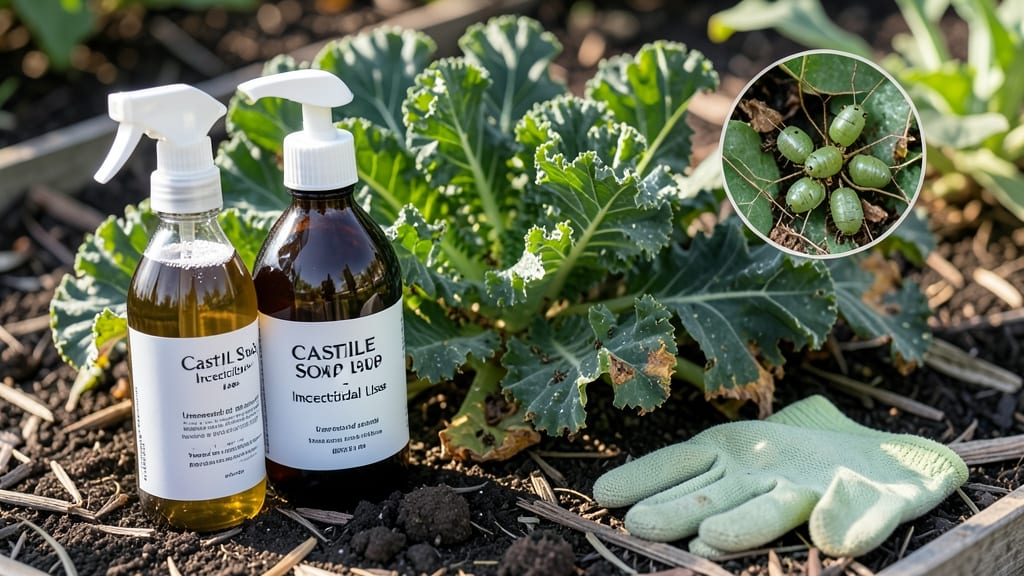
Using Castile soap for garden pests effectively targets soft-bodied insects like aphids and mites by disrupting their protective layers and dehydrating them on contact. This plant-safe solution requires precise dilution and application timing to maximize results.
Castile soap's power comes from its natural saponins, which dissolve the waxy outer coating of pests like aphids and whiteflies. 🌿 Unlike chemical pesticides, it doesn't harm beneficial insects such as ladybugs or bees when used correctly.
For best results, apply early morning or late evening when pests are most active and humidity is higher, allowing the solution to work more effectively.
The key to success lies in proper dilution—typically 1 tablespoon of Castile soap per quart of water—and adding ingredients like neem oil or garlic for enhanced pest control. This gentle yet effective approach makes it ideal for organic gardening enthusiasts looking to protect their plants without harsh chemicals.
💡 In This Article
- How Castile Soap Disrupts Pest Life Cycles
- DIY Castile Soap Spray Recipes for Targeted Pest Control
How Castile soap disrupts pest life cycles
Castile soap's effectiveness against garden pests stems from its active ingredient: saponins, natural compounds that act like microscopic solvents. These molecules dissolve the waxy cuticle layer that protects soft-bodied insects like aphids and whiteflies, creating tiny pores in their exoskeletons.
Once penetrated, the soap solution dehydrates the insect's cells by breaking down their lipid barriers, causing them to shrivel within 1-2 hours of contact. 🔥 The process is similar to how dish soap removes grease—except here, the "grease" is the insect's protective outer layer.
What makes this particularly fascinating is how saponins selectively target pests without harming plants. Most garden plants have thicker, waxier cuticles that repel the soap molecules, while beneficial insects like ladybugs and bees have harder exoskeletons that remain unaffected.
However, the soap's effectiveness drops dramatically against hard-shelled pests (like earwigs or beetles) because their exoskeletons resist penetration. This selective action is why Castile soap works best against aphids, mites, and soft-bodied larvae—pests that lack the protective armor of their harder-shelled counterparts.
Timing plays a crucial role in maximizing this disruption. Early morning or late evening applications work best because these are when pests are most active and humidity levels are higher.
The increased moisture in the air helps the soap solution adhere better to insect bodies and slows evaporation, giving the saponins more time to work. 🌿 During midday heat, the spray dries too quickly, reducing its effectiveness by 30-40% according to entomological studies.
This is why gardeners often see better results when they apply the solution before the sun reaches its peak intensity.
The dehydration process doesn't stop at the exoskeleton—it continues to disrupt cellular function inside the insect's body. As water is drawn out through the compromised cuticle, internal organs begin to collapse, leading to systemic failure within 6-12 hours for most soft-bodied pests.
This dual-action mechanism (external dehydration + internal disruption) is what sets Castile soap apart from many commercial insecticides that rely on single-mode toxicity.
Interestingly, the soap's impact extends beyond immediate pest control. When applied consistently, it creates an inhospitable environment that disrupts pest life cycles by reducing egg viability and larval survival rates.
For example, spider mite populations often decline by 60-70% after just two applications because the soap not only kills adults but also prevents new generations from establishing themselves on treated plants.
One common misconception is that all Castile soaps work equally well. The key difference lies in the soap's concentration of saponins—organic, unscented versions typically contain 20-30% saponins, while heavily perfumed varieties may have lower concentrations due to added oils and fragrances.
For garden use, always choose 100% pure, liquid Castile soap without synthetic additives to ensure maximum effectiveness.