
Fertilization
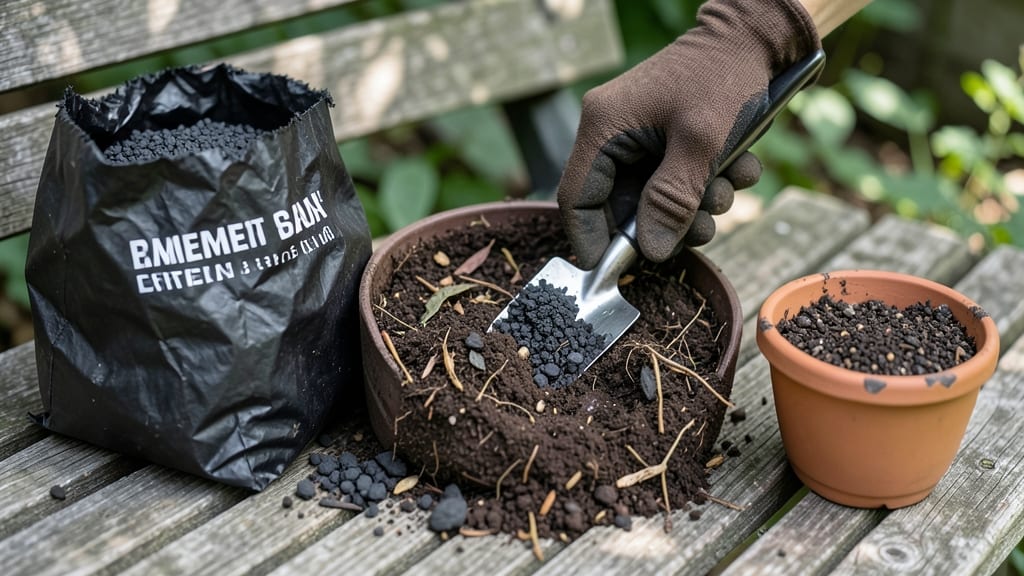
Charcoal in gardening acts as a natural soil amendment that improves drainage, locks in moisture, and balances pH levels while supplying key minerals like calcium and magnesium for stronger plant development.
This natural amendment works by creating tiny air pockets that boost aeration while its porous structure attracts and holds water—perfect for sandy or clay-heavy soils. 🔥 Unlike chemical fertilizers, charcoal also acts as a detoxifier, binding heavy metals and excess salts that can harm roots.
I’ve seen dramatic improvements in container gardens where I mix it with compost, especially for acid-loving plants like blueberries and hydrangeas.
For best results, use activated charcoal (not regular BBQ briquettes) and apply it as 10-20% of your compost mix. The key is moderation—too much can make soil too alkaline, while too little won’t deliver noticeable benefits. Start small, monitor your plants’ response, and adjust as needed.
💡 In This Article
- How Activated Charcoal Benefits Soil Chemistry
- Best Ways to Apply Charcoal for Different Garden Needs
How activated charcoal benefits soil chemistry
Activated charcoal works like a microscopic sponge in your soil, thanks to its highly porous structure created during high-temperature activation. These tiny pores—some as small as 0.5 nanometers—give charcoal an enormous surface area (up to 1,500 square meters per gram).
This allows it to adsorb harmful substances like pesticides, heavy metals (such as lead and cadmium), and excess salts through weak van der Waals forces, preventing them from reaching plant roots. 🔥 The process is different from absorption (where substances enter the material), making charcoal uniquely effective at cleaning soil without altering its structure permanently.
The real magic happens at the molecular level where charcoal's carbon atoms form a lattice that can exchange positively charged ions (like calcium, magnesium, and potassium) with the soil solution. This cation exchange capacity (CEC) typically ranges from 100-300 meq/100g for activated charcoal—comparable to high-quality compost but more stable.
For example, when you add charcoal to acidic soil (pH <6.0), its alkaline ash content (from wood minerals) gradually raises the pH toward neutral (6.0-7.0), creating ideal conditions for nutrient uptake. This dual action—detoxifying while balancing pH—explains why gardeners see healthier foliage and stronger root systems within 4-6 weeks of application.
Charcoal also becomes a microbial hotel, providing shelter and food for beneficial bacteria and fungi. The porous structure traps organic matter where microbes can break it down more efficiently, releasing nutrients like nitrogen and phosphorus in forms plants can absorb.
Studies show soils amended with charcoal can have 20-30% more microbial activity compared to untreated soil. The increased aeration from charcoal's structure creates tiny oxygen-rich pockets that prevent anaerobic conditions where harmful bacteria thrive—this is why charcoal works particularly well in waterlogged or compacted soils where roots struggle to breathe.
One often-overlooked benefit is charcoal's ability to retain moisture without suffocating roots. While it doesn't hold water like hydrogels, its porous structure creates capillary action that draws water toward plant roots while preventing waterlogging.
In sandy soils where water drains too quickly, adding 10-15% charcoal by volume can increase water retention by 30-40%, maintaining consistent moisture levels that reduce transplant shock. The texture becomes lighter and more crumbly—similar to volcanic pumice—while still providing structural support for delicate root systems.
For acid-loving plants like blueberries or azaleas, charcoal's pH-balancing effects are particularly valuable. These plants thrive in pH 4.5-5.5 ranges where most garden soils are too alkaline. By gradually neutralizing acidity while providing micronutrients, charcoal creates an environment where these plants can access phosphorus and iron more efficiently.
The visual difference is striking: leaves develop deeper green hues, and flowering becomes more abundant within 2-3 growing seasons. This chemical balancing act is what makes charcoal a versatile amendment for both vegetable gardens and ornamental landscapes.
What most gardeners don't realize is that charcoal's benefits extend to the long-term carbon sequestration it enables. As organic matter decomposes on charcoal's surface, some carbon becomes stabilized in the soil rather than released as CO₂.
This process mimics natural forest ecosystems where charcoal (called biochar) has been found in soils for thousands of years. The result? Healthier soils that store more carbon while producing better crops—a win for both your garden and the environment. 🌱