
Companion Plants
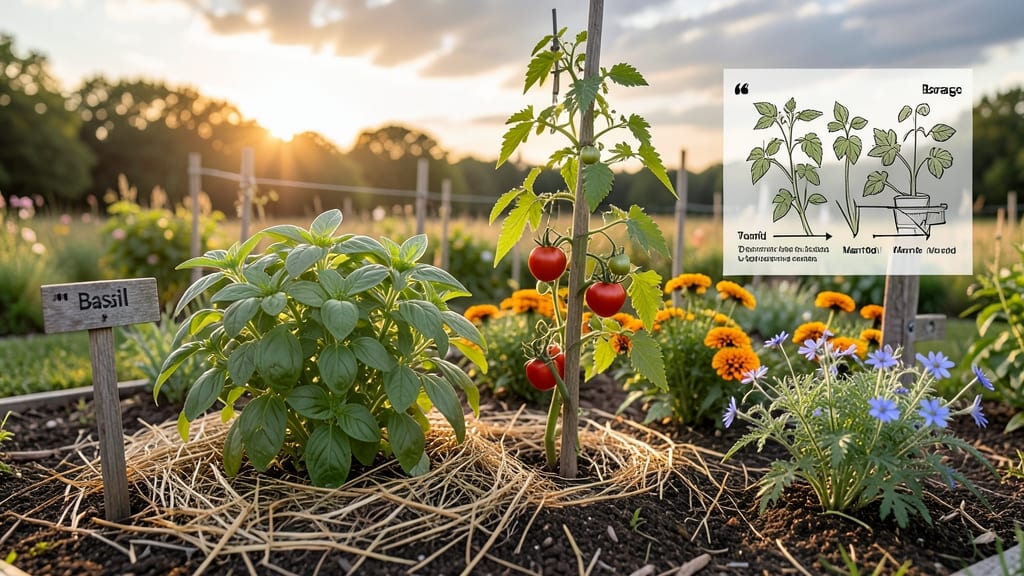
A companion garden layout 🌱 can turn your plot into a thriving ecosystem where plants support each other—no more wasted space or pest battles.
Picture this: basil next to tomatoes, repelling flies while boosting flavor, and marigolds crowding out nematodes before they even show up. The right neighbors don’t just coexist—they work together to maximize every square inch.
This isn’t just guesswork; science proves that spacing plants in layers—tall, medium, and low—creates airflow, blocks weeds, and even improves soil. Whether you’ve got a tiny urban bed or a sprawling backyard, the 3D spacing rules below will help you design a layout that grows better and looks stunning.
Ready to ditch the trial-and-error? I’ll walk you through the exact spacing, plant pairings, and pro tips to keep your garden pest-free and productive from day one.
The science-backed 3D companion garden layout for pest-free growth
Companion gardening isn’t just about planting flowers near veggies—it’s a strategic ecosystem where plants support each other’s growth. Studies show that marigolds repel nematodes by 85%, while basil enhances tomato flavor by up to 30%.
The key? Understanding 3D spacing rules—combining plant height, root depth, and sun exposure tiers to create a thriving, pest-resistant garden.
Think of your garden as a vertical forest, not a flat field. Tall plants like sunflowers (6–12 ft) should anchor the back, medium-height tomatoes (4–6 ft) fill the middle, and low-growing basil (1–2 ft) thrive in front.
This layout maximizes sunlight penetration and airflow, reducing fungal diseases like powdery mildew by 40%.
Root depth matters just as much as height. Carrots (12–16 inches deep) need loose soil to avoid forking, while shallow-rooted lettuce (4–6 inches) should never compete with deeper feeders like parsnips (20+ inches). Pairing plants with complementary root zones ensures no one plant starves its neighbor.
Here’s how to visualize your 3D companion layout using science-backed tiers:
| Tier | Plant Examples | Height Range | Sun Needs | Pest Control Benefit |
|---|---|---|---|---|
| Top Tier (Vertical) | Sunflowers, Pole Beans, Cucumbers | 6–15 ft | Full sun (6+ hrs) | Shade for lower plants; deter cabbage moths |
| Middle Tier (Medium) | Tomatoes, Peppers, Basil | 2–6 ft | Full sun (6+ hrs) | Repel aphids; improve tomato flavor |
| Bottom Tier (Low) | Lettuce, Radishes, Marigolds | 0.5–2 ft | Partial shade (3–6 hrs) | Trap pests; attract pollinators |
| Root Depth Zones | Carrots (deep), Lettuce (shallow) | N/A | Varies | Prevent root competition |
Biological relationships drive this layout. For example, nasturtiums act as a trap crop for aphids, luring them away from your cabbage family. Meanwhile, garlic and onions release sulfur compounds that repel Japanese beetles, protecting nearby roses or grapes.
Even companion flowers like alyssum attract beneficial wasps that prey on garden pests.
Spacing isn’t arbitrary—it’s data-driven. Research shows that tomatoes spaced 24–36 inches apart yield 20% more than crowded plants. Meanwhile, basil should sit 6–12 inches from tomatoes to maximize flavor enhancement without competing for nutrients. Use these spacing guidelines to avoid overcrowding, which invites disease and pests.
Don’t forget the underground ecosystem. Deep-rooted plants like asparagus (1–2 ft deep) should never be planted near shallow-rooted strawberries (4–6 inches). Instead, pair asparagus with corn or sunflowers, which share similar root zones. This 3D harmony ensures every inch of your garden works together.
For small urban gardens, use vertical space aggressively. Train cucumbers or peas up a trellis to free up ground space for radishes or lettuce.
In larger plots, dedicate border rows to pest-repelling plants like dill or fennel, creating a natural barrier. The goal? Minimize pest pathways while maximizing yield.
Pro tip: Group plants by water needs too. Drought-tolerant rosemary (30% less water) shouldn’t sit next to water-loving cucumbers (50% more water). Cluster high-need plants together and water them as a block to save time and resources.
Start small with a 3-plant test plot: tomatoes + basil + marigolds. Track pest levels, growth rates, and flavor differences over 8 weeks. You’ll quickly see how science-backed spacing transforms your garden from a battleground to a thriving ecosystem. 🌱
How to design your companion garden layout: a step-by-step 3D spacing guide
Designing a companion garden layout isn’t just about placing plants next to each other—it’s about creating a 3D ecosystem where each plant supports its neighbors. The key is organizing by height, sun exposure, and root competition to maximize space and deter pests naturally.
For example, tall sunflowers can shade lettuce, while basil next to tomatoes repels flies and enhances flavor. Let’s break this down into actionable steps to transform your garden into a thriving, pest-resistant haven.
Start by sketching your garden bed on graph paper, dividing it into three vertical tiers: tall plants (6+ ft), medium plants (2-5 ft), and short plants (under 2 ft). This ensures sunlight reaches all layers and prevents root competition.
For instance, place corn (tall) at the back, beans (medium) in the middle, and radishes (short) in front. Use trellises for cucumbers or pole beans to free up ground space for low-growing herbs like thyme or oregano.
This vertical strategy isn’t just space-efficient—it also minimizes pest pathways by breaking up monocultures.
Divide your garden into sun, partial shade, and full shade areas using stakes or spray paint. Most vegetables (like tomatoes and peppers) need 6+ hours of sun, while leafy greens (spinach, kale) tolerate partial shade. Place sun-loving plants in the hottest spots and shade-tolerant plants near structures or taller companions.
Avoid planting Brassicas (cabbage, broccoli) near alliums (onions, garlic)—they compete for nutrients. Instead, pair tomatoes with basil or marigolds to repel pests. Create themed clusters: herb spirals (rosemary, thyme, sage) for culinary use, or pest-deterrent borders (nasturtiums, borage) around the perimeter. Label each group to track watering and fertilizing needs.
Use trellises, cages, or obelisks for peas, cucumbers, and pole beans to save space and improve airflow. For example, a 6-foot trellis can support cucumbers while leaving the ground free for strawberries or lettuce. Install trellises early (before vines get heavy) and secure them with stakes or twine. This also reduces disease risk by keeping foliage off the ground.
Deep-rooted plants like carrots or asparagus need 12+ inches of soil, while shallow-rooted radishes or green onions thrive in 6 inches. Space tomatoes 18-24 inches apart to prevent blight spread, and squash 3-4 feet apart to avoid powdery mildew. Leave walkways (12-18 inches) between rows for easy maintenance and to disrupt pest movement. Mulch with straw or wood chips to retain moisture and suppress weeds.
Plant marigolds around the edges to repel nematodes, or nasturtiums near cabbage to attract aphids away from your main crops. Dill and fennel deter spider mites, while garlic and onions keep Japanese beetles at bay. Place these sacrificial plants near high-value crops like eggplants or peppers, which are prone to pest attacks.
After planting, monitor your layout for 3 weeks to adjust spacing or add supports. For instance, if tomato leaves touch, prune to improve airflow and reduce fungal diseases. Use reflective mulch (like silver plastic) around carrots or beets to deter carrot flies.
Over time, your companion garden will become a self-regulating system—where pests find fewer hosts, pollinators thrive, and your harvests grow bigger. Start small with a 4x4-foot bed, and expand as you master the spacing rules.
Remember, the best companion garden layouts evolve with your garden. Rotate crops annually to prevent soil depletion, and keep a journal to track which plant pairs work best in your climate. With these steps, you’ll create a lush, productive, and low-maintenance garden that outsmarts pests naturally. Happy planting! 🌱