
Blooming
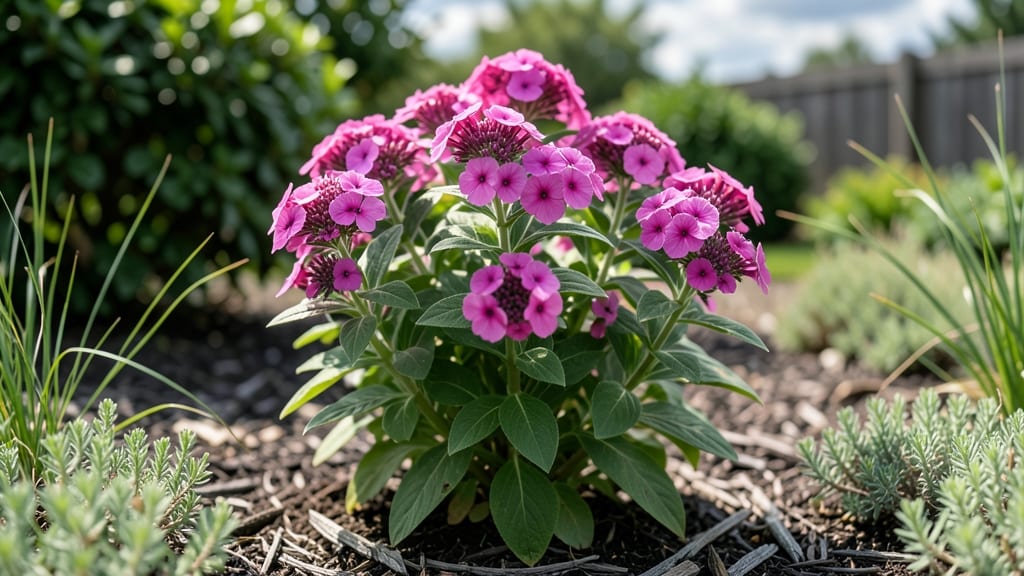
Garden phlox don't bloom all summer long—they typically flower from mid-summer through early fall, peaking between July and September. While some varieties may produce occasional blooms into October, consistent summer-long flowering requires regular deadheading and proper care.
Garden phlox are summer's late bloomers, not year-round performers. 🌸 Their natural cycle aligns with warmer months when daylight hours gradually shorten, triggering their peak bloom period.
What makes them special is their ability to produce sporadic second flushes if you remove spent blooms consistently—this technique can extend their display by several weeks.
I've found that varieties like 'David' or 'Jeanne d'Arc' naturally have longer bloom seasons, often lasting until frost, but even these benefit from proper care to maximize their potential.
Regional climate plays a huge role—northern gardeners often see earlier blooms starting in late June, while southern growers might experience more extended fall flowering. The key is understanding your phlox's natural rhythm: they're designed to put on their best show during that late summer window, not as continuous summer performers.
That's why deadheading becomes your secret weapon for encouraging those occasional late-season blooms.
💡 In This Article
- Phlox Bloom Season: Exact Months and Climate Factors
- How to Extend Phlox Blooms: Deadheading and Care Tips
Phlox bloom season: exact months and climate factors
Garden phlox are summer's late bloomers, not continuous performers. Their natural flowering cycle begins when daytime temperatures consistently reach 70°F+ and nighttime temperatures stay above 55°F, typically around late June in most regions. This timing coincides with the gradual shortening of daylight hours—a crucial trigger for their bloom cycle.
The plant's internal clock responds to this photoperiod change, signaling it's time to produce flowers rather than focus on leaf growth.
The peak bloom period usually spans from mid-July through September, with the most vibrant displays occurring in August when both temperature and humidity are ideal. However, varieties like 'David' phlox (Phlox paniculata 'David') or 'Jeanne d'Arc' often extend their show into early October, sometimes even until the first frost.
These extended bloomers typically have stronger genetic resistance to bolting (premature flowering) and can handle cooler fall temperatures better than standard types.
Regional climate creates noticeable variations in bloom timing. In cooler northern zones (USDA zones 3-5), phlox often start blooming in late June to early July and may finish by late September.
Meanwhile, in warmer southern climates (zones 7-9), the blooming window can stretch from July through November, with some varieties producing sporadic flowers even in December if temperatures remain mild.
The key difference lies in how quickly daylight shortens—northern gardens experience this change more abruptly, while southern gardens have a more gradual transition.
What most gardeners don't realize is that phlox actually have two main flowering periods: the primary flush in summer and a secondary flush in fall. This dual nature explains why you might see sporadic blooms in October—it's not continuous flowering but rather a delayed second wave.
The plant conserves energy during hot summer months, then responds to cooler temperatures by producing another round of buds. This biological strategy helps phlox survive in their native habitats where summer droughts are common.
Daylight hours play a more significant role than most people assume. Phlox are considered "short-day" plants, meaning they flower in response to decreasing daylight rather than increasing temperatures. When days shorten below 14 hours of light (typically in late July), phlox begin their peak flowering.
This explains why northern phlox often bloom earlier than southern ones—they experience the critical daylight threshold sooner. In contrast, southern phlox may wait until August or September before responding to the light change.
One fascinating exception occurs with certain hybrid varieties bred for extended blooming. These cultivars have been genetically modified to have a broader sensitivity range to daylight changes, allowing them to produce flowers over a 6-8 week period rather than the typical 4-6 weeks.
For example, 'Miss Wilford' phlox often blooms from July through October with proper care, while standard varieties might finish by early September. The difference comes down to how their genetic makeup responds to environmental cues.