
How To
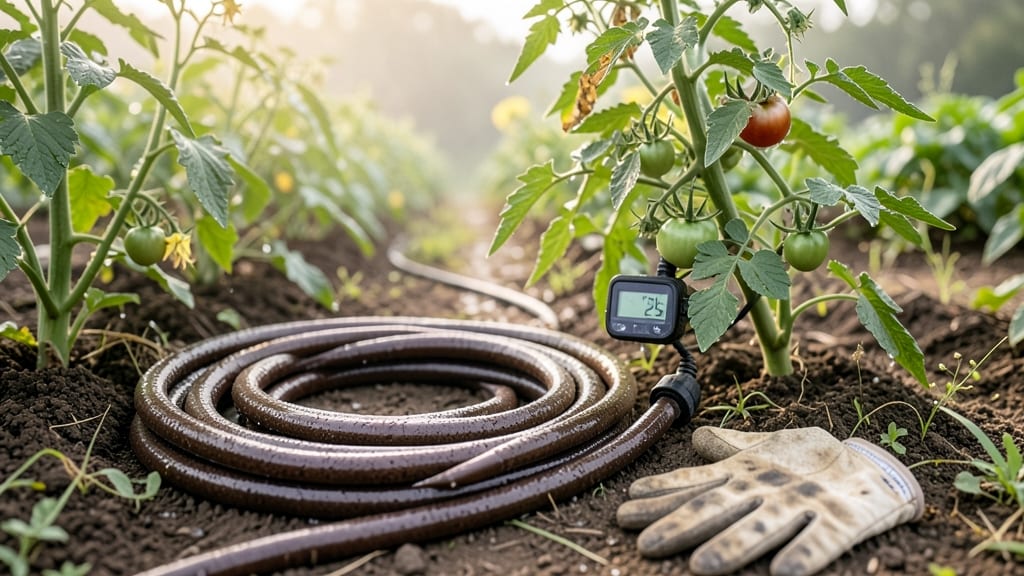
Leaving your soaker hose on your vegetable garden 🥬 for the right amount of time ensures deep root growth without waste—typically between 30 minutes and 2 hours, depending on soil and weather.
Struggling to balance watering your vegetable garden without overdoing it? Soaker hoses are a game-changer—but timing is everything to avoid root rot or wasted water.
Most gardeners guess, but science-backed timing saves time and keeps your crops thriving. Sandy soil drains faster, so 30 minutes may be enough, while clay holds moisture longer, requiring up to 2 hours.
Below, I break down how long to run your soaker hose by plant type, season, and soil—plus signs your garden is getting too much (or too little) water.
Optimal soaker hose duration by plant type and soil conditions
Soaker hoses are my go-to for vegetable gardens because they deliver water directly to roots while minimizing waste. But how long should you leave them running? The answer depends on plant type, soil composition, and even your climate zone.
For example, leafy greens like lettuce need frequent, shallow watering, while root crops such as carrots thrive with deeper, less frequent soaks. Let’s break down the science-backed timing for your garden’s needs.
Soil type plays a critical role in water absorption rates. Sandy soil drains quickly, requiring shorter soaker hose sessions (15-30 minutes), while clay soil holds moisture longer, often needing just 30-60 minutes.
In arid climates, you’ll need longer sessions (up to 2 hours) to compensate for high evaporation, whereas humid regions may only need 30-45 minutes. Understanding these variables ensures your vegetables get the right amount without over- or under-watering.
Here’s a visual comparison to help you adjust your soaker hose schedule based on your garden’s unique conditions:
For leafy greens, shorter sessions (20-45 minutes) are ideal because their shallow roots absorb water quickly. In contrast, root crops like carrots and beets need longer sessions (60-120 minutes) to encourage deep root growth.
If you’re growing fruiting plants such as tomatoes or peppers, aim for 45-120 minutes, depending on your soil and climate. These plants need consistent moisture to support heavy fruit production.
In sandy soil, water drains so fast that you’ll need to run the soaker hose for shorter periods but more frequently. For instance, leafy greens in sandy soil might only need 20 minutes daily, while root crops could require up to 90 minutes every 3 days.
Conversely, clay soil holds moisture longer, so you can extend your soaker hose time to 30-60 minutes for leafy greens and up to 120 minutes for root crops, but you’ll need to space out watering sessions.
Climate also dictates your soaker hose schedule. In arid regions, evaporation rates are high, so you’ll need longer sessions (up to 2 hours) to ensure water penetrates deeply. In humid climates, shorter sessions (20-45 minutes) are often sufficient because the air retains moisture longer.
Always monitor your garden’s soil moisture by sticking your finger 1-2 inches deep; if it feels dry, extend your soaker hose time slightly.
Pro tip: Mulch around your
Signs your vegetable garden needs more (or less) soaker hose time
Your vegetable garden communicates its water needs through subtle clues—if you know what to look for. Wilting leaves or dry soil crust are clear signals your plants need more soaker hose time, while yellowing foliage or mushy roots warn of overwatering.
Seasonal shifts also demand adjustments: summer heat requires longer soaking sessions, while spring and fall often need shorter durations.
Start by checking the top 2 inches of soil—if it feels bone-dry, extend your soaker hose session by 15-30 minutes. For container-grown veggies, they dry out faster, so monitor daily.
Root crops like carrots or beets need consistent moisture, while leafy greens tolerate slightly drier conditions. Pay attention to these visual cues to fine-tune your watering schedule.
⚠️ callout-warning ⚠️
Leaving your soaker hose on too long can suffocate roots by displacing oxygen. Signs of overwatering: Yellowing leaves, mold growth, or soil that stays soggy for days. Solution: Limit sessions to 1-2 hours max unless your soil is exceptionally sandy.
💧 Pro Tip: Use the "squeeze test"—if water drips from the hose after 30 seconds of turning it off, you’re likely overwatering.
In summer months, increase soaker hose time by 30-50% due to evaporation, but water in the early morning to prevent fungal diseases. Spring and fall usually require shorter sessions—20-45 minutes—as cooler temps slow water loss.
Adjust based on rainfall too: skip watering if you’ve had 1 inch of rain in the past 24 hours.
Watch for uneven water distribution—if some plants wilt while others thrive, reposition your soaker hose for even coverage. Mulch helps retain moisture, reducing the need for longer sessions.
For heavy clay soil, shorter but more frequent watering prevents compaction. Always prioritize deep watering over light sprinkles to encourage strong root growth.
For newly transplanted seedlings, keep the soaker hose on for 10-15 minutes daily until they establish roots (about 2 weeks). Mature plants like tomatoes or peppers need 1-2 inches of water weekly, while drought-tolerant varieties (e.g., Swiss chard) can handle shorter sessions.
Use a moisture meter for precise readings if unsure.
Listen to your garden—it’s always telling you what it needs. By tuning into these signs, you’ll master the art of soaker hose timing and keep your veggies thriving without waste. Adjust weekly based on weather, soil, and plant responses for perfect results. 🌱