
Watering
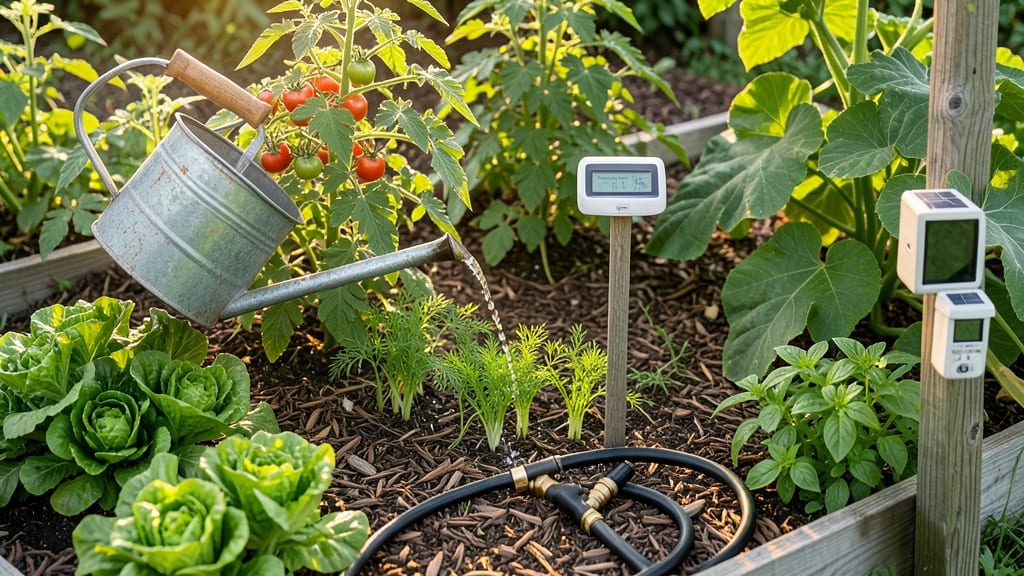
A vegetable garden 🥬 needs about 1 to 2 inches of water per week to thrive, but the exact amount depends on what you’re growing, your soil, and the weather.
Picture this: You water your tomatoes every morning, but they’re still drooping by noon. Or your lettuce bolts to seed because it got too dry. These are classic signs of watering too much or too little—and they’re more common than you’d think.
The key is understanding how much each plant truly needs, not just guessing.
Leafy greens like spinach and kale need consistent moisture, while root crops like carrots and potatoes prefer deeper, less frequent watering. Then there’s the soil: clay holds water longer than sandy soil, and summer heat can dry out your garden in half the time.
This guide breaks it all down so you can water with confidence, not confusion.
You’ll learn how to adjust for drought, rain, or extreme heat, plus the best watering methods to save time and keep your plants happy. No more wasted water or wilted plants—just a vegetable garden that grows like a dream.
Weekly water requirements for common vegetable plants by type
Watering your vegetable garden isn’t a one-size-fits-all task. Different plants have unique needs—leafy greens like spinach need consistent moisture, while root vegetables such as carrots prefer deeper, less frequent watering. Even fruiting plants like tomatoes demand more water during flowering and fruiting stages.
Without precise watering, you risk stunted growth, blossom end rot, or bolted greens. Let’s break down the weekly water needs for each category so you can tailor your approach.
Most vegetable plants thrive with 1 to 2 inches of water per week, but this varies based on soil type, climate, and growth stage. For example, sandy soil drains quickly, requiring more frequent watering, while clay soil holds moisture longer, reducing the need for daily checks.
Seasonal shifts also play a role—summer heat can double water requirements, while cooler months may halve them. Understanding these ranges ensures your garden stays hydrated without drowning.
| Plant Type | Weekly Water Needs | Key Adjustments | Example Plants |
|---|---|---|---|
| Leafy Greens | 1.5–2 inches | Increase during bolting; reduce in humidity | Lettuce, Spinach, Kale |
| Root Vegetables | 1–1.5 inches (deep water) | Avoid surface watering; keep soil moist | Carrots, Beets, Radishes |
| Fruiting Plants | 2–3 inches (especially during fruit set) | Increase during flowering/fruiting; mulch heavily | Tomatoes, Peppers, Cucumbers |
| Herbs | 1–1.5 inches (most prefer less) | Reduce for Mediterranean herbs; increase for basil | Basil, Parsley, Thyme |
| Seedlings | 0.5–1 inch (keep soil damp) | Use shallow trays; avoid overhead watering | All young plants |
Let’s start with leafy greens, which need consistent moisture to prevent bolting (when they flower prematurely). Plants like lettuce and spinach require 1.5 to 2 inches of water per week, split into 2-3 watering sessions.
Overwatering can lead to rot, while underwatering causes bitter leaves. Use a moisture meter to check soil dampness—aim for the top 1-2 inches to stay moist but not soggy.
Root vegetables, including carrots and beets, have different needs. They thrive with 1 to 1.5 inches of water per week, delivered deeply to encourage root growth. Shallow watering can cause forked or stunted roots. For example, carrots need consistent moisture but hate soggy soil. Water in the morning to reduce evaporation and fungal risks, especially in humid climates.
For fruiting plants like tomatoes and peppers, watering becomes critical during flowering and fruiting stages. These plants need 2 to 3 inches of water weekly, with extra attention during heatwaves. Tomatoes, for instance, wilt quickly in dry conditions and may develop blossom end rot if water is inconsistent.
Mulch heavily around the base to retain moisture and cool roots, reducing stress.
Herbs often fly under the radar but have specific needs too. Most herbs, like thyme and rosemary, prefer 1 to 1.5 inches of water per week and can handle drought better than overwatering.
However, basil is an exception—it loves moisture and may wilt if underwatered. Always check soil moisture before watering; herbs in containers dry out faster than those in the ground.
Seedlings are the most delicate stage and require 0.5 to 1 inch of water per week, delivered gently to avoid disturbing their roots. Use a spray bottle or shallow tray to keep soil evenly moist.
Overhead watering can spread disease, so opt for drip irrigation or a watering can with a fine rose attachment. Monitor seedlings daily—wilting or yellowing leaves signal a need for adjustment.
Adjusting for drought or rain is key to success. During droughts, increase watering by 25-50% and water deeply to encourage root growth. If rain is forecast, reduce watering to prevent over-saturation.
In clay soil, water less frequently but more deeply, while sandy soil may need daily checks. Always prioritize morning watering to minimize evaporation and fungal diseases.
Remember, these are general guidelines. Your local climate, soil type, and microclimate will dictate exact needs. Keep a garden journal to track what works best for your space. With precision watering, you’ll see healthier plants, better yields, and fewer pests—all while saving time and water.
How to adjust watering based on soil, climate, and plant stage
Your vegetable garden’s water needs aren’t one-size-fits-all. Sandy soil drains water like a sieve, while clay soil holds moisture like a sponge. Even the same plant—like tomatoes—needs different care as a seedling versus a fruit-bearing vine. Let’s break down how to tweak your watering schedule for real results.
Climate plays a huge role too. In hot, dry climates, plants lose water 3x faster than in humid regions. A morning watering in Arizona might mean daily soaking, while a coastal garden in Oregon could thrive on bi-weekly deep waterings.
Ignoring these factors leads to wilting leaves or root rot—both preventable with the right adjustments.
⚠️ callout-warning
Overwatering kills 2x more plants than underwatering. Soggy soil cuts off oxygen to roots, while dry soil causes stress cracks. Here’s how to spot the difference:
- Overwatered: Yellow leaves, mushy stems, fungus on soil
- Underwatered: Crispy edges, wilting even after watering, dry soil 1" deep
Pro Tip: Stick your finger 1 inch into soil. If it’s dry, water. If it’s damp, wait.
Start with your soil type. Sandy soil needs frequent, shallow waterings (every 1-2 days) because it drains fast. Clay soil, however, holds water for 5-7 days—overwatering here is a common trap.
Test your soil: Grab a handful. If it crumbles easily, it’s sandy. If it forms a tight ball, it’s clay.
Next, adjust for plant stages. Seedlings need consistent moisture—think of them like babies in a humidifier. Once established, tomatoes or peppers can handle deep watering every 3-4 days. The key? Water at the base, not the leaves, to avoid fungal diseases like blight.
Climate shifts demand quick action. In summer heat, mulch with straw or wood chips to lock in moisture. In humid climates, water early in the morning to let foliage dry before evening. And if rain is forecasted, skip watering—overdoing it drowns roots faster than drought wilts them.
Use this water stress checklist weekly: Check leaf color, soil moisture, and plant growth. Dull, drooping leaves? Water more. Yellowing or mold? Cut back. Adjust your schedule seasonally—spring needs steady hydration, while fall can taper off as growth slows.
Your garden will reward you with healthier plants and bigger yields when you water with intention, not guesswork.