
How To
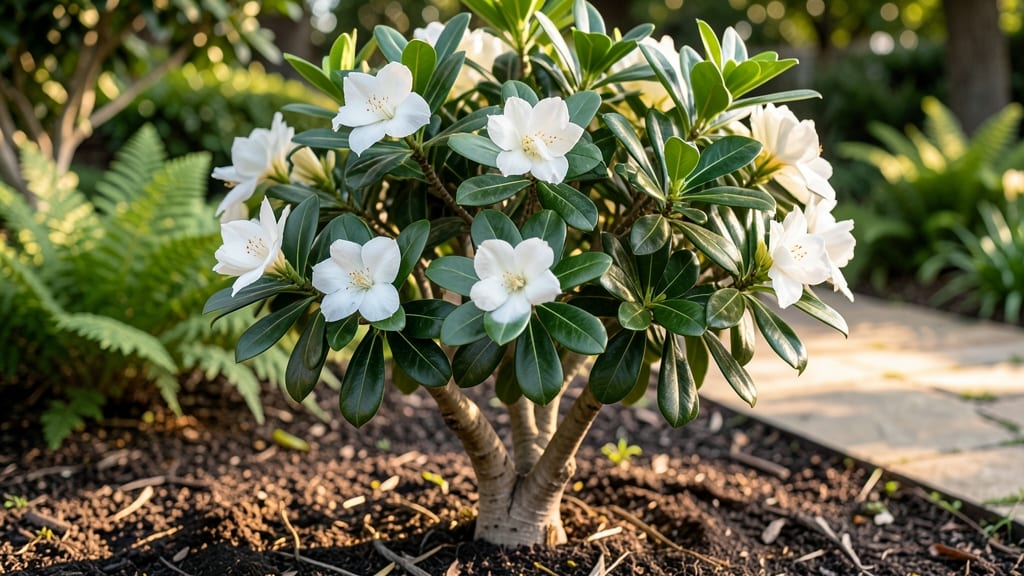
How tall does a gardenia tree grow? The answer depends on the variety and growing conditions, ranging from a compact 3 feet to a towering 15 feet—and that’s the first thing to consider before planting.
If you're dreaming of fragrant gardenias but wondering whether they’ll dwarf your backyard or thrive as a towering centerpiece, their mature height is the first question to answer. Some varieties reach over 20 feet while others stay compact enough for containers.
The most common type, Gardenia jasminoides, typically grows between 6 and 10 feet at maturity, making it a versatile choice for both small patios and larger landscapes. However, without proper pruning, even these medium-sized varieties can grow taller than expected.
In this guide, you’ll discover how to control your gardenia’s height through pruning, which varieties stay small enough for containers, and how climate affects growth. Let’s break it down so you can pick the perfect size for your space.


Gardenia tree height by variety: from dwarf to giant
Gardenia trees are beloved for their intoxicating fragrance and glossy foliage, but their mature height can vary dramatically depending on the variety. Some stay compact enough for container gardening, while others grow tall enough to serve as privacy screens.
Understanding these differences helps you choose the perfect gardenia for your space—whether it's a balcony planter or a backyard focal point.
Most gardenias fall into three height categories: dwarf (3–6 feet), semi-dwarf (6–10 feet), and standard (10–15 feet). The most common species, Gardenia jasminoides, typically reaches 6–10 feet at maturity, but with proper pruning, you can keep it smaller.
Meanwhile, Gardenia augusta and Gardenia radicans offer unique growth habits—some sprawling like vines, others forming dense shrubs.
Here’s how to visualize the height differences at a glance:
| Variety | Mature Height | Growth Habit | Best For |
|---|---|---|---|
| Gardenia jasminoides 'Kleim's Hardy' | 3–5 ft | Compact shrub | Containers, small yards |
| Gardenia jasminoides 'Radicans' | 6–10 ft | Sprawling vine | Trellises, arbors |
| Gardenia augusta 'Veitchii' | 10–15 ft | Tree-like | Privacy screens, hedges |
| Gardenia jasminoides 'Fortuniana' | 4–6 ft | Bushy shrub | Borders, foundation planting |
| Gardenia jasminoides 'Mystery' | 8–12 ft | Upright shrub | Backyard focal point |
The dwarf varieties, like 'Kleim's Hardy', are perfect for urban balconies or window boxes. Their smaller stature makes them ideal for container gardening, where you can move them to optimize sunlight. These varieties also bloom prolifically, offering year-round fragrance with minimal space.
For those with larger spaces, tree-form gardenias like 'Veitchii' create stunning privacy screens or landmark plants. Their height—often exceeding 10 feet—makes them excellent for hedge rows or as a backdrop for patios. However, their size means they require more room to spread their roots and branches.
If you're torn between a shrub-like and tree-like gardenia, consider 'Radicans'. This variety grows as a sprawling vine, reaching 6–10 feet but with a horizontal spread that’s perfect for trellises or arbors. It’s a great middle-ground option for vertical gardening enthusiasts.
One key factor influencing height is pruning frequency. Regular pruning can keep even the tallest varieties in check, while neglect can lead to uncontrolled growth.
For example, a 'Mystery' gardenia left unpruned might reach 12 feet, but with annual trimming, it can stay around 8 feet—ideal for a small backyard.
Climate also plays a role. Gardenias in warmer zones (USDA 8–10) tend to grow faster and taller, while those in cooler climates (USDA 6–7) may stay shorter. For example, 'Kleim's Hardy' is bred for cold tolerance and rarely exceeds 5 feet, even in ideal conditions.
When choosing a gardenia, think about your long-term vision. A 3-foot dwarf might seem perfect now, but if you plan to expand your garden, you might later wish for a taller variety.
Conversely, a 12-foot tree planted near a small patio could soon feel overwhelming. Always measure your space and consider how the gardenia will evolve over time.
🌸
How to control gardenia tree height: pruning and care tips
Keeping your gardenia tree at your desired height requires a mix of strategic pruning and consistent care. Unlike fast-growing trees, gardenias grow slowly—about 6-12 inches per year—so patience is key.
The right approach can transform a sprawling shrub into a neatly shaped small tree or keep a compact variety from outgrowing its space.
Pruning at the right time and using the correct techniques prevents unintended sprawl and encourages fuller, more fragrant blooms. Whether you're working with a standard gardenia or a dwarf variety, understanding seasonal growth patterns will help you maintain control.
For container gardeners, additional strategies like root pruning and pot size management are essential to limit vertical growth.
⚠️ callout warning ⚠️
Over-pruning in late summer can shock your gardenia and reduce next year's blooms. Cutting into old wood (more than 1/3 of the branch) may prevent new growth. Always use sterilized pruners to avoid fungal infections.
✂️ Pro Tip: Never prune when buds are forming (typically late winter)—this removes potential blooms.
Start by pruning your gardenia in early spring, just as new growth begins. Remove any dead or crossing branches first, then shape the tree by cutting back overly long stems to encourage branching.
For a bushier look, trim the tips of branches to promote lateral growth. Use sharp pruners to make clean cuts at a 45-degree angle, about 1/4 inch above a leaf node.
If your gardenia is growing too tall for its space, focus on heading back the main stems. Cut just above a leaf bud or lateral branch to redirect energy downward. Repeat this process in late spring if needed, but avoid heavy pruning after June—this can delay next year's flowering.
For container gardenias, choose pots that are only 2-3 inches larger than the root ball to naturally limit growth.
Seasonal care adjustments play a crucial role in managing height. In summer, reduce watering slightly to slow growth, but keep the soil consistently moist. Apply a balanced fertilizer (like 10-10-10) every 6-8 weeks to support healthy growth without excessive elongation.
In fall, taper off fertilization to prepare the plant for dormancy, which also helps control height.
Common mistakes like pruning too late or using dull tools can lead to weak growth and disease. Always disinfect your pruners with rubbing alcohol between cuts, and avoid heavy pruning in winter when the plant is dormant.
With the right approach, your gardenia will stay within your desired height while still producing those coveted fragrant blooms. 🌸