
Tools
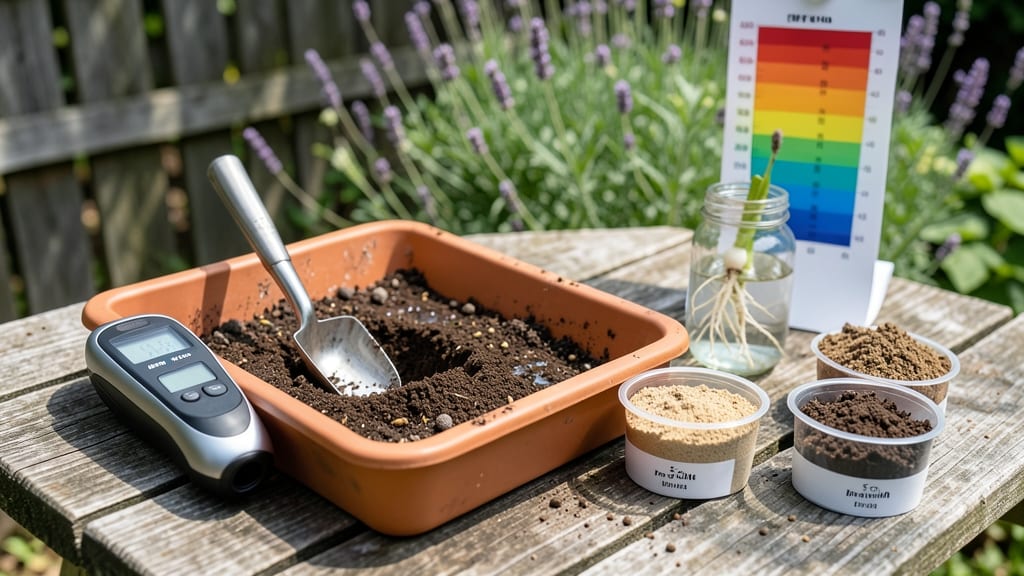
Determining the ideal pH for garden soil is crucial, as most vegetables and flowers thrive in a neutral range of 6.0 to 7.0, while acid-loving plants like blueberries and azaleas require 4.5–5.5. Since soil pH affects nutrient absorption, testing and adjusting with lime (to raise) or sulfur (to lower) ensures healthy plant growth.
The pH level of your garden soil determines which nutrients are available to your plants.
For example, a pH of 6.0–7.0 makes nitrogen, phosphorus, and potassium easily accessible, while a pH below 5.5 can lock out essential nutrients like phosphorus, even if they're present in the soil. 🌱 I've seen firsthand how a simple soil test can reveal hidden issues—like a lawn struggling because the pH is too high, making iron unavailable for green growth.
Adjusting pH isn't just about adding amendments; it's about creating the right environment for your plants to thrive.
Most gardeners focus on testing pH in spring before planting, but fall is also a great time to make adjustments for the next growing season. Organic methods like compost or peat moss can gradually shift pH, while quick fixes like sulfur or dolomitic lime work faster.
The key is patience—soil pH changes take time, especially in dense clay or sandy soils. For container gardens, I recommend testing every few months since pH can fluctuate more quickly in smaller volumes.
💡 In This Article
- How Soil pH Affects Nutrient Uptake in Plants
- Testing and Adjusting Soil pH: Step-by-Step Guide
How soil pH affects nutrient uptake in plants
Soil pH measures the concentration of hydrogen ions (H⁺) in the soil solution, and it directly controls which nutrients dissolve and become available to plant roots. At a pH of 6.0–7.0, most essential nutrients—like nitrogen, phosphorus, and potassium—remain soluble and accessible.
However, when pH drifts too high (alkaline) or too low (acidic), specific nutrients either become locked away or toxic to plants. For example, iron (Fe) and manganese (Mn) become less available in alkaline soils (pH >7.0), causing yellowing leaves even when these minerals exist in the soil.
The chemistry behind this involves nutrient solubility curves. Phosphorus, for instance, is most available at pH 6.0–7.0, while calcium and magnesium prefer slightly alkaline conditions.
Acid-loving plants like blueberries (pH 4.5–5.5) thrive because their roots can absorb aluminum and manganese, which would be toxic at higher pH levels. Meanwhile, brassicas (like broccoli) struggle below pH 6.0 due to reduced sulfur availability.
This is why a soil test isn’t just about numbers—it’s about matching your plants’ needs to the soil’s chemistry.
Extreme pH levels also disrupt microbial activity. Beneficial bacteria and fungi that break down organic matter prefer neutral to slightly acidic conditions. A pH below 5.0 can kill these microbes, reducing nutrient cycling, while a pH above 8.0 may encourage harmful pathogens.
I’ve seen gardens where soil pH was off by just 0.5 units, yet plants exhibited stunted growth or nutrient deficiencies—problems that disappeared after adjusting the pH. The takeaway? Small shifts in pH can have big consequences for plant health.
Consider the classic case of iron chlorosis in tomatoes. Even in iron-rich soil, plants can’t absorb it if the pH is too high. The solution? Chelated iron fertilizers or lowering pH with elemental sulfur.
This shows how pH isn’t just about the soil—it’s about the delicate balance between what’s in the ground and what the plant can actually use. 🌱 For example, azaleas and rhododendrons won’t bloom if their pH isn’t in the 4.5–5.5 range, regardless of how well you fertilize.
Another critical factor is the soil’s buffering capacity—the ability to resist pH changes. Sandy soils change pH quickly, while clay soils hold their pH longer. This is why raised beds often need more frequent adjustments.
For instance, a pH adjustment of 1.0 unit in sandy soil might require 5–10 pounds of lime per 100 square feet, whereas clay soil could need twice that amount. Understanding your soil type helps tailor amendments for long-term stability.
To visualize this, imagine nutrients as keys and plant roots as locks. Only the right pH "unlocks" the right nutrients. For example, phosphorus (P) is most available at pH 6.0–7.0, but if the soil is too acidic, phosphorus binds tightly to iron and aluminum, making it unusable.
This is why phosphorus deficiencies often appear as purple stems in plants—even when the soil has plenty of P. The lesson? Soil pH isn’t just a number; it’s the gateway to whether your plants get the nutrition they need to grow.