
Planting
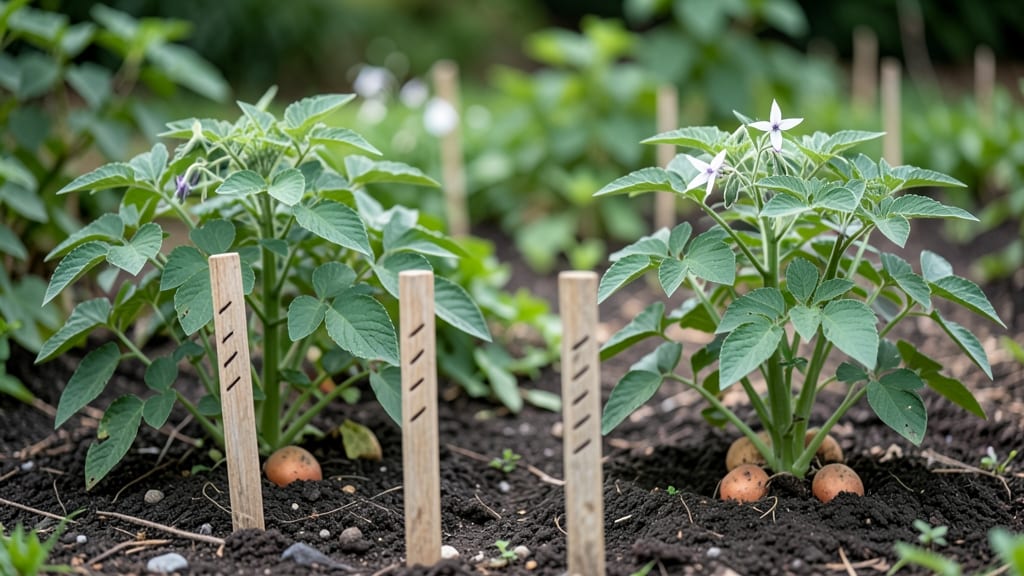
Proper potato spacing in your garden determines whether you’ll dig up a handful of small tubers or a bucketful of plump, disease-free potatoes 🥔.
Struggling to maximize your potato harvest? The secret isn’t just in the soil—it’s in the spacing. Get it wrong, and your plants will compete for nutrients; get it right, and you’ll enjoy bumper crops of crisp, flavorful tubers.
Bush varieties like Yukon Gold need 12 inches apart in rows spaced 30 inches apart, while vining types like Russets demand even more room. Crowd them too closely, and you risk blight or stunted growth. But don’t overdo it—too much space wastes precious garden real estate.
Below, I break down the exact spacing for your garden size, soil type, and even container growing. You’ll learn how to adjust for small plots, raised beds, and high-density setups—so you can grow more potatoes without the guesswork.
Optimal potato spacing by variety: bush vs vining potatoes explained
Potatoes come in two main growth types that dramatically affect how you should space them: bush (determinate) varieties and vining (indeterminate) varieties. Bush potatoes like Yukon Gold or Red Pontiac grow compactly, while vining types such as Russian Banana or Kennebec spread aggressively.
Getting the spacing right ensures healthy foliage, maximum tuber production, and easy harvesting. Let’s break down the science behind spacing for each type.
For bush potatoes, the key is tight but controlled spacing. These varieties produce tubers close to the plant base, so crowding them too much leads to smaller tubers and increased disease risk. Meanwhile, vining potatoes need room to sprawl, as their long stems can reach 2-3 feet outward.
Without proper spacing, their vines tangle, blocking sunlight and reducing yield. Both types also require proper row depth—planting too shallow can expose tubers to light, turning them green and toxic.
Here’s where spacing gets tricky: row orientation matters just as much as distance. Most gardeners plant rows north-south to maximize sunlight exposure, but for vining varieties, you might need to adjust spacing slightly wider to prevent shading between plants.
Additionally, soil type plays a role—sandy soils dry out faster, so you might space plants 10% closer to retain moisture, while clay soils benefit from wider spacing to avoid waterlogging.
Let’s dive into the specifics with this comparison table to help you visualize the ideal setup for each potato type:
| Potato Type | Row Spacing (inches) | Plant Spacing (inches) | Depth (inches) | Yield Impact |
|---|---|---|---|---|
| Bush (Determinate) | 24-30 | 10-12 | 4-6 | Compact tubers, fewer but larger |
| Vining (Indeterminate) | 30-36 | 12-18 | 4-6 | Spread-out tubers, more but smaller |
| Raised Beds | 18-24 | 8-10 (bush), 10-12 (vining) | 4 | Higher density, faster harvest |
| Containers | N/A (1 plant per 5-gallon pot) | N/A | 3-4 | Limited yield, ideal for bush types |
When planting bush potatoes, aim for 10-12 inches between plants and 24-30 inches between rows. This setup gives tubers room to form without competing for nutrients or sunlight. For example, Red LaSoda thrives in this spacing, producing 2-3 pounds per plant when conditions are ideal.
The key is to hill soil around the stems every 2-3 weeks to encourage deeper tuber formation.
Vining potatoes, on the other hand, demand more space. Stretch them out to 12-18 inches apart with 30-36 inches between rows. Varieties like Kennebec or Monalisa benefit from this wider spacing because their vines spread aggressively.
Without enough room, you’ll see stunted growth and increased disease pressure from poor airflow. Pro tip: Use straw mulch to keep soil loose and prevent vines from tangling.
One common mistake is ignoring variety-specific needs. For instance, planting Russian Banana potatoes (a vining type) at the same spacing as Fingerling potatoes (bush type) will lead to disappointment. Always check the seed packet or plant tag for recommendations.
Another error is planting too deep, which can cause rot or delay sprouting. Stick to 4-6 inches deep for most varieties, adjusting slightly for sandy soils (shallower) or heavy clay (deeper).
For small gardens or container growing, you can adjust spacing slightly. In raised beds, reduce row spacing to 18-24 inches and plant 8-10 inches apart for bush types. This high-density approach works well for early harvests but may reduce final yield.
If you’re growing in 5-gallon buckets, limit yourself to one bush potato per container—vining types won’t thrive in such confined spaces. Always prioritize well
How to adjust potato spacing for different garden conditions
Your garden’s unique conditions—like soil type, climate, and space constraints—can dramatically impact how you space potatoes. Clay-heavy soil needs wider spacing to prevent waterlogging, while sandy soil allows closer planting for moisture retention. Hot climates may require tighter spacing to shade tubers, whereas cool regions benefit from extra room for airflow.
Let’s break down how to adapt spacing for your specific setup.
For raised beds, you can cut spacing by 20-30% compared to in-ground planting. This is because raised beds drain faster and allow roots to spread more evenly.
In containers or small spaces, use high-density planting with dwarf varieties like 'Yukon Gold' or 'Red Norland,' but never sacrifice airflow—even in tight quarters.
Here’s how to adjust spacing based on your garden’s conditions:
- 1. Raised Beds: Reduce spacing to 10-12 inches apart in rows 18-24 inches apart. The elevated soil warms faster, speeding up growth and allowing closer planting.
- 2. Containers: Use 5-gallon pots per plant with 12-inch spacing between containers. Dwarf varieties like 'Patriot' thrive here, producing 2-3 lbs per pot with proper care.
- 3. Small Spaces: Try staggered planting in rows 12 inches apart, offsetting plants by 6 inches to maximize space. Ideal for 'Fingerling' varieties.
- 4. Heavy Clay Soil: Increase spacing to 18 inches apart in rows 30 inches apart to prevent soil compaction and improve drainage.
- 5. Arid Climates: Plant 12 inches apart with mulch deeply to retain moisture. Avoid overhead watering to prevent fungal diseases.
Don’t forget about companion planting to optimize space! Pair potatoes with marigolds (to deter pests) or corn (to provide shade). Avoid planting near tomatoes or peppers, as they share diseases like blight. In small gardens, use intercropping with fast-growing greens like lettuce or radishes between potato rows.
If you’re experimenting with high-density planting, start with a small test patch. Monitor your plants closely—yellowing leaves or stunted growth are signs you’ve crowded them too much. Adjust spacing mid-season if needed, but remember: airflow is non-negotiable for disease prevention.
Pro tip: Use a grid layout with string lines to maintain even spacing, especially in larger gardens. This ensures consistent growth and makes harvesting easier. With the right adjustments, you’ll turn even the trickiest garden conditions into a potato-growing powerhouse! 🥔