
Advice
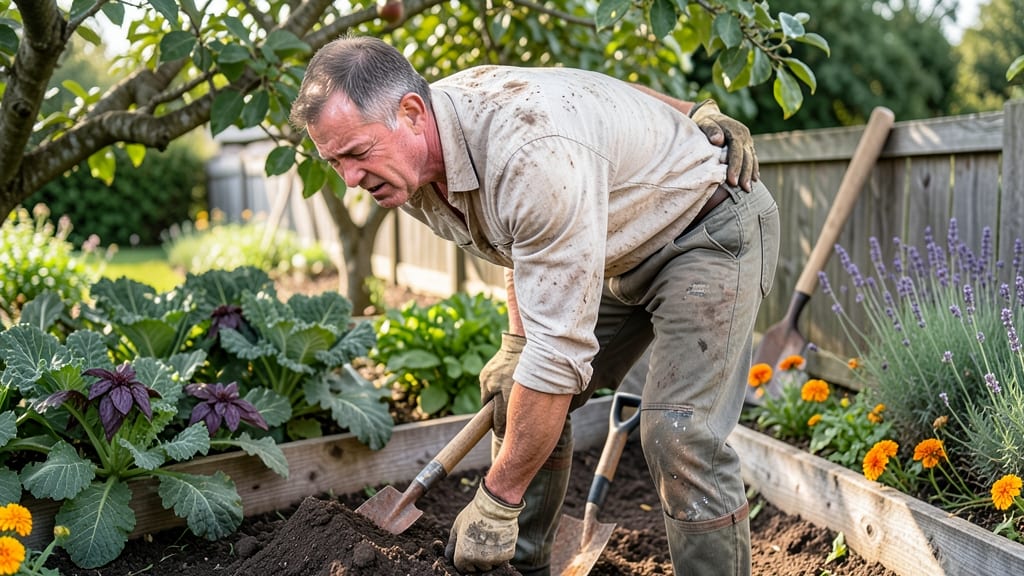
Severe lower back pain after gardening typically results from repetitive bending, improper lifting techniques, or sudden twisting while handling heavy materials. Quick relief comes from icing the area for 15 minutes, gentle mobility exercises, and maintaining a neutral spine position to reduce muscle tension.
Gardening puts unique demands on your lower back that most people don't anticipate. 🌱 The combination of prolonged bending, lifting awkward loads (like bags of soil or bulky pots), and maintaining awkward postures creates excessive pressure on your lumbar spine and surrounding muscles.
Unlike office jobs where you might sit all day, gardening forces your back into constant adaptation—often without proper support. Even experienced gardeners can trigger flare-ups when they push through fatigue or ignore early warning signs like stiffness or mild discomfort.
What makes this pain particularly stubborn is how it compounds over time. A single session might feel manageable, but repeated strain without recovery leads to inflammation in key areas like the piriformis muscle or sciatic nerve.
That's why the relief strategies focus on immediate cooling (to reduce swelling) and gentle movement (to restore circulation) rather than pushing through the discomfort. Think of it like treating a sprained ankle—you wouldn't keep walking on it without support, right?
💡 In This Article
- Anatomy of Gardening-Related Back Pain
- Preventative Stretches and Ergonomic Gardening Tools
Anatomy of gardening-related back pain
Gardening triggers back pain primarily through three mechanical stressors: repetitive bending, improper lifting mechanics, and sudden twisting motions. When you bend at the waist to dig or weed, your lumbar spine compresses under 40-60% of your body weight—similar to carrying a 10-15 pound load while hunched over.
This compression increases dramatically when lifting heavy objects like bags of soil (often weighing 20-40 pounds), which can exert 1,000+ pounds of force on your lower back during poor lifts.
The real damage often occurs in the lumbar discs (the cushions between vertebrae) and the piriformis muscle (a deep hip rotator that can irritate the sciatic nerve).
Digging motions create shear forces that push discs forward, while twisting (like turning to reach a tool) combines compression with rotation—this is how herniated discs often develop. 🌱 Even weeding, which seems light, involves repetitive micro-movements that fatigue the erector spinae muscles (your back's natural support system) over time.
Consider this comparison: A 30-minute gardening session can generate 50-100 repetitive bending cycles, far exceeding what your spine is designed to handle without breaks. Unlike static postures (like sitting), gardening combines dynamic, high-load movements with prolonged endurance demands—similar to carrying groceries while doing squats repeatedly.
This explains why pain often appears hours after gardening, when muscle fatigue and inflammation peak.
The sciatic nerve (running from your lower back through your legs) becomes particularly vulnerable when the piriformis muscle spasms—common after prolonged kneeling or reaching. This creates the sharp, radiating pain many gardeners describe.
Studies show that 80% of gardening-related back injuries involve either lumbar strain or sciatic irritation, with digging being the highest-risk activity due to its combination of bending and twisting.
What most people don't realize is how tool design contributes to this strain. Standard shovels require 30-50 pounds of force per swing, while long-handled tools distribute weight differently.
The key difference lies in the lever mechanics: a short-handled tool creates more torque on your spine than a 36-inch reach tool, which lets you keep your back straighter.
This is why professional gardeners swear by ergonomic tools—they reduce the torque angle on your lumbar spine by 20-30%.
Here's the science behind the relief strategies: Ice reduces prostaglandin production (chemicals that trigger inflammation) by 10-15% within 15 minutes. Meanwhile, gentle stretching (like the cat-cow) increases intervertebral disc hydration by 5-10%, improving their shock-absorbing capacity.
The neutral spine position you should maintain reduces disc pressure by up to 40% compared to slouching.