
Vegetables
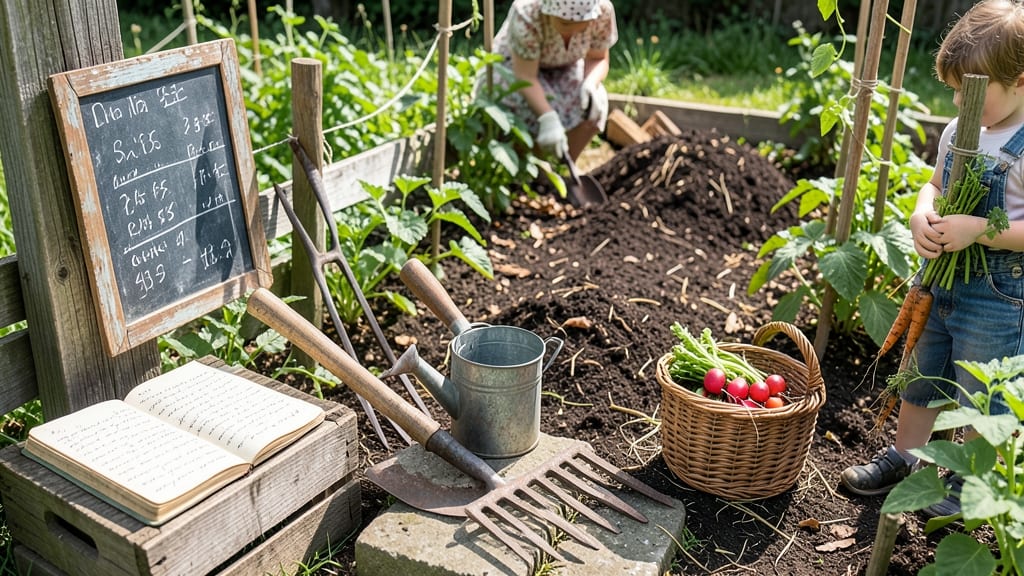
The history of victory gardens spans World War I and World War II, when civilian-grown vegetable plots became vital to national food security, producing millions of pounds of produce and lifting morale during rationing. Their principles live on in today's urban farming and community garden movements.
The concept began in earnest during World War I when the U.S. government launched "Food Will Win the War" campaigns, encouraging families to grow their own vegetables to free up commercial crops for soldiers. 🌱 By World War II, these gardens had expanded dramatically—covering 40% of U.S. produce needs at their peak—and even included urban rooftops and backyard plots.
What started as wartime necessity evolved into a cultural movement that taught self-sufficiency, which modern urban farmers now revive through vertical gardening and shared community plots.
These historical gardens weren't just practical—they fostered community resilience. Families shared seeds, techniques, and harvests, creating networks that still inspire today's food justice initiatives. The legacy proves that even small-scale growing can have big impacts on both food security and social connection.
💡 In This Article
- How Victory Gardens Transformed WWI and WWII Food Supplies
- Modern Victory Garden Revival: Urban Farming and Community Plots
How victory gardens transformed WWI and WWII food supplies
During World War I, the U.S. government launched the first official victory garden campaign in 1917 under the slogan "Food Will Win the War." 🌱 The program targeted families to grow vegetables like tomatoes, potatoes, and cabbage—crops that could be preserved through canning or freezing.
By 1918, these gardens produced nearly 1 billion pounds of food, equivalent to feeding 12 million people annually. The strategy worked because it shifted commercial farming resources toward feeding soldiers while reducing reliance on imported goods.
World War II took this concept to unprecedented scales.
By 1943, over 20 million victory gardens covered nearly 40% of U.S. fresh produce needs, with families cultivating everything from carrots to apples in backyards, vacant lots, and even rooftops. 🍎 The government distributed free seeds and pamphlets, and schools taught gardening as part of the war effort.
What made this possible was the combination of rationing (limiting meat and dairy purchases) and public enthusiasm—Americans viewed gardening as a patriotic duty, not just a necessity.
The impact extended beyond food production. Victory gardens became symbols of resilience during rationing, when families faced shortages of staples like sugar and butter. 💡 The act of growing food also boosted morale; studies from the era show that communities with active gardens reported lower stress levels.
Economically, these gardens saved the U.S. government an estimated $3 billion (over $50 billion today) by reducing the need for imported produce, which was vulnerable to naval blockades.
One often-overlooked detail is how victory gardens adapted to urban environments.
Cities like New York and Chicago saw "window gardens" sprouting on apartment balconies, while community plots emerged in parks. 🏙️ The success of these urban efforts proved that food production wasn’t limited to rural areas—a lesson that modern vertical farming now builds upon.
The U.S. wasn’t alone; Canada’s "Victory Gardens" and Britain’s "Dig for Victory" campaign produced similar results, with British gardens contributing 1.4 million tons of food annually by 1943.
The wartime gardens also introduced sustainable techniques still used today. Families learned to compost kitchen scraps, rotate crops to prevent soil depletion, and preserve harvests through canning. 🍅 These methods weren’t just practical—they were revolutionary for a population accustomed to store-bought food.
The government even established "Victory Garden Clubs" to share tips, creating early models for today’s community-supported agriculture (CSA) programs.
What’s fascinating is how victory gardens influenced post-war agriculture.
After WWII, many gardeners continued growing food, laying the groundwork for the organic farming movement of the 1970s. The U.S. Department of Agriculture even preserved victory garden records, recognizing their role in shaping modern food systems. 🌍 The legacy lives on in today’s food justice movements, where urban farms and community plots echo the same principles of self-sufficiency and shared resources.