
Planting
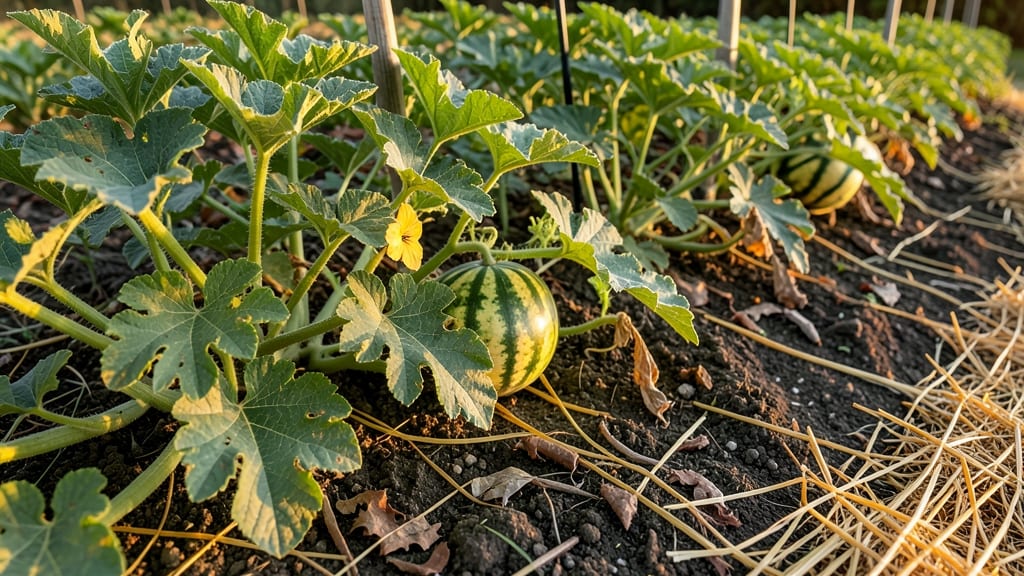
Getting the right watermelon garden spacing is the difference between tiny, bitter melons and 20-pound giants that split the bed.
Picture this: you’ve planted your 🍉 seeds with high hopes, only to watch vines tangle and fruit shrivel by midsummer. That’s not bad luck—it’s spacing gone wrong. Too close, and your melons fight for sunlight and nutrients.
Too far apart, and you waste garden real estate. The sweet spot? It’s all about the variety, the soil, and whether you’re letting those vines sprawl or training them up a trellis.
In this guide, I’ll break down the exact spacing rules for bush vs. vining varieties, how to adjust for your climate, and the 3 biggest spacing mistakes that kill yields.
Whether you’re working with 6a zone heat or a small urban plot, these proven layouts will help you grow melons that actually feed a crowd.
Ready to turn your patch into a watermelon powerhouse? Let’s dive into the numbers—and why 2 feet between plants might not be enough for your favorite heirloom.
Optimal watermelon garden spacing by variety and growing method
Watermelons are notorious for their sprawling vines, but proper spacing isn’t just about giving them room to stretch—it’s about maximizing fruit size, sunlight exposure, and airflow. Whether you’re growing vining varieties like Sugar Baby or bush types like Bush Champion, spacing directly impacts your harvest.
Too close, and you’ll get small, seedy melons; too far, and you’ll waste garden space. Let’s break down the science-backed spacing rules for every growing scenario.
First, understand that watermelons fall into three main categories: standard vining (10–15 feet spread), semi-dwarf (6–8 feet spread), and bush/dwarf (3–5 feet spread). Your growing method—whether in-ground, raised beds, or containers—will further dictate how you arrange them.
For example, a 5-gallon container might only fit one bush variety, while a raised bed can squeeze in 2–3 plants of a semi-dwarf type if spaced correctly.
Here’s the golden rule: Watermelons need 3–4 feet between plants in rows spaced 6–8 feet apart for standard vining types. But this changes dramatically for bush varieties or container growing.
Below, you’ll find a side-by-side comparison of spacing by variety and method, so you can plan your garden like a pro. This isn’t just theory—these spacing rules come from commercial growers who consistently harvest 20+ pound melons.
| Variety Type | Plant Spacing (inches) | Row Spacing (feet) | Plants per 10' Row | Growing Method | Pro Tip |
|---|---|---|---|---|---|
| Standard Vining (e.g., Crimson Sweet, Sugar Baby) | 36–48" | 6–8' | 2–3 | In-ground or raised beds | Use trellises to save space and improve airflow. |
| Semi-Dwarf (e.g., Bush Champion, Black Diamond) | 24–36" | 4–6' | 3–4 | Raised beds or containers (5+ gallons) | Ideal for small gardens—plant in hills for better drainage. |
| Bush/Dwarf (e.g., Sugar Baby, Tiny Tim) | 18–24" | 3–4' | 4–5 | Containers (10+ gallons) or small raised beds | Perfect for patios—use large pots with trellis support. |
| High-Density (e.g., 'Sugar Baby' in blocks) | 12–18" | 2–3' | 6–8 | Raised beds or square-foot gardening | Thin to 1–2 melons per vine for larger fruit. |
| Trellised Vining (e.g., 'Moon and Stars') | 24–36" | 4–5' | 3–4 | Vertical trellis or fence | Save 90% space—ideal for urban gardens. |
Now, let’s talk about why these numbers matter. Vining varieties like Crimson Sweet need that 36–48 inch spacing because their vines can spread 10–15 feet in a single season. Crowd them, and they’ll compete for nutrients and sunlight, resulting in small, underdeveloped fruit.
On the flip side, bush varieties like Tiny Tim are bred to stay compact, so you can fit 4–5 plants per 10-foot row without sacrificing size.
For container growing, the rules change entirely. A 5-gallon pot is perfect for one bush variety, but you’ll need 10+ gallons to grow a semi-dwarf like Black Diamond. Pro tip: Use fabric grow bags for better drainage and root health.
If you’re growing in containers, trellis the vines to save space and improve airflow, which reduces the risk of powdery mildew.
Here’s a game-changer: High-density planting in raised beds or square-foot gardens. By spacing Sugar Baby watermelons 12–18 inches apart in 2-foot rows, you can fit 6–8 plants per 10-foot row. The trick? Thin to 1–2 melons per vine
How to adjust spacing for different soil types and climates
Your watermelon vines thrive differently depending on your soil type and climate zone. Sandy soil drains too fast, while clay holds moisture too long—both require spacing adjustments to prevent disease and maximize fruit size.
Even humidity levels play a role in vine spread. Let’s break down how to tailor your spacing for your unique growing conditions.
In sandy soil, watermelon roots struggle to anchor, so widen spacing by 20-30% compared to loam. Aim for 8-10 feet between vines in rows spaced 6-8 feet apart. This prevents root competition and ensures consistent moisture retention.
For clay-heavy soil, reduce spacing slightly to 6-8 feet between vines—the dense soil retains moisture longer, supporting faster vine growth.
In humid climates, increase spacing to 7-9 feet between vines to improve air circulation and reduce fungal risks like powdery mildew. If you’re in a hot, arid region, prioritize mulching and wider row spacing (6-8 feet) to retain soil moisture.
For cool, wet climates, tighten spacing slightly to 5-7 feet—the extra shade helps vines thrive without overheating.
Don’t forget trellising can change spacing needs. Vertical vines need 4-6 feet between plants but require sturdy support to handle 10-15 foot vines. In container gardens, space plants 3-4 feet apart and use large pots (at least 15 gallons) to prevent root competition.
Always adjust based on your local microclimate—a sunny south-facing bed may need wider spacing than a shaded north side.
Pro tip: Monitor your vines’ leaf health mid-season. Yellowing leaves in sandy soil signal nutrient leaching, while dark spots in humid areas warn of fungal pressure.
Adjust spacing or prune vines to improve airflow immediately. With the right adjustments, your watermelons will spread just enough to soak up sunlight while avoiding competition.
🌱