
Tools
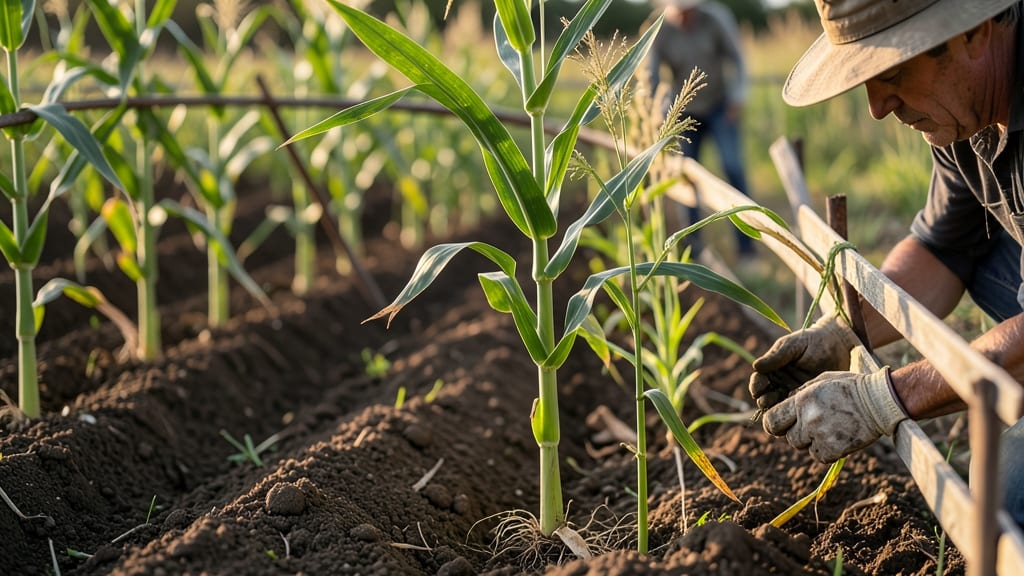
Gardening in agriculture involves the intentional growing of crops—like vegetables, fruits, and herbs—on a smaller scale to improve food systems, preserve biodiversity, and promote sustainable practices. Unlike industrial farming, it prioritizes soil health, high-value produce, and eco-friendly methods to maximize efficiency in limited spaces.
This practice isn't just about growing food—it's a way to reconnect with nature while solving real challenges. 🌱 Many gardeners focus on perennial plants and heirloom varieties that thrive in local climates, reducing the need for pesticides and artificial fertilizers.
What's fascinating is how even small backyard plots can contribute to larger agricultural goals, like reducing food miles or supporting pollinator populations through diverse plantings.
Whether you're a home gardener or a commercial grower, the principles remain the same: work with your environment rather than against it. Techniques like companion planting and crop rotation aren't just traditional—they're scientifically proven to boost yields while maintaining healthy ecosystems.
The beauty of gardening in agriculture is that it scales from your windowsill to community gardens, proving that sustainability starts with intentional choices.
💡 In This Article
- Key Differences Between Gardening and Large-Scale Farming
- How Home and Commercial Gardening Boosts Agricultural Resilience
Key differences between gardening and large-scale farming
At its core, gardening operates on a human scale—literally. While industrial farms may cultivate hundreds of acres with monocultures like corn or soybeans, gardening thrives in plots smaller than 1 acre, often just 100-500 square feet for home gardens.
This shift in scale enables hyper-localized growing where microclimates and soil variations become critical factors. For example, a backyard in Zone 7 might grow heirloom tomatoes that struggle in a commercial field due to different temperature fluctuations and humidity levels.
The labor intensity is another stark contrast. Gardening requires high-touch care—hand-weeding, companion planting (like basil with tomatoes to repel pests), and daily soil checks—whereas large-scale farms rely on mechanization (tractors, harvesters) and chemical inputs (synthetic fertilizers, pesticides).
Studies show small-scale gardens can achieve 3-5 times higher yield per square foot for crops like leafy greens because of this hands-on attention. The trade-off? Gardening demands 20-40 hours per week of active management during peak seasons, compared to 5-10 hours per acre on a commercial farm.
Ecological impact is where gardening truly shines. Traditional farming often prioritizes yield volume over biodiversity, leading to soil depletion and habitat loss. In contrast, gardening embraces polycultures—mixing crops like beans, squash, and corn (the "Three Sisters" method)—which mimics natural ecosystems.
This approach boosts soil microbial activity by 30-50% and reduces erosion, while also supporting pollinators through diverse flowering plants. The sensory payoff is immediate: a garden buzzing with bees and the earthy aroma of compost contrasts sharply with the sterile monocultures of industrial fields.
Crop selection reveals another key difference. Gardens prioritize high-value, nutrient-dense crops like kale, strawberries, or microgreens, which might fetch $5-10 per pound at farmers' markets versus $0.50-2 per pound for commodity crops. This focus on specialty produce aligns with consumer demand for organic, locally grown foods.
For instance, a 20-foot by 20-foot garden can yield 500 pounds of heirloom carrots—enough for a family's winter supply—whereas a farm might grow 500,000 pounds of conventional carrots using 100x the land and resources.
Water usage is another critical divergence. Gardening employs drip irrigation and rainwater harvesting to deliver 0.5-1 gallon per square foot annually, while industrial farms can consume 2-5 gallons per square foot for crops like almonds or cotton.
The precision of gardening techniques—like mulching with straw to retain moisture—mirrors permaculture principles that design systems to thrive with minimal external input.
This efficiency is why urban gardens in cities like Detroit have transformed vacant lots into food-producing spaces, slashing water waste by up to 70% compared to conventional methods.
Finally, the economic model differs dramatically. Large-scale farming relies on economies of scale to reduce costs, while gardening leverages value-added products like homemade sauces, cut flowers, or seed packets.
A home gardener might spend $500 annually on seeds and tools but generate $2,000+ in produce sales at local markets, achieving a 4x return. This model supports circular economies, where gardeners trade surplus produce for eggs or handmade goods, creating resilient local networks that industrial systems often overlook.