
Tools
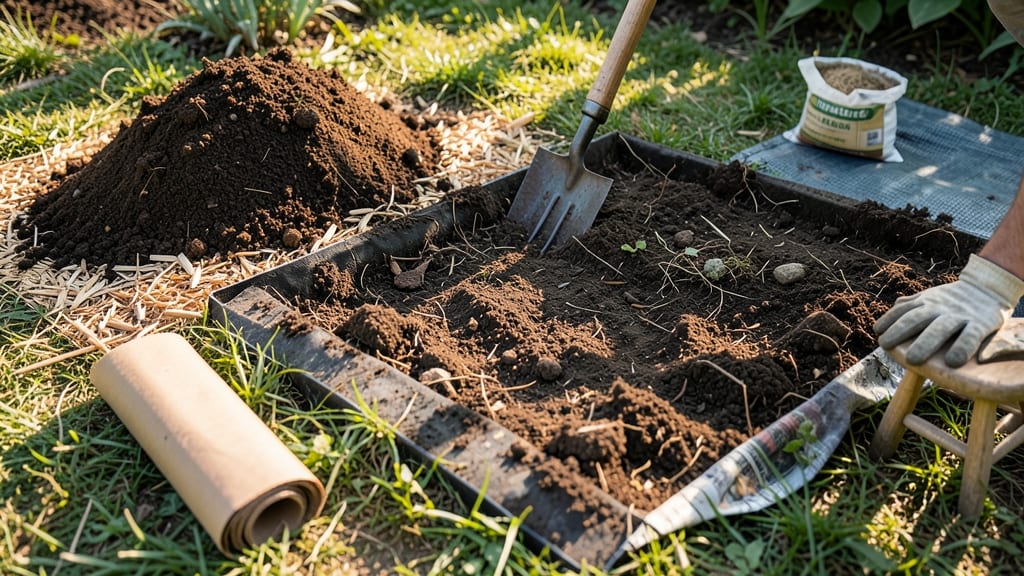
What to put under a garden bed, you should use organic mulch like cardboard, straw, or wood chips to boost soil health by locking in moisture, blocking weeds, and breaking down to feed plants over time.
Organic mulches work like a living blanket for your soil—keeping it cool in summer and warm in winter while slowly releasing nutrients as they break down. 🌱 I’ve found that straw is ideal for moisture-loving plants like tomatoes, while wood chips create a long-lasting barrier against weeds.
Cardboard, when properly layered, even acts as a weed-blocking foundation before adding mulch.
For best results, aim for a 2-4 inch layer of mulch—thicker layers can suffocate soil and trap too much moisture. Different plants thrive with different mulches: leaf mold is perfect for acid-loving blueberries, while composted wood chips work well for most vegetables.
Always avoid fresh wood chips, as they can draw nitrogen from the soil while decomposing.
💡 In This Article
- How Organic Mulches Enhance Soil Structure and Fertility
- Best Organic Mulch Choices for Different Plant Types
How organic mulches enhance soil structure and fertility
The real magic of organic mulches happens below the surface, where they transform your soil's physical and chemical properties.
When you spread a 2-4 inch layer of mulch, it creates a protective barrier that shields soil from temperature extremes—keeping roots cool in summer (20-30°F cooler at surface) and insulating them in winter.
This stability encourages deeper root growth, as plants don't need to expend energy seeking moisture or nutrients near the surface.
Mulch works like a slow-release fertilizer factory. As materials like straw or wood chips decompose, they feed beneficial soil microbes that break down organic matter into plant-available nutrients. For example, straw decomposes in about 3-6 months, while hardwood chips can take 2-4 years—each releasing different nutrient profiles.
The decomposition process also improves soil aeration by creating tiny air pockets between mulch particles and soil, which is crucial for root respiration. 🌱
One often-overlooked benefit is mulch's role in water regulation. Organic mulches absorb and slowly release moisture, reducing evaporation by up to 70% compared to bare soil. This creates a moisture reservoir that's particularly valuable during dry spells.
The texture of different mulches matters too: finer materials like grass clippings break down quickly and improve soil texture faster, while chunkier wood chips provide long-term structure and weed suppression.
For plants like tomatoes that thrive in well-draining but consistently moist soil, straw is ideal because its fibrous structure holds moisture while allowing excess water to drain. In contrast, leaf mold—partially decomposed leaves—creates a spongy, nutrient-rich layer perfect for acid-loving plants like blueberries.
The key is matching your mulch choice to both your plants' needs and your soil's current condition.
What most gardeners don't realize is how mulch affects soil pH over time. As organic matter decomposes, it typically makes soil slightly more acidic (pH 6.0-6.5), which benefits many vegetables and flowers.
However, if you're growing alkaliphiles like lavender, you'll want to use mulches like pine needles or composted wood that are naturally more acidic themselves. The decomposition process also generates humic acids that improve nutrient uptake.
When applying mulch, maintain a 2-inch gap between the mulch and plant stems to prevent rot. This simple spacing allows air circulation while still protecting roots.
Over time, the mulch layer will blend into your soil, becoming part of its permanent structure—creating what gardeners call "topsoil improvement" through natural biological processes. 💫