
Picking
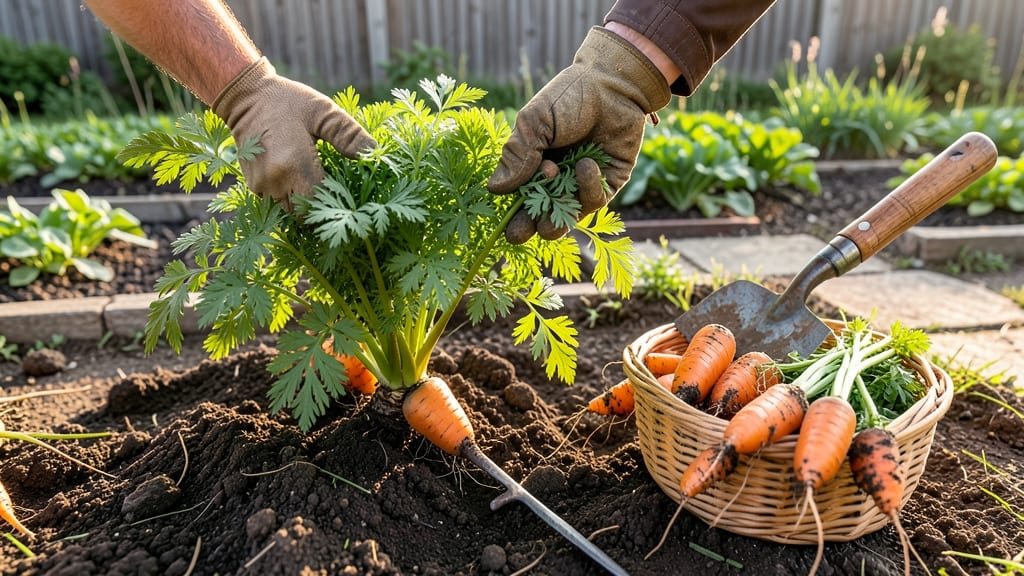
Harvesting carrots from your garden at the right time means the difference between sweet, tender roots and tough, woody messes—so don’t guess your timing!
Picture this: you’ve nurtured your 🥕 for months, only to pull a root that’s either too small or so large it splits when you try to dig it up.
That’s why knowing the exact moment—when the tops reach 4-6 inches and the roots are firm—is the key to a perfect harvest.
Most varieties take between 70 and 80 days to mature, but soil conditions and seasonal cues (like cooler fall temperatures) can shift that window. Below, I’ll walk you through how to check depth, test firmness, and spot the leaf signals that tell you it’s time to pull.
You’ll also learn how to avoid common mistakes—like harvesting too early (baby carrots) or too late (woody texture)—and when to store your haul for the longest shelf life.
How to check soil depth for perfect carrot harvest timing
Harvesting carrots at the right time ensures sweet, tender roots instead of woody, bitter ones. The key? Checking soil depth and root size before pulling. Different varieties mature at different rates—some in 50 days, others up to 80 days—so timing matters!
Start by identifying your specific carrot type, whether it's early-maturing Danvers or late-season Nantes.
Loose, well-draining soil is essential for carrots to grow straight and long. If your soil is compacted or rocky, roots may fork or split, making harvest tricky. Before planting, mix in compost or sand to improve texture.
I always test my soil by pressing my finger into it—if it feels firm but not hard, it’s ready for carrot seeds.
Now, let’s dive into the step-by-step soil depth check to determine when your carrots are ready for harvest. This method works for both baby carrots (harvested early) and full-sized roots.
🌱 Step-by-Step Soil Depth Check for Carrots
-
Step 1: Choose a representative plant
Pick a carrot with healthy green tops (4-6 inches tall) and no signs of pests or disease. -
Step 2: Gently loosen the soil
Use a small hand trowel or your fingers to create a 2-inch deep hole around the base of the plant. -
Step 3: Expose the root
Carefully brush away soil to reveal the carrot’s full length. Avoid damaging the root—gently is key! -
Step 4: Check root size and firmness
For baby carrots, aim for 1-2 inches long. For full-sized, look for 6-12 inches with a firm, vibrant color. -
Step 5: Finger test for readiness
Press the root gently—it should feel solid, not spongy. If it snaps easily, it’s underripe. If it’s tough, it’s overripe. -
Step 6: Note soil depth
Measure how deep the root grew. Most carrots need 8-12 inches of loose soil to reach full size without forking.
Once you’ve checked the soil depth and confirmed the root size, it’s time to harvest. Use a small fork or hand trowel to loosen the soil around the root before pulling gently.
Never yank—this can break the carrot or leave pieces in the soil, inviting pests. For baby carrots, you can harvest every 2-3 weeks to encourage continuous production.
Timing your harvest by soil depth also helps avoid common mistakes. For example, harvesting too early results in small, underdeveloped roots, while waiting too long leads to woody, bitter carrots.
I’ve learned the hard way—overripe carrots are nearly inedible! Pay attention to the leaf color too: vibrant green means healthy, while yellowing or wilting signals it’s time to harvest.
If you’re growing multiple varieties, keep a harvest journal. Note the planting date, variety, and days to maturity. This helps you plan future plantings and ensures you’re harvesting at the perfect time every season.
For example, my Nantes carrots always take about 75 days to reach full size, while my Danvers are ready in 65 days.
For fall-planted carrots, harvest before the first frost (around October 30 in Zone 6a). Cold weather can turn roots soft and pithy. If frost is imminent, harvest and store them in a cool, dark place for up to 2 weeks.
This extends their shelf life while keeping them crisp.
Finally, always harvest on a dry, sunny day. Wet soil can compact around the roots, making them harder to pull cleanly. After harvesting, brush off excess dirt and let them cure in the sun for 1-2 hours to toughen the skin.
This simple step improves storage life and keeps them fresher longer.
By mastering the soil depth check, you’ll never again guess whether your carrots are ready. The next time you’re in your garden, grab a trowel and test a few—your taste buds will thank you for the sweet, crisp rewards! 🥕
Leaf test for sweetness: how to spot overripe vs. underripe carrots
Your carrots' leaf health is the best indicator of when they're ready to harvest. Sweetness peaks when foliage shows vibrant green color and sturdy growth, but subtle changes signal overripe or underripe roots.
I’ve learned the hard way—waiting too long turns them woody, while harvesting too early leaves them bitter and small.
Start by checking the leaf size and color. Ideal harvest time occurs when tops reach about 4-6 inches tall with deep green, healthy leaves. Yellowing or wilting leaves mean you’ve waited too long, while tiny leaves suggest more time in the soil is needed.
Here’s how to use the leaf test to determine sweetness:
| Leaf Condition | Root Condition | Sweetness Level | Action |
|---|---|---|---|
| Deep green, 4-6 inches tall, upright | Firm roots, 1-2 inches diameter | Peak sweetness | Harvest now |
| Pale green or small leaves | Small roots, soft texture | Bitter, underripe | Wait 1-2 weeks |
| Yellowing, wilted leaves, brown edges | Woody texture, tough roots | Dry, bitter | Harvest immediately |
| Leaves flopping over, dried out | Shriveled roots, poor quality | Unusable | Too late |
Avoid the common mistake of harvesting based solely on days after planting. Soil conditions and variety types affect maturity—some carrots like 'Paris Market' mature in 50 days, while others like 'Danvers' take 70-80 days. Always cross-check with the leaf test for accuracy.
For baby carrots, harvest when leaves are about 2-3 inches tall. These tiny roots are sweeter and more tender. Use a fork to loosen soil gently before pulling to avoid damaging nearby plants.
Pro tip: Taste test one carrot before harvesting the batch. If it’s sweet and crisp, the rest are likely ready too. If it’s fibrous or bland, wait another week or two.