
Picking
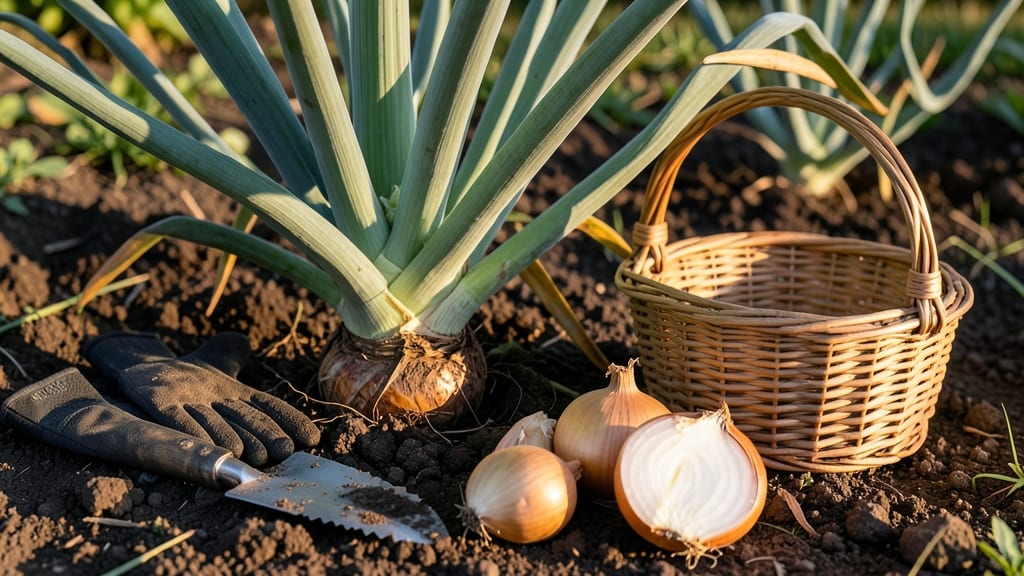
Harvesting onions from the garden at the right time ensures they’re full of flavor and store well—so timing is everything.
Picture this: you’ve nurtured your 🧅 for months, only to pull them too early and end up with small, bland bulbs that won’t last. Or worse, you wait too long, and they split or rot in the soil.
The difference between a perfect harvest and a disappointing one often comes down to knowing when those tops turn yellow and papery.
In Zone 6a, most gardeners aim for late summer to early fall, but the real test isn’t the calendar—it’s the bulb’s readiness.
Below, I’ll walk you through the 5 key signs your onions are ready, how to avoid common mistakes, and exactly how to cure and store them for months of use.
No more guessing games—just a foolproof method to turn your garden’s hard work into a pantry staple.
5 Key signs your onions are ready for harvest (pungency test included)
Knowing when to harvest onions from the garden can feel like guessing—until you spot these 5 foolproof signs. Onions mature at different rates, but these visual and sensory cues will tell you the exact moment to pull them for the best flavor and storage life.
Miss these signs, and you might end up with small, pungent bulbs that won’t last long or flavorless giants that spoil quickly.
First, let’s talk about the most obvious clue: the leaf color change. When your onion tops start turning from vibrant green to a golden-yellow or brown shade, it’s a clear signal that the bulb below is nearing perfection.
This shift happens because the plant is redirecting energy from leaf growth to bulb development—a natural process you’ll want to catch at the right moment.
📌 5 Key Signs Your Onions Are Ready
- 🌱 1. Tops Yellow and Flop: Leaves turn golden-brown and fall over naturally.
- 🧅 2. Bulb Size Matters: Diameter reaches 1–2 inches (or your variety’s ideal size).
- 💧 3. Dry and Papery Skin: Outer layers feel dry and papery to the touch.
- 📏 4. Neck Shrinks: The stem above the bulb tightens and shrinks noticeably.
- 👃 5. Pungency Test Passes: Cut a leaf—strong aroma means peak flavor.
Next, check the bulb size. A fully mature onion bulb should feel firm and round, typically reaching 1–2 inches in diameter (though varieties like giant onions can grow larger).
Gently squeeze the bulb—if it feels soft or spongy, it’s not ready yet. Overly large bulbs may have hollow centers, so aim for that sweet spot where size meets firmness.
Don’t overlook the neck of the onion, the stem above the bulb. When it starts to shrink and tighten, it’s a sure sign the bulb is maturing. This neck acts like a valve, stopping nutrients from flowing upward and signaling the plant to focus on storage.
If you see this, your onions are likely ready within 3–5 days, depending on your climate.
The pungency test is my favorite trick for determining flavor intensity. Snip a leaf from the top of the plant and crush it between your fingers. If it releases a strong, sharp aroma, your onions are packed with flavor and ready to harvest.
A weak scent means they need more time—this test is especially useful for storage onions, which should be harvested at peak pungency.
One common mistake is waiting too long, which can lead to bolting—when onions send up a flower stalk. If you see a tall, hollow stem shooting upward, your onions have gone to seed and will be bitter.
Harvest immediately if this happens, but the bulbs may be small and less flavorful. For the best results, act when you see the first signs of maturity, not after the plant has bolted.
Regional climate plays a role too. In hot, dry climates, onions mature faster, so watch for signs like yellowing tops earlier in the season. Conversely, in cooler regions, the process slows down, and you might need to wait until late summer or early fall.
Always check the outer skin—it should be dry and papery, not damp or green.
Finally, consider your onion’s variety and purpose. Green onions or scallions are harvested young, when leaves are tender and bulbs are tiny. For storage onions, wait until the tops are completely dry and the bulbs are firm.
If you’re unsure, do a small test harvest: pull one onion, cure it, and taste it. This hands-on approach ensures you’ll nail the timing every season.
Harvesting onions at the perfect moment rewards you with bulbs that store well, taste bold, and keep your kitchen stocked for months. Now that you know these 5 key signs, you’ll never second-guess when to pull them again! 🧅
Onion harvesting mistakes that ruin flavor and storage life
Even the most patient gardeners can fall victim to onion harvesting mistakes that turn sweet, flavorful bulbs into bland or rot-prone disappointments.
The timing of your harvest directly impacts both flavor intensity and storage life, so small errors can mean the difference between a pantry full of onions and a sad, shriveled pile. Let's explore the most common pitfalls—and how to sidestep them for perfect harvests every time.
One of the biggest mistakes is waiting too long to harvest. When onions stay in the ground past their prime, they start to split open or develop soft spots, which ruins their storage potential.
Overripe onions also lose their sharp, pungent flavor, becoming mild and almost flavorless. On the flip side, harvesting too early means small, underdeveloped bulbs that won’t store well and lack the bold taste you crave.
⚠️ When to Harvest Onions from the Garden
Harvest onions when:
- Tops yellow and fall over (not just wilted)
- Bulbs feel firm when gently squeezed (no softness)
- Neck begins to shrink and turns brown/papery
- Skin is dry and papery (not green or moist)
🌱 Pro Tip: Use the pungency test—cut a bulb in half and smell it. If it’s strong and sharp, it’s ready!
Another critical error is improper curing. Onions need time to dry out after harvest, but many gardeners rush this step, leading to mold growth and spoilage. Skipping the curing process means onions won’t store well, even if they looked perfect at harvest.
The key is to let them dry in a well-ventilated, dry area for 2-3 weeks, away from direct sunlight. This step is non-negotiable for long-term storage.
Don’t forget about harvesting conditions. Pulling onions after a heavy rain or when the soil is waterlogged can cause rotten bulbs or fungal infections. Always harvest on a dry, sunny day when the soil is slightly dry at the surface.
This helps prevent disease and ensures a cleaner harvest. Even the gentlest tug can damage bulbs if the soil is too wet.
Finally, storing onions incorrectly after harvest is a surefire way to waste your hard work. Onions need cool, dark, and well-ventilated conditions to last. Storing them in plastic bags or the fridge speeds up spoilage.
Instead, braid them or store them in a mesh bag in a cool, dry place (like a pantry) where they’ll keep for 6-8 months or longer.
By avoiding these common mistakes—harvesting at the wrong time, skipping curing, or ignoring storage conditions—you’ll enjoy onions that are bold in flavor and long-lasting. The effort pays off with a pantry stocked with homegrown goodness all season long. 🧅