
Picking
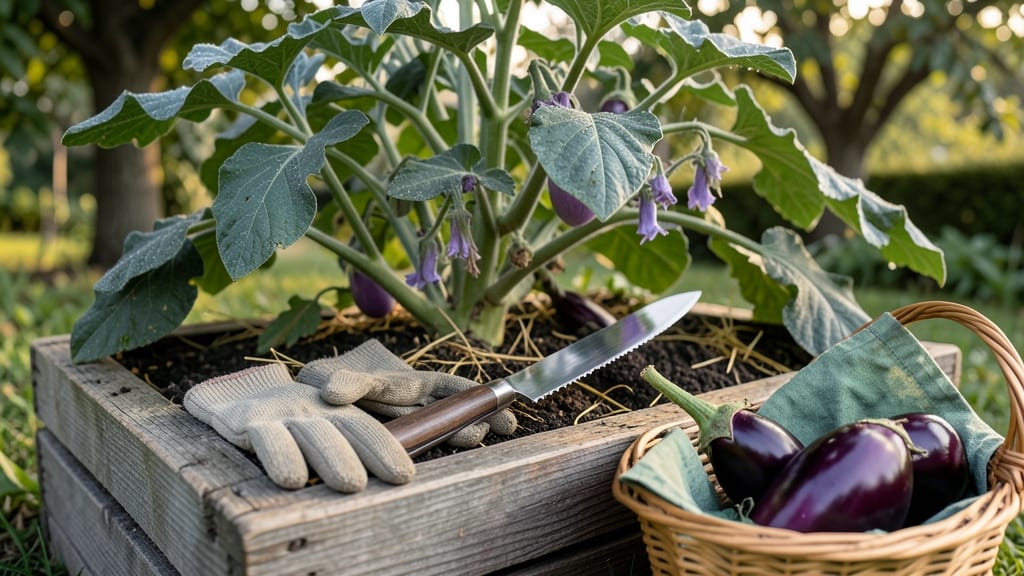
Picking eggplant from your garden at the right time means the difference between a tender, flavorful fruit and a mealy, bitter disappointment.
You’ve watched your 🍆 grow from a tiny seedling to a glossy purple orb, but how do you know it’s truly ready? Skip the guesswork by learning the two foolproof signs—color shifts and the stem twist test—that guarantee peak ripeness every time.
Eggplant ripens quickly, so timing matters. Harvest too early, and you’ll taste bitterness; wait too long, and the texture turns grainy. Below, I’ll walk you through the exact visual cues to pick your eggplant at its sweet spot, plus common mistakes to avoid.
Ready to master the art of harvesting? You’ll discover when to reach for your pruners, how to check firmness like a pro, and even how to extend your eggplant’s shelf life once it’s off the vine.
How to tell when eggplant is ripe: the color shift + stem twist test
Eggplant ripeness can be confusing—especially when skin color and stem condition seem to contradict each other. The good news? Two simple tests will give you 100% accuracy every time. First, focus on the color shift from green to your variety's mature hue.
Second, perform the stem twist test to confirm readiness. Mastering these two cues will transform your harvest from guesswork to a foolproof routine. 🍆
Most gardeners make the mistake of waiting for full color development before checking other ripeness signs. However, immature eggplants often turn purple prematurely while still being bitter and seedy.
That's why combining visual cues with a tactile test is essential. The color progression alone won't guarantee peak flavor—you need that stem twist confirmation. 🌱
When to pick eggplant from your garden depends on these two reliable indicators working together. Let's break them down with specific examples you can use in your own garden. For instance, a Black Beauty variety should show deep purple-black skin with a glossy finish, while Ichiban stays white with subtle yellowing. The stem test remains consistent across all varieties. ✂️
| Ripeness Indicator | Visual/Tactile Cue | Ready to Pick? | Action |
|---|---|---|---|
| Color Shift | Deep, consistent mature color (purple, black, white, etc.) with glossy skin | ✅ Yes | Proceed to stem test |
| Color Shift | Pale or uneven color with dull skin | ❌ No | Wait 3-5 days |
| Stem Twist Test | Stem snaps cleanly when twisted gently (180° motion) | ✅ Yes | Harvest immediately |
| Stem Twist Test | Stem resists or tears when twisted | ❌ No | Wait 2-3 days |
| Stem Color | Yellowish-brown stem end (not green) | ✅ Yes | Confirm with color shift |
| Size | 6-8 inches in length (varies by variety) | ✅ Yes | Check other indicators |
The color shift is your first clue, but don't rely on it alone. For example, a Black Beauty eggplant might look fully purple externally while still containing seeds and bitterness inside. That's why the stem twist test is non-negotiable.
Gently grasp the stem between your thumb and forefinger, then twist with a 180° motion. If it snaps cleanly, your eggplant is ready to harvest. 📏
Pro tip: Perform the stem test in the morning when the plant is firmest. Avoid testing after heavy rain or watering, as the stem may feel softer than usual.
I've found that 6-8 inches is the ideal size range for most varieties, but always prioritize the stem test over size alone. Some heirloom varieties like Rosa Bianca can be harvested smaller for tender skin. 🌿
Another common mistake is assuming all eggplants mature at the same rate. Asian varieties like Ichiban often ripen faster than Black Beauty
Common mistakes that ruin eggplant harvest timing (and how to avoid them)
Even experienced gardeners sometimes make critical errors when harvesting eggplant that turn perfectly good fruit into bitter, seedy, or mushy disappointments. The most common mistakes involve timing misjudgments—picking too early for bitter flavors or too late for overripe textures.
These errors aren't just annoying; they can ruin your entire harvest if you're not careful.
One frequent blunder is ignoring the size benchmark of 6-8 inches in length. Many gardeners wait until eggplants grow much larger, assuming bigger means better—but that's a recipe for mealy flesh and seeds that dominate the texture.
Similarly, harvesting based solely on color can backfire if you're growing white or striped varieties that don't turn purple.
Another critical oversight is overlooking seasonal variations. Eggplants grown in hotter climates may ripen faster than those in cooler regions, throwing off your usual timeline. Even within the same garden, early-season plants might need harvesting weeks before late-season varieties reach their peak.
🚨 Warning: The 3 Harvest Timing Mistakes That Kill Eggplant Flavor
1. Picking by color alone – Many varieties (like white eggplant) never turn purple, yet still need harvesting at 6-8 inches when firm.
2. Waiting for maximum size – Giant eggplants (>10 inches) develop bitter compounds and hard seeds—always prioritize size over girth.
3. Ignoring the stem test – A green stem base means unripe fruit, while a dry, yellowish-brown stem signals peak ripeness.
Let's tackle the size myth first. While it's tempting to let eggplants grow larger for more yield, oversized fruit (over 8 inches) often suffers from uneven ripening—the outer skin may look ready while the center remains underdeveloped and seedy.
For Japanese varieties, which are typically smaller, aim for 4-6 inches—any larger and the flavor becomes woody and bland.
Seasonal timing is another area where gardeners stumble. In northern climates (USDA Zones 1-5), your first eggplants might ripen in mid-July, while late-season varieties could still be harvesting in September.
Pay attention to your last frost date—if frost threatens before your plants finish, prioritize harvesting smaller, ripe fruit over waiting for larger specimens.
Finally, don't underestimate the power of the stem twist test. When you gently twist an eggplant at its stem, it should snap cleanly—this indicates the fruit is fully detached from the plant's nutrients and ready to eat.
If the stem resists or pulls away with a stretch, it's not quite ripe. This simple test beats guessing based on color or size every time.
By avoiding these common pitfalls—ignoring size limits, overlooking seasonal shifts, and skipping the stem test—you'll transform your eggplant harvest from hit-or-miss to consistently delicious every season. 🍆