
Picking
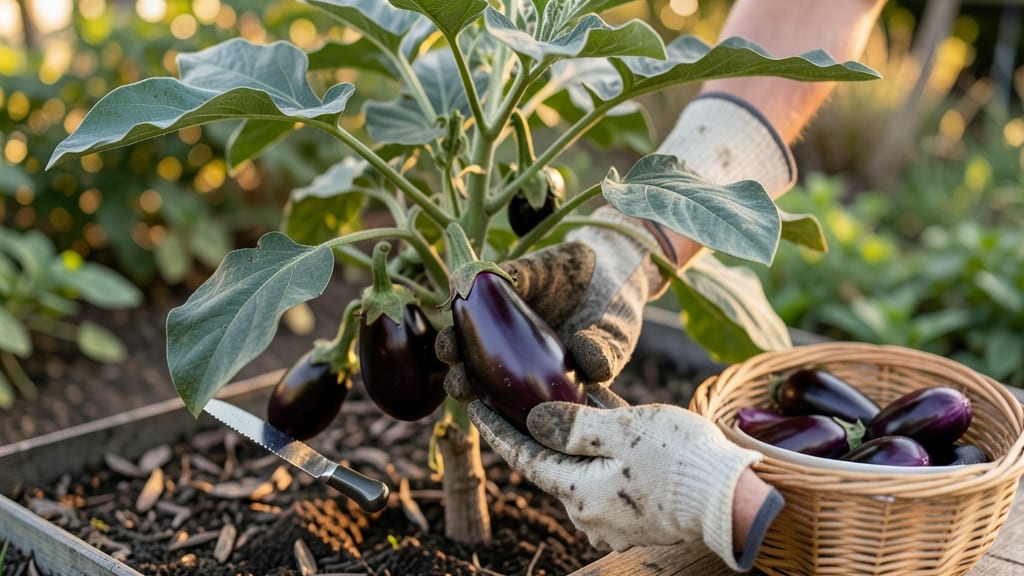
Picking eggplant in the garden at the right time means the difference between a tender, sweet fruit and one that’s bitter or seedy—here’s when to harvest yours for peak flavor.
Knowing the exact moment to harvest your eggplant can mean the difference between a tender, flavorful meal and a bitter, seedy disappointment—here’s how to spot perfection before it slips away.
Most gardeners wait until late summer or early fall, but the truth is, eggplant 🍆 ripens over weeks, not days. A firm, glossy skin and a stem that twists off easily are your best clues—ignore size alone, or you might miss the sweet spot.
Below, I’ll walk you through the 3 key signs of ripe eggplant, how climate affects timing, and the simple trick to avoid overripe (or underripe) fruit that ruins dishes.
How to identify perfectly ripe eggplant using 3 key signs
Harvesting eggplant at the right moment transforms your garden bounty into a culinary masterpiece. Overripe fruit becomes bitter and seedy, while underripe eggplant stays tough and bland. The secret lies in mastering three simple but crucial visual and tactile cues that reveal peak ripeness.
Whether you're growing purple globe, Italian, or white eggplant varieties, these signs apply universally.
First-time gardeners often assume eggplant ripeness is purely about color, but the truth is more nuanced. Color variations exist between varieties, and even within the same plant, environmental factors can create misleading appearances.
That's why combining multiple indicators gives you the most accurate harvest timing. Let's explore the three foolproof methods I've used to consistently pick eggplant at its prime.
-
1 Glossy, Firm Skin: Run your thumb over the eggplant's skin. Ready fruit feels smooth and firm with a slight glossy sheen. Dull or wrinkled skin means it's past its prime.
-
2 Stem Twist Test: Gently twist the stem near the fruit. If it snaps cleanly with minimal resistance, the eggplant is ready. A stubborn stem means it needs more time.
-
3 Deep, Consistent Color: Check for no green at the stem end. Purple varieties should be rich and uniform, while white or green types should show their true mature hue without streaks.
Let's start with the most visual cue: color variations by variety. Purple eggplant, like the classic 'Black Beauty', should display a deep, uniform purple without any green near the stem.
I once missed this detail and picked a batch that still had faint green—those eggplants were tough and bland compared to the perfectly ripe ones. White varieties, such as 'Casaba', should be completely white with no yellowing, while green types like 'Thai Green' need to be fully green without any purple tinges.
Size and weight also play a crucial role in determining ripeness. Most eggplant varieties reach their mature size between 4 to 8 inches in length, depending on the type. Italian varieties tend to be longer and slender, while Asian types are smaller and rounder.
When fully ripe, eggplant should feel heavy for their size—this indicates proper water uptake and development. I always compare my homegrown eggplant to store-bought ones; the ripe ones feel noticeably heavier.
The stem twist test is my favorite trick because it's so reliable. Simply grasp the stem near the fruit and give it a gentle twist. If the stem snaps cleanly with just a little resistance, that's your cue to harvest.
This test works because it checks the cell structure of the fruit—ripe eggplant has developed enough pectin to hold its shape but remains tender enough to separate easily. I've found this method particularly useful for delicate varieties that might bruise if pulled too hard.
Don't overlook the importance of skin texture when checking ripeness. The skin should be smooth and slightly glossy, almost like a fresh apple. A dull or wrinkled surface is a clear sign the eggplant has overripened.
I learned this lesson the hard way when I ignored the texture and ended up with eggplant that was too seedy and bitter. The gloss comes from the wax coating that develops as the fruit matures—it's nature's way of protecting the skin and indicating readiness.
One common mistake gardeners make is waiting too long for eggplant to reach its maximum size. While size is important, it's not the only factor. Some varieties, like 'Ichiban', are best picked when they're slightly smaller than their full potential size for better texture.
Always check the variety's specific guidelines alongside these general rules. I keep a small notebook by my garden where I jot down each variety's ideal harvest characteristics to avoid confusion.
For container gardeners, these ripeness signs are especially valuable since space is limited. You'll want to harvest eggplant as soon as it's ripe to make room for more production.
I grow 'Fairy Tale' eggplant in containers and find that checking the stem twist test every 2-3 days during peak season prevents overcrowding. The key is to harvest frequently—eggplant plants produce continuously throughout the growing season.
Remember that environmental factors can slightly alter these signs. Hotter weather, for example, might cause eggplant to ripen faster, so you may need to check for readiness more frequently. Conversely, cooler temperatures can slow ripening.
Always combine these visual and tactile cues with your knowledge of the specific variety and current growing conditions for the most accurate harvest timing. With practice, you'll develop an instinct for when your eggplant is at its peak!
Common mistakes that cause eggplant to ripen too late (or too early)
Even with the perfect eggplant variety and ideal growing conditions, your harvest timing can still go awry. Many gardeners unknowingly make common mistakes that delay ripening or cause fruit to mature too quickly. Understanding these pitfalls helps you adjust care for optimal harvest timing—typically between 75-120 days after planting.
One of the biggest culprits is over-fertilizing with nitrogen. While plants need nutrients, too much nitrogen promotes leafy growth at the expense of fruit development. This can leave your eggplants looking lush but delaying ripening for weeks.
Similarly, underwatering stresses plants, causing them to slow down or produce small, underripe fruit.
Another overlooked factor is temperature fluctuations. Eggplants thrive in warm weather (70-85°F), but sudden cold snaps or heatwaves can disrupt ripening. If your garden experiences unpredictable weather, your eggplants may ripen unevenly or not at all.
⚠️ Warning: 3 Critical Mistakes That Ruin Your Eggplant Harvest
1. Over-Fertilizing: Too much nitrogen = leafy growth, not fruit. Stick to a balanced 5-10-10 fertilizer every 4-6 weeks.
2. Inconsistent Watering: Drought stress or soggy soil both delay ripening. Water deeply 1-2 gallons per plant in the morning only.
3. Ignoring Weather: Eggplants need consistent warmth (70-85°F). Protect from frost or extreme heat with row covers or shade cloth.
🌱 Fix it now: Adjust care immediately—reduce fertilizer, mulch to retain moisture, and monitor weather forecasts!
If your eggplants are ripening too early, the issue might be poor pollination or overcrowding. Eggplants need space to develop properly, and crowded plants often produce small, premature fruit. Prune excess leaves and flowers to encourage larger, later-season harvests.
For late-ripening eggplants, check your soil pH. Eggplants prefer slightly acidic to neutral soil (pH 6.0-6.8). If your soil is too alkaline, nutrients become unavailable, stunting growth. Test your soil and amend with sulfur or peat moss if needed.
Finally, don’t forget to harvest regularly. Eggplants produce fruit continuously, and leaving overripe ones on the plant can signal others to ripen too quickly. Pick every 2-3 days once fruit starts maturing to keep your plants productive all season.