
Picking
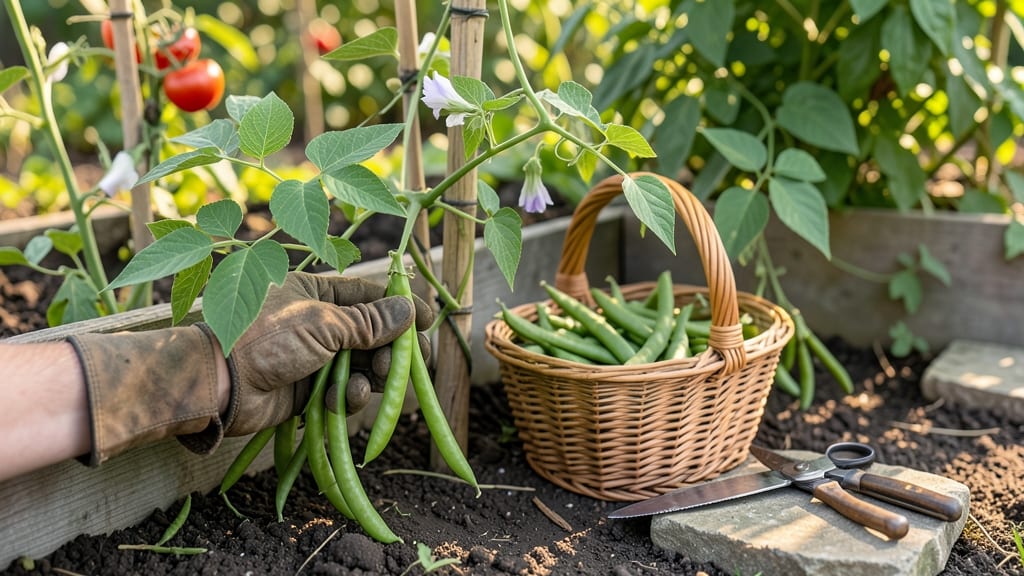
Picking green beans from your garden at the right time ensures crisp, sweet pods packed with flavor—miss the window, and you’ll end up with tough, stringy messes instead.
Green beans are a gardener’s gift—crisp, sweet, and packed with flavor—but timing their harvest wrong can turn your bounty into tough, woody pods.
Most gardeners wait until pods reach 4-6 inches for bush beans or 6-8 inches for pole varieties, but the real secret lies in the stem twist test.
Here’s how to master it: harvest in the morning when pods are cool, check for a crisp snap when bent, and pick every 2-3 days to keep your plants producing.


How to use the stem twist test for perfect green bean harvesting
The stem twist test is my secret weapon for harvesting green beans at their peak—crisp, tender, and bursting with flavor. Unlike guessing by size or color, this method reveals the internal readiness of pods, ensuring you never pick too early or too late.
The technique is simple: gently twist the pod between your thumb and forefinger near the stem. If it snaps cleanly with a slight resistance, it’s perfect. This test works for bush beans and pole beans alike, and it’s especially useful when pods look similar but vary in maturity.
Why does this method work? The stem twist test checks for cell wall development. When pods are ready, their cell structure is firm but not fibrous, giving you that satisfying snap.
Overripe beans, on the other hand, twist with a dry, brittle sound or resist too much, signaling they’ve passed their prime. This technique saves you from the disappointment of woody, tough pods that ruin even the best recipes.
Before you start twisting, know your green bean variety. Bush beans (like Blue Lake) typically reach harvest size at 4-6 inches, while pole beans (like Kentucky Wonder) can stretch to 6-8 inches.
However, size alone isn’t enough—always combine it with the twist test. For example, a 5-inch bush bean might feel woody if left too long, while a 7-inch pole bean could still be tender if harvested early enough.
Step-by-Step Stem Twist Test
- 🌱 Step 1: Choose a Pod – Pick a fully elongated pod that matches your variety’s ideal size (4-6" for bush, 6-8" for pole). Avoid pods with yellowing tips or wrinkled skin.
- 👆 Step 2: Locate the Stem – Find the thickest part of the stem, about 1 inch from the pod. This is where the cell structure is most reliable for testing.
- ✂️ Step 3: Prepare to Twist – Hold the pod firmly with your thumb and forefinger. Gently twist side-to-side (not up-and-down) to avoid crushing the pod.
- 🎵 Step 4: Listen for the Snap – A crisp, clean break with slight resistance means it’s perfectly ripe. If it bends without snapping, it’s underripe. If it twists dryly or resists too much, it’s overripe.
- 🌿 Step 5: Harvest Immediately – Use clean pruning shears or your fingers to snap the pod off just above the node. Avoid tearing the stem, which can damage the plant.
The stem twist test isn’t just about flavor—it’s about encouraging continuous production. When you harvest at the right stage, your plants redirect energy to producing more pods instead of wasting it on overripe ones.
I’ve seen my Romano beans yield 30% more over a season simply by sticking to this method. Plus, the pods stay sweeter and crunchier because they’re harvested before their sugars convert to starches.
One common mistake is twisting too hard, which can crush the pod and make it mushy. Always use a gentle, controlled motion. Another pitfall is ignoring the pod’s color.
Even if the twist test passes, a pod with yellow streaks or brown spots should be discarded—it’s a sign of disease or pest damage. Pair the twist test with a quick visual check for the best results.
Morning is the ideal time to perform the stem twist test because pods are firmest after overnight hydration. If you harvest in the afternoon, you might find pods that feel slightly softer due to heat stress.
Pro tip: Bring a small basket or clamshell container with you while harvesting. This keeps pods organized and protected from bruising, which can happen if you toss them into a bag.
What if your green beans are all the same size but some twist perfectly while others don’t? This often happens in pole beans, where pods mature at different rates on the same vine.
In this case, prioritize the pods that pass the test and leave the others to mature a day or two. This staggered harvesting ensures you’re always picking at peak ripeness.
For bush bean varieties, like Contender or Derby, the twist test is especially critical because these plants produce pods in short bursts. If you miss the window, the entire plant can bolt (flower prematurely), ending your harvest early.
By using the twist test, you’ll maximize your 5-6 week harvest window and avoid the heartbreak of a sudden crop failure.
Remember, the stem twist test is your quality control for green beans. It’s faster than checking seeds through the pod and more reliable than guessing by color. Once you master it, you’ll never settle for less-than-perfect pods again. Happy harvesting—your future salads and stir-fries will thank you!
Optimal green bean harvesting times by variety and growth stage
Green beans thrive when harvested at the right moment, but the perfect time depends on whether you're growing bush or pole varieties. Each type has distinct harvest windows and maturity cues that determine peak flavor and texture. Understanding these differences ensures you never miss the sweetest, crispest pods.
Bush beans like Blue Lake or Kentucky Wonder typically mature faster—ready in just 50-60 days—while pole beans such as Romano take slightly longer, up to 65 days. Climate also plays a role: cooler regions may delay harvests by 1-2 weeks compared to warmer zones.
For all varieties, the key is to harvest when pods are firm but snap easily. Overripe beans develop woody textures and plump seeds, ruining their tender quality. In hot climates, check plants daily—they mature faster—while cooler areas may only need weekly checks until peak season.
Pole beans require more frequent picking because they produce continuously. Use a trellis to support vines and make harvesting easier. Always pick in the morning when pods are crispest, and avoid harvesting after rain to prevent disease spread.
Watch for yellowing leaves or pods turning pale, which signal overmaturity. If left unchecked, plants will stop producing and focus energy on seed development. Regular harvesting extends the season by encouraging new flower and pod growth.
In regions with short growing seasons, opt for early-maturing varieties like Blue Lake to maximize yield. For longer seasons, pole beans like Romano provide a steady harvest over 4-6 weeks if picked consistently.