
Planting
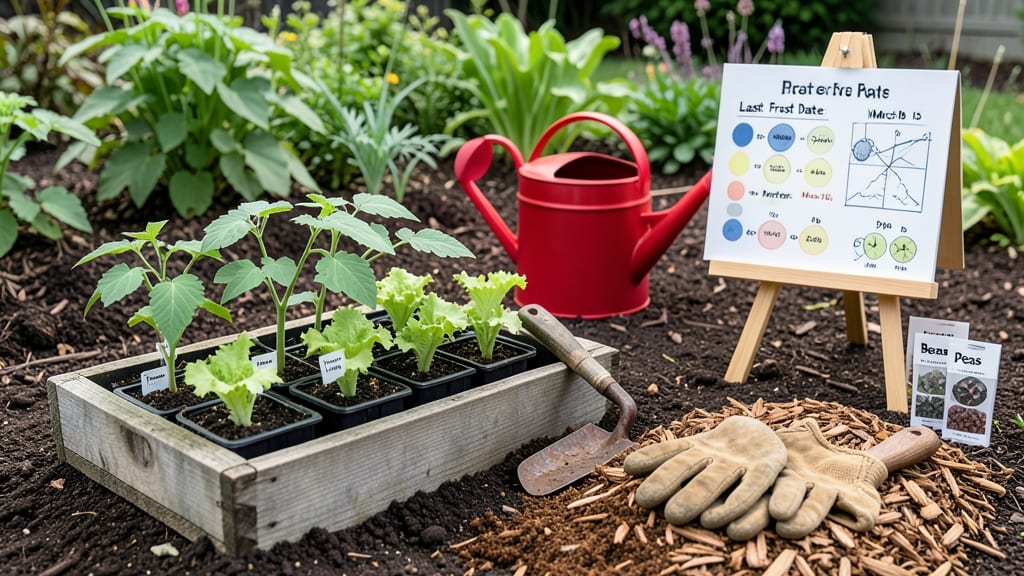
Planting a garden in Tennessee at the right time means the difference between a bountiful harvest and wasted effort — and your region’s last frost date is just the starting point.
Tennessee’s varied climate—from the Blue Ridge Mountains to the Mississippi Delta—means your garden’s success hinges on planting at the perfect time. Get the timing wrong, and even heat-loving tomatoes or frost-sensitive basil can fail.
Whether you’re in zone 6a or 7b, knowing when to start seeds indoors or transplant outdoors is the key to avoiding common pitfalls.
Most gardeners in Tennessee aim for March through May for spring planting, but microclimates shift those windows. Urban heat islands in Nashville can push planting dates forward by two weeks, while high-elevation areas like Gatlinburg may need to wait until after Memorial Day.
The same logic applies to fall crops like kale and spinach, which thrive when planted in August or September before the first frost.
Below, I break down the exact planting windows by region, how to adjust for soil temperature, and which crops to prioritize for Tennessee’s 180-220 frost-free days. No more guessing—just a clear schedule tailored to your corner of the state.
Tennessee’s planting zones explained: when to start seeds and transplant by region
Tennessee spans USDA Hardiness Zones 6b through 8a, creating distinct planting windows across its three main regions. East Tennessee’s Zone 6b-7a (Knoxville) has later last-frost dates than West Tennessee’s Zone 7b-8a (Memphis).
Middle Tennessee (Nashville) falls in Zone 7a-7b, offering a middle-ground schedule. Understanding these zones helps you avoid frost damage to tender crops like peppers or cucumbers while maximizing your growing season.
Your last-frost dates vary dramatically: Knoxville averages April 15-20, Nashville April 5-10, and Memphis March 20-April 5. These dates mark the safe window for transplanting frost-sensitive plants.
For zero-frost crops like okra or sweet potatoes, timing is even more critical—plant too early, and they’ll languish in cool soil; too late, and they won’t mature before fall frosts.
Indoor seed-starting gives you a 4-6 week head start on the season. Begin pepper and tomato seeds indoors 8-10 weeks before your last frost date. For Memphis gardeners, that means starting seeds by February 15, while Knoxville gardeners can wait until March 1. Direct-sowing outdoors should begin 2-4 weeks after your last frost date, when soil temperatures consistently reach 60°F.
Direct-sowing outdoors is ideal for fast-growing crops like radishes or lettuce, which tolerate cooler soils. These can go in as early as 2-4 weeks before your last frost date, often in March for Memphis and late March to early April for Knoxville. Use row covers to protect young plants if nighttime temperatures dip below 40°F.
| Region | Last Frost Date | Indoor Seed Start (Peppers/Tomatoes) | Direct Sow (Okra/Cucumbers) | Transplant (Basil) |
|---|---|---|---|---|
| East TN (Knoxville) | April 15-20 | March 1-15 | May 1-15 | May 1-15 |
| Middle TN (Nashville) | April 5-10 | February 15-March 1 | April 15-May 1 | April 15-May 1 |
| West TN (Memphis) | March 20-April 5 | February 1-15 | April 1-May 1 | April 1-May 1 |
This region-specific timeline ensures you’re planting at the optimal moment for each crop. For example, okra and sweet potatoes thrive when soil temperatures exceed 70°F, so wait until late April or early May in East Tennessee.
In contrast, cool-season crops like broccoli or spinach can handle Zone 6b’s cooler springs and should be sown in February or early March.
Adjust your schedule if you’re in a microclimate, like a valley (warmer) or mountain slope (cooler). Urban areas with heat islands (e.g., downtown Nashville) may have 2-3 weeks earlier last-frost dates than rural areas.
Always monitor soil temperature—a simple soil thermometer tells you when it’s safe to plant heat-lovers like peppers or eggplants.
For fall planting, aim to transplant warm-season crops like tomatoes or peppers by July 15 in West Tennessee or August 1 in East Tennessee. These late-season crops need 90-100 days to mature before the first frost.
Use black plastic mulch to extend the season by warming the soil and protecting plants from early frosts.
Extend your growing season with season extenders like cold frames or low tunnels. These tools let you plant leafy greens in September or harvest herbs like basil until November. In Zone 8a (West Tennessee), you might even squeeze in a winter garden of kale or carrots under row covers.
Track your local frost dates using NOAA’s Climate Data or your county’s Cooperative Extension Service. These resources provide hyper-local insights that can shift your planting window by 1-2 weeks. For instance, Chattanooga’s Zone 7a last frost often arrives 3-5 days later than Nashville’s, so adjust accordingly.
Start with cold-hardy crops like peas or lettuce in February for a head start. By April 15, most Tennessee gardeners
Microclimate adjustments: how elevation, soil, and urban heat islands shift planting times
Tennessee’s geography creates dramatic microclimates that can shift your planting schedule by weeks. A Gatlinburg garden at 3,000 feet might need to wait until May 15th for tomatoes, while Nashville’s river valleys can safely plant by April 15th.
These differences aren’t just about elevation—they’re about soil warming, urban heat retention, and even river breezes that cool nearby areas.
For example, the Cumberland River valley around Nashville warms up faster than surrounding hills because water absorbs and releases heat slowly. Meanwhile, urban heat islands in Memphis can push soil temperatures 5-10°F warmer than rural areas, letting you plant okra or sweet potatoes two weeks earlier.
The key is understanding how these factors interact with your local frost dates and soil thermometers.
Here’s how to adjust your schedule using NOAA Climate Data and simple observations:
- 1. Elevation Delays For every 1,000 feet gain, shift planting 1-2 weeks later. Gatlinburg (3,000 ft) often waits until May 1st for peppers, while Chattanooga (650 ft) can start by April 15th.
- 2. Soil Temperature Rules Use a soil thermometer—most seeds need 60°F+ for germination. River valleys hit this by mid-April, while mountain soils may not warm until late May.
- 3. Urban Heat Advantages Cities like Nashville can plant heat-lovers (okra, peppers) 2 weeks early due to asphalt and concrete retaining heat. Check NOAA’s urban heat maps for your area.
- 4. Shade vs. Sun Exposure North-facing urban gardens may need shade-tolerant varieties (e.g., bush beans) and delayed planting by 1 week compared to sunny south-facing beds.
- 5. NOAA’s Climate Data Visit NOAA’s Climate Tool (climate.ncei.noaa.gov) to find your local frost dates and soil warming trends. Enter your ZIP code for hyper-local adjustments.
Don’t rely on neighbor’s advice—even if they’re just a mile away. For instance, a Nashville backyard beside the Cumberland River might plant cucumbers by April 20th, while a hilltop garden a mile away could wait until May 1st.
The same tomato seeds planted on the same day in both spots will yield vastly different results.
Pro tip: Test your soil in early spring. If it’s still below 50°F in March, delay planting cool-season crops (like lettuce) until April 1st—even in Nashville. Use black plastic mulch to warm mountain soils 2-3 weeks faster if you’re in a high-elevation zone like Sevierville.
By accounting for these microclimate factors, you’ll avoid the heartbreak of frost-nipped basil or bolting lettuce. Start with NOAA’s data, then fine-tune with your own soil thermometer and garden journal to nail the perfect planting window for your Tennessee patch. 🌱