
Planting
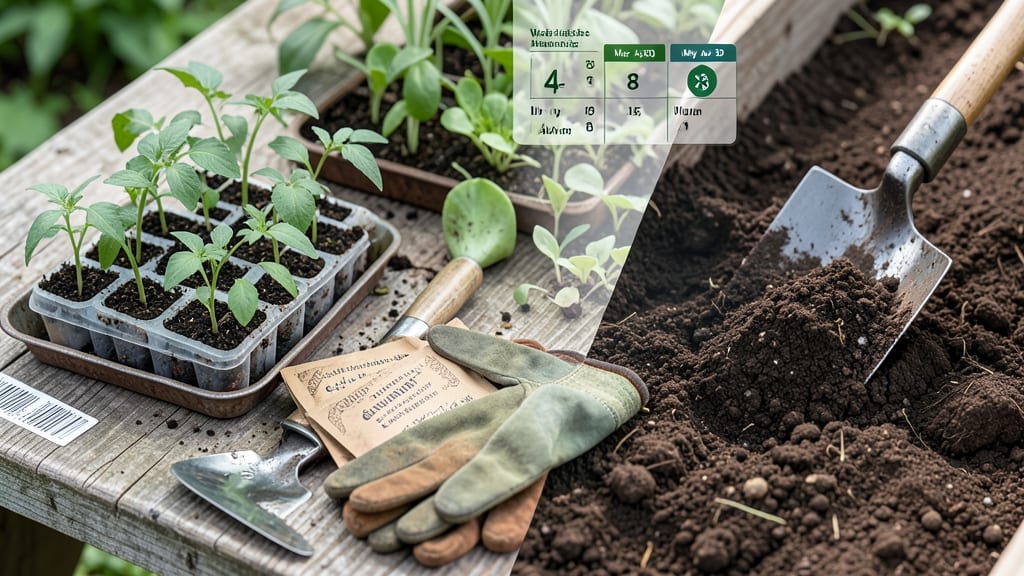
To plant a garden in Washington State at the right time means timing it with your local frost dates—because a late frost can turn your hard work into a sad, wilted memory.
Washington State’s diverse climate—from coastal rainforests to high-desert plateaus—means your garden’s planting timeline can vary by hundreds of days. Get it wrong, and frost will wipe out your hard work.
But follow this microclimate guide, and you’ll plant at the perfect time for zero-frost success, no matter where you live in WA.
Cool-season crops like peas and lettuce thrive when planted in early spring or late summer, while tomatoes and peppers need to wait until after the last frost—usually mid-April in Western WA but closer to May in Eastern regions.
Understanding your zone (from 5b to 9a) is the key to avoiding common mistakes, like planting too early in the Skagit Valley or too late in Yakima.
Below, I’ll break down the exact planting windows for your region, plus tips for adjusting schedules based on elevation, soil warmth, and even urban heat islands. Ready to grow a thriving garden? Let’s get started.
Washington State planting zones by region: frost dates and ideal start times
Washington State’s 9 distinct microclimates create a gardening puzzle—what thrives in coastal Seattle (Zone 8) may freeze in Spokane (Zone 6) just 300 miles away. Understanding your last-frost dates and ideal planting windows is the key to avoiding frost damage and maximizing harvests.
Below, we break down each region’s unique timing, including cool-season vs. warm-season crop comparisons to help you plan like a pro.
For Western WA (coastal and Puget Sound regions), the growing season stretches from late March to October, while Eastern WA (Columbia Basin, Palouse) enjoys longer summers but earlier frosts—sometimes as early as September 15.
Mountain regions like the Cascade foothills (Zone 6-7) face shorter seasons but can grow heat-tolerant varieties like ‘Cherokee Purple’ tomatoes or ‘Black Krim’ tomatoes to extend harvests.
Use this region-by-region guide to pinpoint your planting deadlines, including heat-tolerant alternatives for late starters. Pro tip: Check your local WSU Extension office for hyper-local frost data—microclimates can shift even within cities!
| Region | USDA Zone | Avg. Last Frost | Cool-Season Start | Warm-Season Start | Heat-Tolerant Alt. |
|---|---|---|---|---|---|
| Coastal (e.g., Olympia, Aberdeen) | Zone 8b-9a | March 15 - April 1 | February 15 | April 15 | ‘Heatmaster’ okra, ‘Solar Fire’ peppers |
| Puget Sound (e.g., Seattle, Bellevue) | Zone 7b-8a | March 20 - April 5 | February 28 | April 10 | ‘Arkansas Traveler’ tomatoes, ‘Jalapeño M’ peppers |
| Cascade Foothills (e.g., Wenatchee, Leavenworth) | Zone 6b-7a | May 1 - May 15 | April 1 | May 20 | ‘Cherokee Purple’ tomatoes, ‘Lemon Cucumber’ |
| Columbia Basin (e.g., Yakima, Pasco) | Zone 7a-8b | April 10 - April 25 | March 15 | April 20 | ‘Santee’ potatoes, ‘Black Beauty’ eggplant |
| Eastern WA Highlands (e.g., Spokane, Moses Lake) | Zone 5b-6b | May 1 - May 10 | April 15 | May 25 | ‘Early Girl’ tomatoes, ‘Bush Bean’ varieties |
In Western WA, where cool, wet springs delay soil warming, start cool-season crops like lettuce, peas, and spinach indoors by February 15 to transplant after the last frost.
For warm-season crops (tomatoes, peppers, squash), wait until soil temps hit 60°F+—typically mid-April in Seattle but late May in higher-elevation foothills.
Eastern WA’s drier climate and hotter summers allow for earlier warm-season planting (as early as April 10 in the Columbia Basin), but first frosts arrive sooner—sometimes by September 15.
Prioritize fast-maturing varieties like ‘Early Girl’ tomatoes (55 days) or ‘Bush Bean’ varieties (50 days) to beat the clock. Use row covers to extend harvests into October.
For mountain regions (e.g., Cascade foothills), where late frosts are common, opt for cold-hardy warm-season crops like ‘Black Krim’ tomatoes (tolerates 28°F) or ‘Swiss Chard’. If your last frost slips past May 15, try container gardening—pots warm
How to adjust planting times for your specific microclimate (even within cities)
Even within the same city, your garden’s microclimate can shift dramatically based on elevation, urban heat islands, or wind exposure. For example, Seattle’s last frost date can vary by 3 weeks between a sheltered backyard and a windy hillside.
Understanding these factors lets you fine-tune planting times for zero-frost success, even in tight spaces.
Start by noting your garden’s unique conditions: Are you in a low-lying valley (like Yakima) where cold air pools, or on a sun-baked rooftop (like downtown Spokane) that warms up faster?
A soil thermometer ($10 at garden centers) reveals when the ground reaches 50°F—the sweet spot for cool-season crops like spinach or radishes.
⚠️ callout warning
⚠️ Common Mistakes to Avoid
Planting tomatoes too early in the Skagit Valley (risk: late frost) or peppers too late in Yakima (risk: heat stress). Even within Seattle, a north-facing garden may need row covers for 2 extra weeks of protection.
Use WSU Extension’s frost maps (link) to cross-check local data with your microclimate. For urban gardens, heat-tolerant varieties (like ‘Heatmaster’ tomatoes) can buy you 10–14 extra days of growing time.
Extend your season with simple tools: Row covers (floating fabric) add 5–10°F of warmth and protect against light frosts. A cold frame (a clear plastic box over seedlings) can push spring starts by 3–4 weeks in cooler areas like Bellingham.
For high-desert zones like Wenatchee, prioritize shade cloth to prevent heat stress in summer.
Wind is another game-changer. In open fields (e.g., Palouse region), young plants need windbreaks—even a cornstalk fence or bamboo stakes can reduce drying by 30%. Meanwhile, urban canyons (like Seattle’s Pioneer Square) trap heat, letting you plant warm-season crops 2 weeks earlier than rural areas.
Pro tip: Track your garden’s microclimate shifts for 3 years to spot patterns. For example, my Everett garden’s last frost crept 5 days later each year due to urban sprawl. Adjusting my pepper planting from May 15 to May 20 saved my harvest twice.
For container gardens (common in cities), use black plastic pots to absorb heat faster—ideal for basil or cucumbers in Spokane’s shorter season. Pair this with a self-watering system to avoid drought stress during July’s 90°F+ spikes.