
Planting
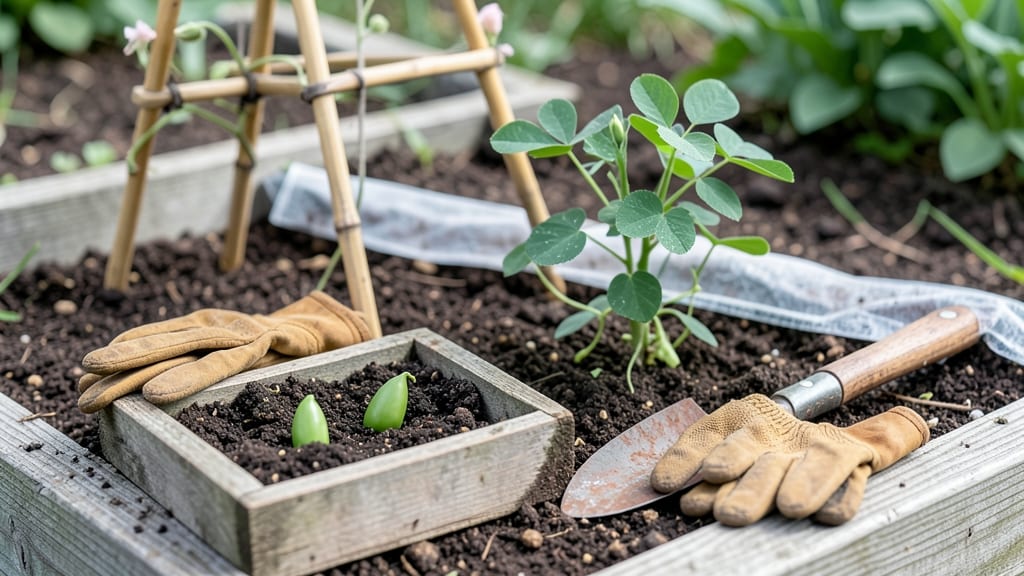
To plant garden peas at the perfect time means catching that narrow window between frost and heat — 4-6 weeks before your last spring frost or again in fall for a second harvest.
Picture this: you’ve prepped the soil, marked the rows, and the seeds are ready — but if you wait too long, the peas bolt before you even get a taste. Or worse, you plant them too early, and a late frost turns your tender sprouts into sad, mushy mulch.
I’ve been there, and trust me, timing is the game-changer for a fast, bountiful harvest.
Garden peas 🌱 are cool-season champions, thriving when soil temps hover between 40-75°F. That means early spring or late summer/fall, depending on your zone.
In USDA Zone 6a, like much of the Midwest, that’s typically March or early April for spring plantings, with a second chance in late summer if you’re quick.
Here’s what you’ll discover: how to read your local frost dates, which pea varieties play nice with cold snaps, and the simple soil prep tricks that keep your peas growing faster and straighter.
No more guessing — just a clear, step-by-step guide to turn your pea patch into a harvest goldmine.
Best planting times for garden peas by climate Zone
Garden peas (Pisum sativum) are one of the first cool-season crops I plant each year. Their ability to thrive in 40-75°F temperatures makes them perfect for early spring and fall harvests.
However, planting too early risks frost damage, while waiting too long can lead to bolting or poor yields. The key is understanding your USDA hardiness zone and adjusting your timeline accordingly.
Peas grow best when soil temperatures hover between 40-60°F. In colder zones like USDA 3-5, I start seeds indoors 6-8 weeks before the last frost or sow directly into the garden as soon as the ground is workable.
In warmer zones (USDA 7-10), fall planting becomes crucial for avoiding summer heat stress. Let’s break down the ideal windows by zone to ensure your peas get off to the best start.
In USDA zones 3-4, where winters are harsh, I focus solely on early spring planting. The goal is to sow seeds as soon as the soil is workable—typically 4-6 weeks before the last frost date.
For example, in Zone 3, that might mean planting in early March, while in Zone 4, late March works better. Use row covers if late frosts are likely to protect young seedlings.
Zones 5-6 offer flexibility with both spring and fall plantings. For spring, aim to sow seeds 4-6 weeks before your last frost date, usually between March and early April. For fall, plant 60-90 days before the first frost, often in August or early September.
This two-season approach ensures a continuous harvest. I’ve found that sugar snap peas and snow peas perform exceptionally well in these zones during both seasons.
Warmer climates in USDA zones 7-10 shift the focus to fall and winter planting. In Zone 7, I plant in late summer (August) for a fall harvest, while Zones 8-10 can even support winter plantings in December or January in cooler microclimates.
The key is to avoid summer heat, which causes peas to bolt prematurely. Always check your local frost dates and adjust accordingly—some coastal areas in Zone 10 might have mild winters, allowing for year-round production.
High-altitude gardens (3,000+ feet elevation) require special attention. Cooler temperatures at higher elevations mean peas can be planted 2-3 weeks earlier than in lower areas within the same zone. For example, a Zone 6 garden at 5,000 feet might align more closely with a Zone 5 timeline.
Always account for 10-15°F colder soil temperatures and extend your planting window accordingly. Use black plastic mulch to warm the soil faster if needed.
Pro tip: For succession planting, sow new seeds every 2-
How to time pea planting for fastest harvests and avoid common mistakes
Peas are one of the first cool-season vegetables I plant each year, but their success depends entirely on timing. Unlike heat-loving crops, peas thrive in temperatures between 40°F and 75°F, making early spring and fall their ideal windows.
Planting too early risks frost damage, while waiting too long can lead to bolting—when plants flower and pod prematurely. The key is balancing these factors with your local climate.
Most gardeners focus on the last frost date when planning pea planting, but soil temperature matters just as much. Peas germinate best when soil reaches 40°F to 50°F.
A soil thermometer is your best tool here—I’ve learned the hard way that air temperature ≠ soil temperature, especially in early spring when mornings may be chilly but the ground warms quickly under sunlight.
While peas tolerate light frost, hard freezes (below 20°F) will kill seedlings. If your area experiences late frosts, wait until 4-6 weeks before your last frost date to ensure safe germination. For example, in USDA Zone 5, that means planting in mid-to-late April rather than early March.
Pro Tip: Use row covers or straw mulch to protect young plants if late frosts are forecasted after planting.
For fastest harvests, I recommend planting two successions—one in early spring and another in late summer (fall). The first planting should go in as soon as soil is workable, while the second succession goes in 60-90 days before your first frost.
This staggered approach ensures a continuous supply of fresh peas throughout the growing season.
Spacing is another critical factor many overlook. Peas need 2-3 inches between seeds and 18-24 inches between rows to avoid overcrowding. I’ve seen gardens where overcrowded plants produce fewer pods because they compete for sunlight and nutrients.
Use a trellis or cage for climbing varieties to maximize space and improve airflow, reducing disease risk.
If you’re in a warmer climate (Zones 8-10), focus on fall planting instead of spring. In these areas, summer heat causes peas to bolt and produce bitter pods.
Aim to have them established by mid-August so they mature before winter sets in. Varieties like ‘Sugar Ann’ or ‘Oregon Sugar Pod’ are excellent choices for these regions.
Finally, don’t forget to rotate your pea planting location each year. Peas are legumes, which means they fix nitrogen in the soil, but planting them in the same spot annually can lead to soil depletion of other nutrients.
Pair them with heavy feeders like tomatoes or peppers the following year to balance the soil.