
Planting
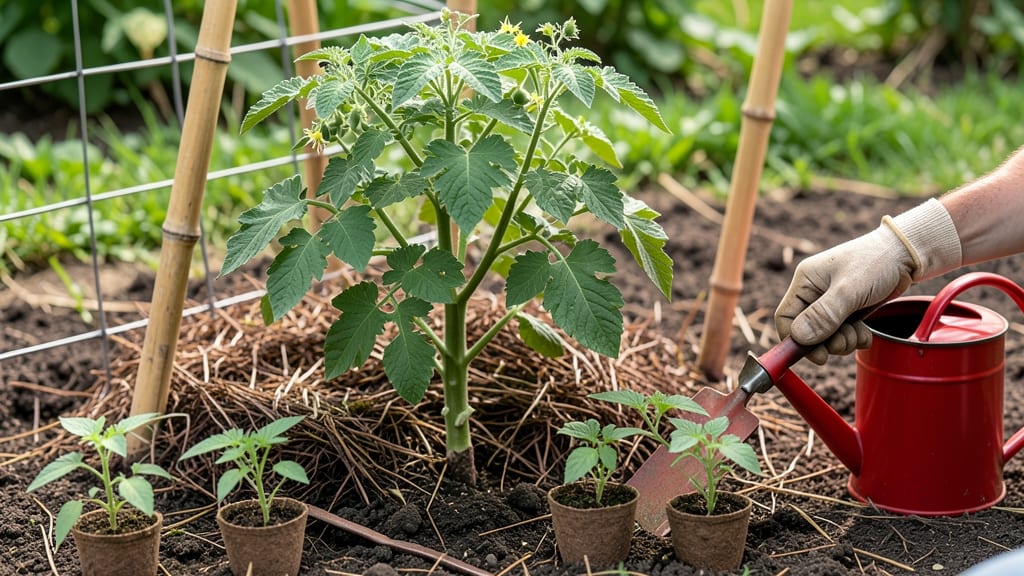
To plant tomato seedlings in the garden, timing is everything—wait until soil temperatures hit 60°F and nighttime lows stay above 50°F to avoid frost damage and stunted growth.
Picture this: you’ve nurtured your seedlings for weeks, only to watch them wilt overnight because you planted too soon. Or worse, you miss the sweet spot and harvest season slips away. Getting the timing right means the difference between a bountiful 🍅 harvest and wasted effort.
In USDA Zone 6a, that typically lands in late April or early May, but soil temperature—not the calendar—is the real trigger.
Below, I’ll walk you through how to check your soil’s readiness, adjust for early or late planting, and avoid the most common mistakes that derail even the most eager gardeners.
You’ll learn exactly when to transplant, how to harden off seedlings for survival, and the 3 key signs your garden is finally ready—so you can skip the guesswork and start harvesting by summer.
Optimal soil temperature for planting tomato seedlings (with exact degree guidelines)
Getting your tomato seedlings into the ground at the right time isn’t just about avoiding frost—it’s about giving their roots the perfect environment to thrive. Soil temperature is the hidden factor that determines whether your plants take off or struggle.
For tomatoes, the magic numbers start at 50°F (10°C) for root establishment, but you’ll want 60°F (15°C) or warmer for vigorous growth and flowering.
Why? Tomatoes are warm-season crops that refuse to grow when soil is chilly. Below 55°F (13°C), their roots slow down, delaying growth by weeks. Worse, cold soil can trigger disease risks like damping-off, where seedlings rot at the stem.
But how do you know when your soil is truly ready? Let’s break it down with science-backed guidelines and simple tests.
Soil thermometers are your best friend here—these inexpensive tools give you exact readings. Stick one into the soil 6 inches deep (where tomato roots will grow) and check it in the morning. If it’s consistently 60°F+ (15°C+) for 3-5 days, your seedlings are safe to plant. For cooler climates, aim for 55°F (13°C) as a minimum, but growth will be sluggish.
No thermometer? No problem. Try the moisture test: Dig a small hole, add water, and cover it with plastic. Check the next day—if the soil feels warm to the touch (like a cozy bath), it’s likely in the 55-60°F (13-15°C) range.
Another trick: Plant a fast-growing test crop like radishes. If they sprout in 3-5 days, your soil is warm enough for tomatoes.
Now, let’s talk regional timing. The USDA divides the country into hardiness zones, but soil warmth varies even within zones. Generally, you’ll want to plant after your last frost date and when nighttime temps stay above 50°F (10°C). Here’s a quick cheat sheet for common zones:
Pro tip: Morning soil temps are usually cooler than afternoon temps, so check in the late afternoon for the most accurate reading. If your soil is still too cold, raise beds or use black plastic mulch to absorb heat.
These tricks can add 5-10°F (3-6°C) to your soil’s warmth, making it safe to plant weeks earlier in cool climates.
What about nighttime temperatures? Tomatoes hate cold snaps. If nights dip below 50°F (10°C), growth stalls, and flowers may drop off. Use row covers or cloches to protect seedlings for the first 2 weeks after planting. This buffer gives roots time to establish before facing the elements.
One common mistake? Planting by the calendar instead of the soil. Just because it’s “spring” doesn’t mean your soil is ready. I’ve seen gardeners in Zone 5 plant in April only to watch their seedlings wilt when a late frost hits.
Always check both soil and air temperatures—they don’t always match.
For container gardening, soil heats up faster, so you can plant 1-2 weeks earlier than in-ground gardens. Just ensure your pots have drainage holes and use lightweight potting mix that warms up quickly. Pro growers swear by heat mats under containers to jumpstart root growth in cool springs.
Finally, remember that tomato varieties play a role. Determinate varieties (bush types) tolerate cooler soils slightly better than indeterminate varieties (vining types), which need consistent warmth to thrive. If you’re growing heirlooms or large vining types, prioritize 60°F+ (15
How to calculate your local last frost date and adjust planting timing
Getting your tomato seedlings in the ground at the right time means knowing your local last frost date with precision. A late frost can wipe out tender young plants, while planting too late reduces your harvest window.
The key is using a mix of USDA frost maps, historical weather data, and local observations to pinpoint that perfect window.
Start by checking the USDA Plant Hardiness Zone Map for your area—this gives you a baseline. However, your actual last frost date can vary by 1-3 weeks depending on microclimates, elevation, and recent weather patterns.
For example, a valley might warm up faster than a hilltop, even if they share the same zone.
Next, consult your local weather station or garden extension service for 3-5 years of frost records. Look for the average last frost date in spring and add a 2-week buffer to account for variability.
In my Zone 6a garden, this means aiming for mid-to-late May rather than the early April average.
Here’s how to calculate your safe transplant window using a step-by-step approach:
- 1 Check USDA Zone Map: Identify your hardiness zone (e.g., Zone 5-9). This sets your baseline frost window.
- 2 Find Local Frost Data: Visit NOAA’s Climate Data or your state extension office for your area’s historical last frost dates.
- 3 Add a 2-Week Buffer: Subtract 14 days from the average last frost date to account for early-season surprises.
- 4 Verify Soil Temperature: Use a soil thermometer to confirm 60°F+ soil temps at a 4-inch depth—critical for root growth.
- 5 Monitor Nighttime Temps: Ensure consistent 50°F+ nights for 1 week before planting to prevent chilling injury.
Once you’ve nailed down your safe transplant date, you can extend your growing season even further with season-extending tools. For cooler climates, use row covers or cold frames to plant 2-3 weeks earlier.
Black plastic mulch also warms the soil faster, giving your tomato seedlings a head start in chilly regions.
Remember, even with the best calculations, Mother Nature can throw curveballs. Keep a frost cloth on hand for the first 2 weeks after transplanting, just in case. My cherry tomato seedlings once survived a 32°F night under a lightweight row cover—proof that preparation pays off!