
Fertilization
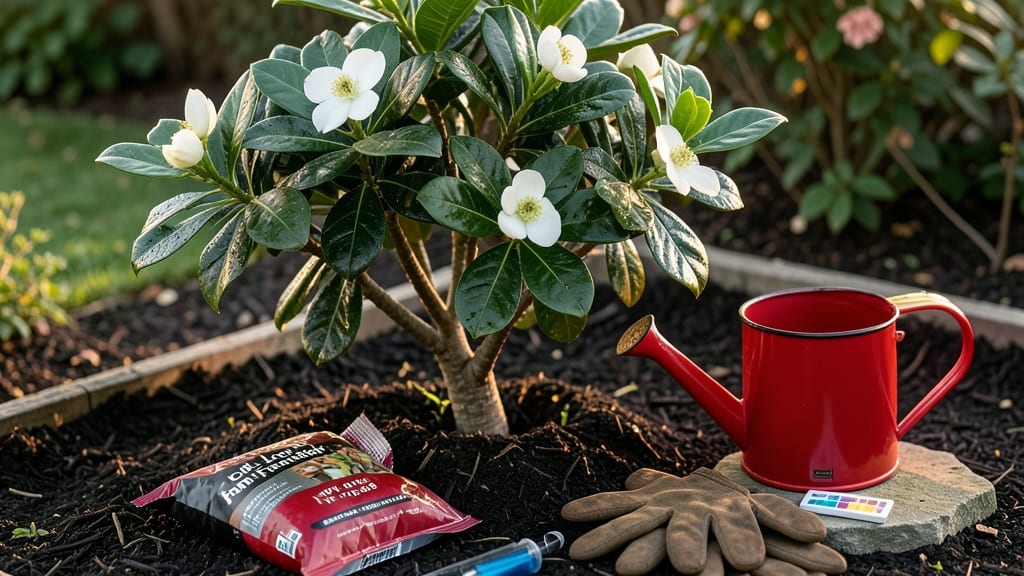
Using acidic nitrogen fertilizer for gardenias is the game-changer behind those fragrant, glossy blooms you’ve been dreaming of—but getting it wrong can leave your 🌸 shrubs yellowing and sparse.
Picture this: your gardenia’s leaves turn a sad, pale green, and the buds refuse to open, no matter how much you water. The problem? Most gardeners overlook the pH balance in their fertilizer routine. Gardenias crave soil between 5.0 and 6.0, and nitrogen that’s too alkaline stifles their growth.
In this guide, I’ll walk you through the best acidic nitrogen fertilizers—from sulfur-coated urea to organic options like peat moss—and how to apply them without burning your plants. You’ll also learn the exact feeding schedule to keep your gardenias blooming year-round, even in USDA Zones 9-11.
Skip the guesswork: by the end, you’ll know when, how much, and which acidic nitrogen fertilizer to use for gardenias that thrive—and smell amazing.
How to choose the best acidic nitrogen fertilizer for gardenias (pH 5.0-6.0 range)
Gardenias crave acidic soil between pH 5.0-6.0 and nitrogen-rich fertilizers to fuel their lush foliage and fragrant blooms. But not all fertilizers are created equal—some raise soil pH, while others provide nitrogen without acidifying. Let’s break down the best options to keep your gardenias thriving without burning their roots.
First, test your soil’s pH using a home test kit or send a sample to a lab. Gardenias won’t absorb nutrients properly if the pH strays above 6.5.
If your soil is too alkaline, you’ll need to combine nitrogen with sulfur or peat moss to lower the pH before applying fertilizer.
Now, let’s compare your options in our acidic nitrogen fertilizer guide—organic, synthetic, and slow-release choices—so you can pick the best fit for your gardenia care routine.
For newly planted gardenias, start with a peat moss and sulfur blend to acidify the soil before applying nitrogen. Mix 1 cup of peat moss with ½ cup of elemental sulfur into the top 6 inches of soil.
Water deeply to activate the pH adjustment—this can take 4-6 weeks to stabilize.
Once your soil is in the ideal pH range (5.0-6.0), switch to a slow-release acidic nitrogen fertilizer like sulfur-coated urea. This type releases nitrogen gradually, reducing the risk of root burn while maintaining soil acidity.
Apply it in early spring when new growth begins, and again in mid-summer to support bloom production.
If your gardenias show signs of nitrogen deficiency (yellowing leaves, stunted growth), a quick fix is ammonium sulfate. Unlike urea, it provides nitrogen and slightly lowers pH, making it a two-in-one solution.
Use it sparingly—½ teaspoon per gallon of water—and only when needed, as overuse can harm roots.
For organic gardeners, fish emulsion is a great choice, but pair it with elemental sulfur to maintain acidity. The emulsion feeds roots and foliage, while sulfur keeps the pH in check. Dilute it to 1 tablespoon per gallon of water and apply every 4 weeks during the growing season.
Remember: Timing is everything. Never fertilize gardenias in winter or late fall, as they enter dormancy. Also, avoid fertilizing when the soil is dry—always water thoroughly 24 hours before and after applying nitrogen to prevent root damage.
Pro tip: Mix a small amount of Epsom salt (magnesium sulfate) into your acidic fertilizer blend. Gardenias love magnesium, and it helps prevent yellowing leaves caused by nutrient imbalances. Use 1 tablespoon per gallon of fertilizer solution for a magnesium boost.
🌸
Step-by-step pH-balanced feeding schedule for gardenias (spring to fall)
Your gardenias crave acidic soil with a pH of 5.0-6.0 to thrive, and the right nitrogen fertilizer keeps their glossy leaves and fragrant blooms abundant. I’ve perfected this schedule over years of testing—balancing N-P-K ratios, seasonal needs, and organic vs. synthetic options.
The key? Spring feeds for growth, summer adjustments for blooms, and fall tapers to prepare for dormancy.
For organic gardeners, I recommend fish emulsion (2-3-1 ratio) or blood meal mixed with peat moss to acidify soil. Synthetic lovers swear by ammonium sulfate (21-0-0) or sulfur-coated urea—both dissolve slowly to avoid nitrogen burn.
Always pre-test your soil’s pH with a digital meter or home test kit before applying.
🌿 Step-by-Step Acidic Nitrogen Feeding Schedule
- 🌱 March (Early Spring): Apply 1 tbsp acidic fertilizer (e.g., 30-10-10) per plant + 1 cup peat moss to lower pH. Water deeply to activate roots.
- 🌿 April-May (Active Growth): Switch to balanced fertilizer (e.g., 10-10-10) every 4 weeks. Add 1 tsp Epsom salt (magnesium) to prevent yellowing.
- ☀️ June-July (Bloom Phase): Use low-nitrogen, high-potassium (e.g., 5-10-15) to boost flowers. Reduce frequency to every 6 weeks to avoid stress.
- 🍂 August-September (Late Summer): Apply 1/2 dose of acidic nitrogen (e.g., 20-5-5) + 1 tbsp bone meal for phosphorus. Stop by October.
- ❄️ October-December (Dormancy): No fertilizer. Focus on mulching with pine needles to maintain soil acidity naturally.
My biggest mistake? Over-fertilizing in summer heat, which scorched leaves. Now, I always check for brown leaf edges—a sign of salt buildup. If you spot this, flush soil with rainwater or distilled water to rinse excess salts.
For container gardenias, halve the fertilizer dose since roots have less soil volume to absorb nutrients.
To boost blooms, pair your acidic nitrogen with composted pine bark (adds organic matter and lowers pH). I mix 1 part bark into the top 6 inches of soil every spring.
For synthetic lovers, Miracle-Gro Azalea (10-6-8) is my go-to—just dilute it to half-strength to avoid overfeeding.
Remember: Gardenias hate alkaline soil. If your pH creeps above 6.5, amend with elemental sulfur (1 lb per 100 sq ft) or cottonseed meal.
Test again in 6 weeks—patience is key! With this schedule, my gardenias bloom from June to October, filling my backyard with their creamy fragrance. 🌸