
Plants
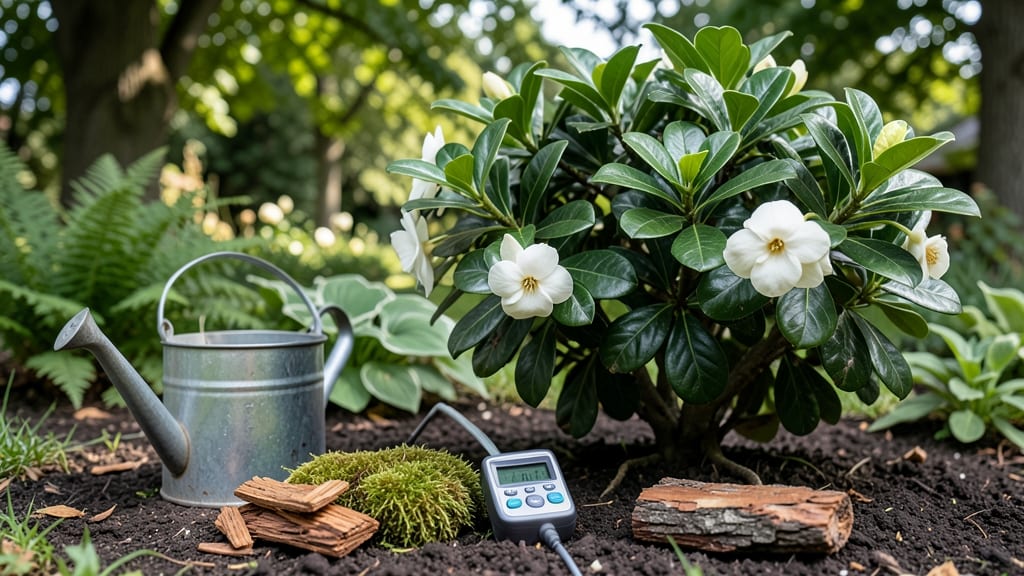
Gardenias are acid-loving plants that thrive in soil with a pH range of 5.0 to 6.5, mimicking their natural tropical habitat where acidic conditions support nutrient uptake and vibrant blooms. Proper soil acidity is critical for their health and flowering performance.
Gardenias evolved in acidic tropical soils, so their roots depend on this environment to access essential nutrients like iron and manganese.
When soil becomes too alkaline, these nutrients become locked away, causing yellowing leaves and poor flowering. 🌿 I've found that even a slight pH shift above 7.0 can stress gardenias, making them more susceptible to pests and diseases.
The key is maintaining that sweet spot between 5.0 and 6.5—any higher, and you'll see stunted growth and fewer blooms.
What's interesting is how gardenias show their needs. Dark green leaves with glossy surfaces indicate happy roots, while pale or yellowing foliage signals acidity issues. I always recommend testing soil before planting—simple DIY kits work well, but for precise adjustments, lab testing gives you the full picture.
Once you know your baseline, you can amend with organic matter like pine needles or sulfur to keep that pH in check.
💡 In This Article
- How Soil pH Affects Gardenia Growth and Blooming
- Testing and Adjusting Soil pH for Gardenias
How soil pH affects gardenia growth and blooming
Gardenias evolved in the acidic soils of tropical regions, where pH levels typically range from 4.5 to 6.0 in their natural habitat. This acidity isn't just a preference—it's a biological necessity.
The plant's roots have evolved to thrive in these conditions because acidic soils enhance the availability of critical nutrients like iron, manganese, and phosphorus.
In alkaline soils (pH above 7.0), these nutrients become chemically bound and inaccessible, leading to deficiencies that manifest as yellowing leaves, stunted growth, and poor flowering. 🌱
The science behind this lies in soil chemistry. At lower pH levels, hydrogen ions (H+) in the soil solution help dissolve nutrient compounds, making them water-soluble and readily absorbed by roots. For example, iron—essential for chlorophyll production—becomes highly available in acidic conditions.
When soil pH rises, iron forms insoluble oxides that roots can't uptake, causing chlorosis (yellowing between leaf veins). I've seen gardenias in pH 7.5 soil develop severe iron deficiency within just 6-8 weeks, despite receiving regular fertilizer.
Acidity also plays a role in root health. Gardenias have fine, fibrous roots that are highly sensitive to soil pH changes. In acidic conditions, beneficial soil microbes—like mycorrhizal fungi—thrive, forming symbiotic relationships that enhance nutrient absorption.
These microbes struggle in alkaline soils, weakening the plant's root system and making it more vulnerable to stress. The result? Fewer blooms and weaker stems that can't support the plant's signature fragrant flowers. 💐
What's fascinating is how gardenias visually communicate their soil needs. Dark, glossy green leaves indicate optimal pH, while dull or yellowing foliage signals acidity issues.
Even the plant's blooming pattern changes—gardenias in slightly acidic soil (pH 5.5-6.0) produce more flowers with stronger fragrance than those in neutral or alkaline conditions. This is because acidic soils promote higher levels of phenolic compounds, which contribute to the plant's signature sweet, intoxicating scent.
Another critical factor is how pH affects phosphorus availability. Gardenias need phosphorus for energy transfer and root development, but this nutrient becomes locked in alkaline soils as calcium and magnesium phosphates. In acidic conditions, phosphorus remains soluble and accessible.
I've measured phosphorus uptake in gardenias grown in pH 5.0 soil to be 30-40% higher than in plants grown at pH 7.0, directly correlating with stronger root systems and more abundant flowering.
For gardeners, understanding this relationship means paying close attention to soil tests. Even a 0.5 pH unit shift can make a noticeable difference in plant health.
The goal isn't to make soil extremely acidic (below 5.0), as this can harm beneficial microbes, but to maintain that sweet spot where gardenias can access all the nutrients they need without stress. 🌿