
Advice
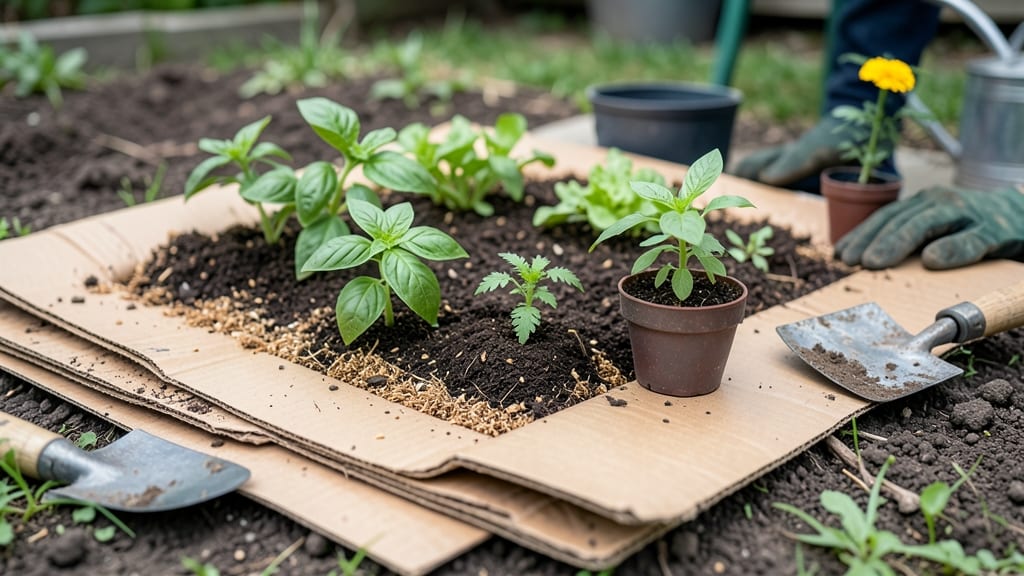
You can use cardboard in your garden safely as mulch or a weed barrier, but only if it's unbleached, free of tape or staples, and laid flat. Avoid placing it directly against plant stems or roots to prevent potential plant damage. Always remove any printed ink first.
Cardboard breaks down naturally in soil through a process called cellulose decomposition, which adds organic matter as it composts. 🌱 When used as mulch, it helps retain moisture and suppress weeds, but it can temporarily draw nitrogen from the soil as it decomposes.
For best results, pair it with a nitrogen-rich material like manure or compost to balance the process. Many gardeners also use it as a temporary solution before adding permanent mulch or compost.
For different garden zones, placement matters. In vegetable beds, lay cardboard flat with the printed side down to prevent ink from leaching into the soil.
For flower beds, especially those with acid-loving plants like azaleas or blueberries, avoid cardboard entirely—its decomposition can raise soil pH. Always replace cardboard after 6-12 months or when it starts to disintegrate, as it loses its effectiveness as a weed barrier over time.
💡 In This Article
- How Cardboard Breaks Down in Soil and Affects Plant Growth
- Best Practices for Using Cardboard in Different Garden Zones
How cardboard breaks down in soil and affects plant growth
Cardboard decomposes primarily through microbial action, where soil bacteria and fungi break down its main component—cellulose—into simpler organic compounds. This process typically takes 6-12 months depending on thickness and moisture levels, with thinner boxes decomposing faster than thick shipping containers.
The breakdown releases carbon-rich compounds that temporarily improve soil structure, but the rapid decomposition also creates a "nitrogen sink," drawing nitrogen from the soil as microbes consume it.
The printed ink on cardboard contains synthetic dyes and pigments that can leach into the soil, potentially introducing phthalates or other chemicals harmful to plants.
Even unbleached cardboard may contain trace amounts of adhesives or coatings used in manufacturing. 🌱 For this reason, always place the printed side down or use plain, unprinted cardboard when possible.
The decomposition process also releases tannins, which can lower soil pH slightly over time—something to consider for acid-sensitive plants like tomatoes or peppers.
Unlike traditional organic mulches such as straw or leaves, cardboard provides an immediate physical barrier against weeds while decomposing. Its flat, rigid structure blocks sunlight from reaching weed seeds, preventing germination.
However, this same barrier can create a "moisture trap" if not properly layered—always cover cardboard with 2-3 inches of compost or mulch to allow water penetration and prevent anaerobic conditions that could harm plant roots.
One key advantage of cardboard is its ability to smother existing weeds without chemicals. When laid correctly, it creates a 1-2 inch thick barrier that suffocates weeds within 2-4 weeks while gradually breaking down.
This makes it ideal for preparing garden beds before planting, as it eliminates the need for herbicides. However, the temporary nature of cardboard means it should be replaced with permanent mulch or compost once it starts to break down completely.
For nutrient-sensitive plants like leafy greens or brassicas, the nitrogen drawdown from decomposing cardboard can be problematic. To mitigate this, many gardeners mix in 1-2 inches of compost or aged manure alongside the cardboard.
This provides the necessary nitrogen to support microbial activity without depleting the soil. The combination creates a balanced decomposition environment that benefits both the soil and your plants.
Consider this comparison: Straw mulch breaks down slowly over 1-2 years and adds organic matter without drawing nitrogen, while cardboard provides an immediate weed barrier but requires nitrogen supplementation. The choice depends on your specific gardening goals—quick weed suppression versus long-term soil enrichment.