
Fertilization
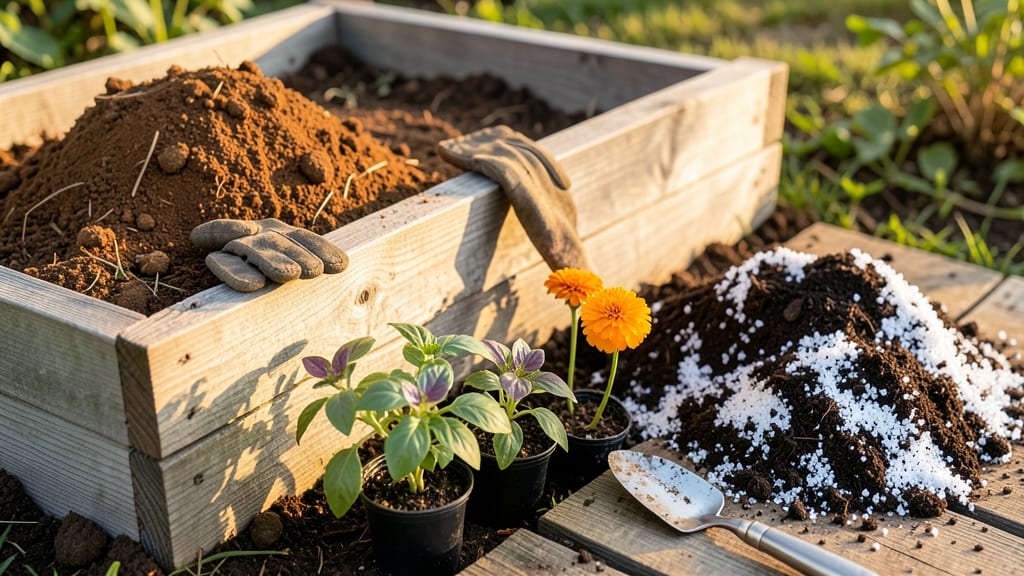
You can use garden soil in raised beds, but it requires careful preparation: unamended garden soil often harbors pests, pathogens, or poor drainage while lacking the nutrient density of topsoil. Mixing it with compost, sand, or coconut coir creates a more balanced growing medium for vegetables and flowers.
Garden soil from your yard often contains hidden problems like compacted layers, weed seeds, or harmful microbes that thrive in raised beds' controlled environment. 🌱 The key is transforming it into a looser, more fertile mix—think of it like upgrading from a dirt road to a well-paved highway for plant roots.
For heavy clay soils, I recommend blending equal parts garden soil with coarse sand or perlite, while sandy soils benefit from adding organic matter like leaf mold or well-rotted manure. Root vegetables like carrots and potatoes especially need this lighter texture to develop properly.
Even after mixing, sterilization helps eliminate dormant pests. Solarization—covering moist soil with clear plastic for 4-6 weeks—naturally heats it to kill pathogens, while baking small batches in the oven at 300°F for 30 minutes works for container mixes.
The payoff? Plants grow faster with fewer diseases, and you save money by repurposing what you already have. Just remember: the ideal raised bed soil should feel like a damp sponge—not sticky or crumbly—when squeezed.
💡 In This Article
- Risks of Garden Soil in Raised Beds: Pests, Compaction, and Nutrient Deficiencies
- How to Safely Use Garden Soil in Raised Beds: Mixing, Sterilizing, and Layering Techniques
Risks of garden soil in raised beds: pests, compaction, and nutrient deficiencies
Garden soil often contains hidden threats like nematodes, fungal spores, and weed seeds that can thrive in raised beds' warm, moist conditions. 🌱 These pathogens multiply rapidly in the controlled environment, where roots are concentrated and drainage is less predictable than in open ground.
For example, clubroot disease in brassicas (like broccoli) can turn healthy plants into stunted, yellowing messes within weeks if infected soil isn't treated. The problem isn't just the microbes themselves—it's how they interact with your plants' immune systems, which are already stressed by the soil's poor structure.
Compaction is another silent killer. Garden soil often has a dense, layered structure from years of foot traffic or machinery.
When packed into raised beds, this creates a brick-like barrier that restricts root growth—especially for deep-rooted plants like tomatoes or potatoes. 🌿 A simple squeeze test reveals the issue: compacted soil holds its shape like wet clay, while ideal raised bed mix should crumble easily between your fingers.
This density also limits oxygen flow to roots, which can lead to stunted growth or even root rot in heavy clay soils. Even "good" garden soil can have pockets of sand or silt that create uneven moisture distribution, leaving some roots waterlogged while others dry out.
Nutrient deficiencies become obvious when comparing garden soil to topsoil.
Most yard soil is depleted of essential micronutrients like boron or zinc after years of plant uptake, while raised beds demand a consistent supply. 🌱 For instance, leafy greens like spinach need readily available nitrogen, but garden soil often releases it too slowly.
The organic matter in garden soil also breaks down faster in raised beds' elevated temperatures, accelerating nutrient loss. Without amendments, you'll see symptoms like yellowing leaves (nitrogen deficiency) or purple stems (phosphorus deficiency) within just a few weeks of planting.
Root crops suffer most from these issues because they need loose, uniform soil to develop properly.
Carrots grown in unamended garden soil often fork or split due to uneven resistance, while potatoes develop rough, gnarled shapes from struggling against compacted layers. 🥕 Even herbs like basil, which are less demanding, will produce smaller leaves and weaker stems when grown in poor-quality soil.
The contrast is striking when you compare plants grown in amended raised beds—their roots spread freely, and their foliage stays vibrant green instead of developing the dull, mottled appearance of nutrient-stressed plants.
One often-overlooked factor is the soil's pH balance. Garden soil frequently sits at extreme pH levels (either too acidic or alkaline) that lock out essential nutrients.
For example, blueberries need acidic soil (pH 4.5-5.5), but most garden soil tests between 6.0-7.5. 🌿 When you mix in garden soil without testing, you might accidentally create conditions where plants can't absorb calcium or magnesium—even if those nutrients are present.
This is why soil testing before mixing is critical; it reveals hidden imbalances that could sabotage your entire harvest.
The real tragedy is that these problems are invisible until it's too late.
What looks like fertile dark soil on the surface might contain a time bomb of compacted subsoil just inches below. 💥 This is why professional gardeners recommend never using garden soil alone in raised beds—it's like building a house on a foundation you haven't inspected.
The solution lies in transforming that garden soil into something entirely different: a custom-growing medium tailored to your plants' specific needs.