
Tools
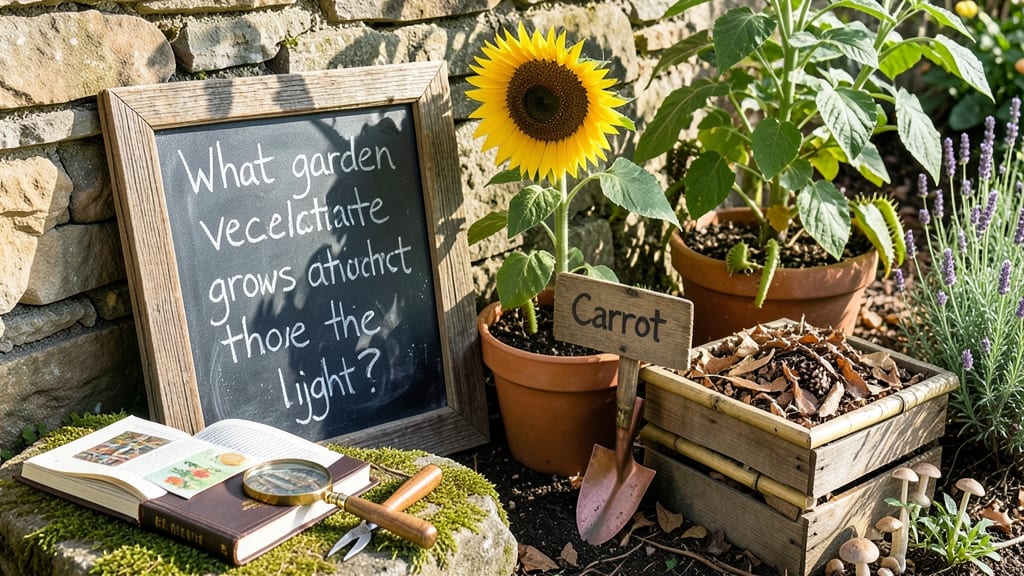
Garden trivia questions and answers uncover surprising plant facts, like the bamboo species that grows a full meter per day or the bristlecone pine that can live over 5,000 years, making them perfect for sparking curiosity and deepening your connection to nature.
These fun facts do more than just entertain—they reveal the incredible adaptations plants have developed over millennia. 🌱 For example, did you know the Venus flytrap's "snapping" mechanism is one of the fastest movements in the plant kingdom, completing its trap closure in just 0.1 seconds?
Understanding these quirks helps gardeners appreciate why certain plants thrive in specific conditions, from the deep roots of desert dwellers to the carnivorous habits of bog plants.
Many trivia facts also highlight how humans have shaped plant evolution through cultivation, like the 10,000-year history of corn that transformed from wild teosinte into today's staple crop.
Beyond pure knowledge, these facts create memorable learning moments. Whether you're teaching kids about plant life cycles or hosting a gardening club trivia night, the right questions can turn a simple fact into a lasting memory.
I've found that pairing trivia with visuals—like showing a time-lapse of bamboo growth—makes the learning experience even more engaging. The best garden trivia doesn't just test what you know; it reveals how much more there is to discover right in your backyard.
💡 In This Article
- Science Behind Popular Garden Trivia Facts
- How to Use Garden Trivia in Gardening Clubs or Lessons
Science behind popular garden trivia facts
The Venus flytrap's lightning-fast trap closure—just 0.1 seconds—is powered by a clever turgor pressure mechanism. When tiny hairs on its leaves are triggered, specialized cells called motor cells rapidly absorb water, creating internal pressure that snaps the lobes shut.
This adaptation evolved in nutrient-poor bogs where the plant needs to catch insects for nitrogen. 🌿 The same principle explains why mimosa pudica plants "sleep" at night—their leaves fold due to potassium ion movements that cause cells to lose water and droop.
Bamboo's explosive growth—up to 35 inches per day—relies on a unique vascular system that rapidly transports water and nutrients. This rapid elongation is called "culm elongation," where the plant's stem cells divide at an astonishing rate, fueled by stored energy in its rhizomes.
Interestingly, this growth pattern is similar to how some mushrooms expand overnight, though bamboo's growth is more controlled and sustained.
The oldest living trees, like the bristlecone pine, owe their longevity to dense, resinous wood that resists rot and pests, while their shallow but extensive root systems anchor them against mountain winds.
Photosynthesis gets even more fascinating with plants like the pitcher plant, which has evolved translucent, waxy leaves that act like funnels to trap sunlight while digesting insects. These carnivorous plants thrive in nutrient-poor soils by supplementing their diet with nitrogen from trapped prey.
The deep roots of desert plants, like the mesquite tree, can extend 50 feet underground to access water tables, while their small leaves reduce water loss through transpiration. These adaptations explain why some plants appear in trivia—because their survival strategies are nothing short of extraordinary. 🌵
The corn plant's dramatic transformation from wild teosinte to modern maize is a prime example of human-driven evolution. Through selective breeding over 9,000 years, farmers increased the plant's cob size from just a few kernels to hundreds, while reducing its natural seed dispersal mechanism.
This process highlights how closely tied plant trivia is to human agriculture and history. Even the humble potato's ability to produce 200 tubers per plant under ideal conditions is a result of careful cultivation that maximized its storage capabilities.
Some trivia-worthy plants, like the resurrection fern, can survive years of drought by entering a dormant state, reviving within hours when water returns. Their cells produce protective sugars and proteins that preserve cellular structures until conditions improve.
This extreme resilience is why these plants appear in survival-themed trivia—they're living proof of nature's ability to adapt to harsh conditions. 💧 Understanding these mechanisms helps gardeners appreciate why certain plants thrive in specific microclimates, from the shade-loving ferns to the sun-worshipping succulents.
For example, the giant sequoia's massive size—up to 300 feet tall—is made possible by its thick bark, which protects against both fire and pests. This adaptation explains why these trees dominate trivia lists about the largest living organisms.
Meanwhile, the tiny watermeal (Wolffia) holds the record for the world's smallest flowering plant, measuring just 0.4 inches across. These extremes in size and adaptation create the perfect foundation for engaging garden trivia that spans the entire plant kingdom. 🌲