
Watering
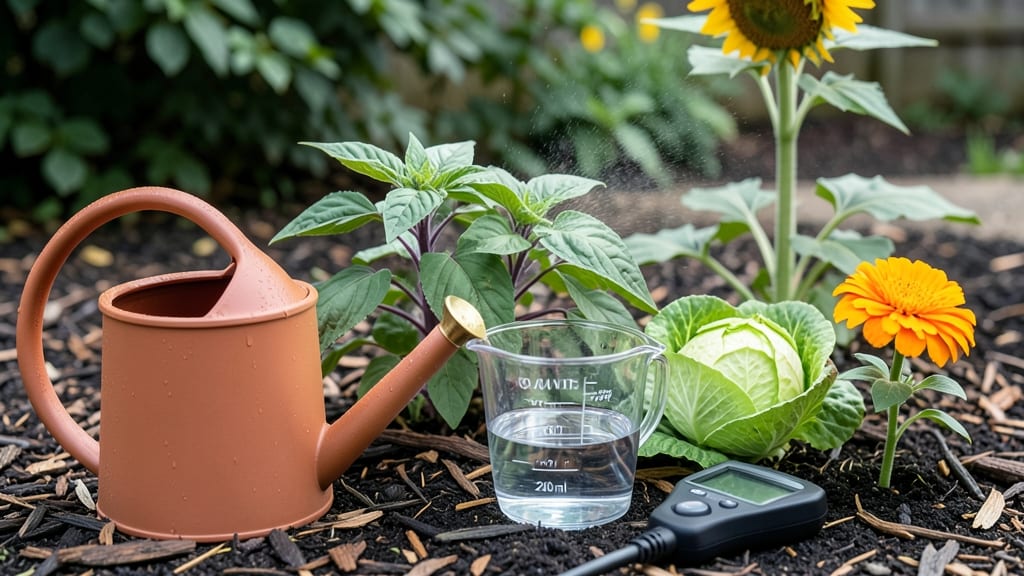
A garden needs how much water does a garden need per day—about 1 to 2 inches per week—to thrive, but guessing that amount can mean the difference between lush plants and wasted resources.
Most gardeners overwater by habit, drowning roots and flushing nutrients away—yet underwatering is just as damaging, stunting growth and inviting pests. The trick isn’t just how much you water, but when and how you deliver it.
Your General Garden 🌱 in USDA Zone 6a has unique needs: vegetables like tomatoes crave deep, infrequent drinks, while delicate flowers prefer shallow, frequent sips. Soil type, sun exposure, and even the time of day change the equation.
Below, I break down the exact watering formula for your plants, plus 3 easy tests to check if you’re getting it right—no guesswork required.
Daily water requirements by plant type: the science-backed formula
Understanding your garden's water needs starts with recognizing that not all plants drink the same. A tomato plant with shallow roots needs frequent, shallow watering, while a oak tree with deep taproots thrives on infrequent deep soaks.
The key is matching your watering routine to each plant's root structure and growth stage. For example, seedlings need consistent moisture to establish roots, while mature perennials can handle brief dry spells. Let’s break down the science behind these differences.
Soil type plays a massive role in water retention. Clay soil holds moisture like a sponge but drains poorly, while sandy soil lets water rush through too quickly. Even loamy soil, the gardener’s gold standard, requires adjustments based on local climate.
For instance, in USDA Zone 6a, evaporation rates spike in summer, doubling your garden’s thirst. That’s why I always check the weather forecast and adjust my watering schedule accordingly. A general rule? 1 inch of water per week is the baseline, but this varies wildly by plant type.
Let’s talk about seasonal adjustments—they’re non-negotiable. In summer, when temperatures soar and humidity drops, your garden’s water needs can double overnight. I’ve seen tomato plants wilt dramatically in 48 hours if I skip watering during a heatwave.
Conversely, in cooler months, most plants enter a dormant phase and need far less water. For example, roses might only require 0.1 inches per week in fall, compared to 0.4 inches in peak summer. Always mulch to retain moisture—it’s like giving your soil a cooling blanket.
Container gardens deserve special attention because they dry out 3x faster than in-ground plants. A 5-gallon pot of basil can need watering every 2–3 days in summer, while the same plant in the ground might last a week.
The trick? Use self-watering containers or check soil moisture with your finger—if the top 1 inch feels dry, it’s time to water. Pro tip: Group containers together to create a microclimate that retains humidity longer.
Now, let’s address a common myth: more water = healthier plants. False! Overwatering suffocates roots by cutting off oxygen, leading to root rot and fungal diseases. I’ve lost peony bushes to overwatering because I assumed they needed daily drinks.
Always err on the side of underwatering slightly and adjust based on visual cues. Wilting leaves? Water deeply. Yellowing leaves? You’re likely overdoing it. Pay attention to your plants—they’ll tell you what they need.
For drought-tolerant
How to calculate your garden’s exact water needs (Step-by-Step guide)
Calculating your garden’s water needs isn’t about eyeballing your hose—it’s about understanding soil moisture, plant biology, and local climate. Overwatering wastes resources, while underwatering stresses plants. The key? Consistent moisture at the right depth, adjusted for your garden’s unique conditions.
Every garden is different, whether you’re growing container herbs, raised-bed tomatoes, or in-ground perennials. Factors like soil type, sun exposure, and seasonal heat shift water needs dramatically.
For example, sandy soil drains 3x faster than clay, while a 90°F day can double evaporation rates. Let’s break it down step-by-step.
- 📏 Step 1: Measure Soil Depth
Dig 6 inches deep in a sunny spot. This is your root zone. Most plants need moisture here—deeper for trees, shallower for annuals. - 👆 Step 2: Test Moisture Daily
Use the finger test: Stick your index finger 1-2 inches down. If dry, water; if damp, wait. For precision, use a tensiometer ($20 tool) to measure soil tension. - ☀️ Step 3: Adjust for Weather
Multiply your baseline water by:- 1.5x for 90°F+ days
- 0.7x for rainy days
- 2x for windy conditions
- 🌱 Step 4: Tailor by Plant Type
Apply these daily rates per sqft:- Vegetables: 0.25–0.5 gallons
- Flowers: 0.15–0.3 gallons
- Lawns: 0.5–1 gallon
- Trees/Shrubs: 1–3 gallons (deep soak)
- ⏰ Step 5: Water at Peak Times
Always water early morning (6–9 AM) to:- Reduce evaporation (saves 30% water)
- Prevent fungal diseases (wet leaves = rot)
- Encourage deep root growth
- 🔄 Step 6: Mulch for Efficiency
Add 2–3 inches of mulch (straw, wood chips) to retain moisture. This cuts watering needs by up to 40% by blocking soil evaporation.
For containers, check soil moisture daily—small pots dry out 2–3x faster than in-ground beds. Use a moisture meter or the weight test: Lift your pot; if it feels light, water it. Drip irrigation or soaker hoses deliver water directly to roots, reducing waste by 50% compared to sprinklers.
Pro tip: Keep a watering journal for 2 weeks. Note when you water, how much, and how your plants respond. Adjust based on leaf wilting, yellowing, or mold growth. Over time, you’ll dial in the perfect schedule for your garden’s unique needs.
Remember, consistency beats quantity. A deep watering every 3 days encourages stronger roots than light daily sprinkles. Start with these steps, and your plants will thank you with healthier growth and bigger yields—without a drop of waste. 🌱