
Planting
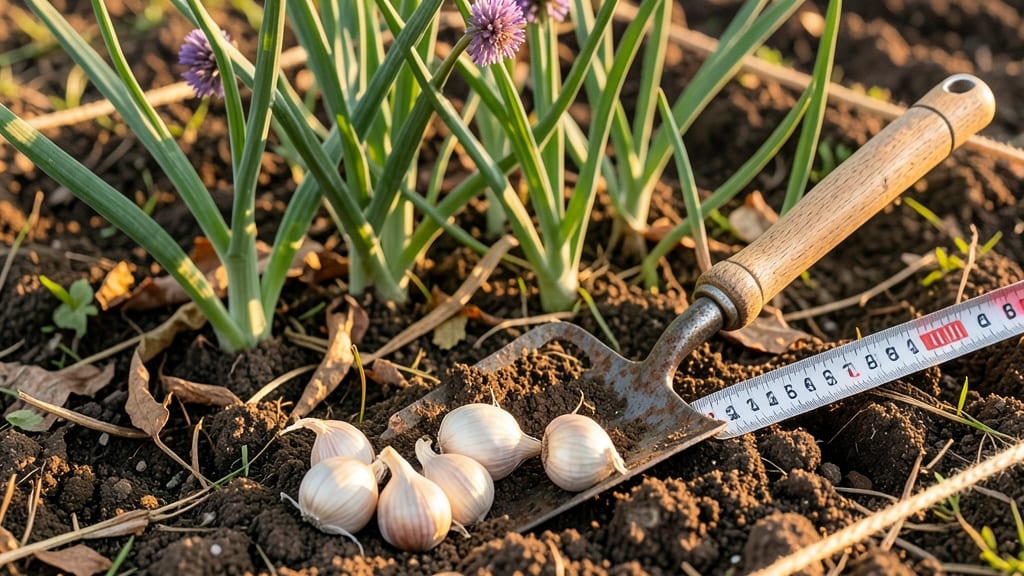
Garlic spacing in garden determines whether you'll harvest fat, flavorful bulbs or end up with tiny, weak cloves that barely cover your cooking needs.
Struggling with small, weak garlic bulbs? The secret to growing plump, flavorful garlic lies in proper spacing—yet most gardeners get it wrong. Learn the exact planting distances that maximize bulb size and yield, whether you're growing hardneck, softneck, or elephant garlic 🧄.
Too close, and your garlic will compete for nutrients, leaving you with puny harvests. Too far apart, and you waste precious garden space. The right spacing—4 to 6 inches between cloves and 12 to 18 inches between rows—balances airflow, sunlight, and soil nutrients for the biggest bulbs.
In this guide, I’ll break down the ideal spacing for each garlic type, common mistakes to avoid, and advanced techniques to squeeze even more harvests from your garden.
Optimal garlic spacing by variety: hardneck vs softneck vs elephant garlic
Getting the garlic spacing right transforms your harvest from puny cloves to plump, flavorful bulbs. Each garlic type—hardneck, softneck, and elephant garlic—has unique spacing needs that directly impact bulb development. Overcrowding steals nutrients, while over-spreading wastes garden space.
Let's break down the science behind spacing for each variety to maximize your yield.
Why does spacing matter? Garlic bulbs need room to expand underground and develop properly. Hardneck varieties, for example, produce scapes that require extra space, while elephant garlic grows larger bulbs but needs deeper soil.
Even soil density and climate zones play a role—compacted soil or warm regions may require adjustments to standard spacing guidelines.
Before we dive into measurements, here's a quick rule: plant cloves 2 inches deep with the pointed end up, but the distance between them varies dramatically by type. Row spacing also matters—tight rows can block sunlight and airflow, inviting fungal diseases like white rot.
Let's explore the ideal distances for each garlic variety in our comparison table below.
For hardneck garlic, the 4-6 inch spacing between cloves allows room for scapes to develop without competing for nutrients. Row spacing of 12-18 inches ensures airflow and prevents fungal diseases.
In cold climates (USDA Zones 3-5), you can reduce plant-to-plant distance to 4 inches since growth is slower, but maintain wider rows to avoid shading.
If you're growing softneck garlic, which stores longer and braids better, 5-7 inch spacing between cloves gives bulbs enough room to mature without overcrowding. Row spacing of 12-16 inches works well, but in hot, dry climates, increase spacing to 7 inches to reduce stress on plants.
Softneck varieties like Silverskin garlic benefit from slightly tighter rows since they produce smaller bulbs.
Elephant garlic is the giant of the garlic world, and its 8-12 inch spacing reflects its massive bulb size. Row spacing of 24-30 inches is critical—this variety needs deep, loose soil to accommodate its large underground growth. In compacted or clay-heavy soil, consider planting on raised beds or mounds to improve drainage and bulb development.
Adjusting for soil density is key. In loose, sandy soil, you can plant hardneck garlic 6 inches apart since the soil won't restrict root growth.
Conversely, in heavy clay soil, reduce spacing to 4 inches for hardneck varieties to compensate for slower growth. Elephant garlic in clay soil may need 12 inch spacing and planting on mounds to prevent waterlogging.
Pro tip: Use a stake or marker to map your rows before planting. This helps visualize spacing and ensures consistency, especially if you're planting multiple varieties. Label your rows—hardneck, softneck, and elephant garlic have different harvest times and storage needs, so keeping them organized saves time later.
Remember, proper spacing isn't just about bulb size—it's also about disease prevention and harvest quality. Overcrowded garlic develops small, weak bulbs with poor storage life, while ideal spacing leads to large, firm cloves that store well for months.
Experiment with spacing in small sections of your garden to see what works best for your soil type and climate.
Now that you've got the spacing down, your next step is to monitor soil moisture and fertilize lightly during the growing season. Garlic thrives with consistent watering but hates soggy soil—aim for 1 inch of water per week and adjust based on rainfall.
With these spacing guidelines, you're on your way to growing bigger, better garlic than ever before! 🌱
Common garlic spacing mistakes that shrink your harvest
If your garlic bulbs are smaller than expected, spacing mistakes might be the culprit. Overcrowding or underplanting both sabotage growth, leading to stunted bulbs, disease risks, and wasted garden space.
I've seen gardeners plant garlic too close together for "quick harvests," only to end up with shallow-rooted, flavorless cloves. Let's fix that!
The biggest mistake? Planting cloves 2-4 inches apart when they actually need 4-6 inches of space. This gives roots room to expand and bulbs room to plump up.
Without proper spacing, plants compete for nutrients and sunlight, resulting in poor bulb formation. Even row spacing matters—crowded rows trap moisture, inviting fungal diseases like white rot.
⚠️ Overcrowded Garlic = Tiny Harvests
Problem: Cloves planted closer than 4 inches lead to shallow roots, stunted bulbs, and disease spread. Overcrowding also blocks sunlight, causing leaf yellowing and poor flavor development.
Fix: Thin seedlings to 6 inches apart early in the season. For existing beds, remove every other plant to restore airflow. Mulch with straw to prevent soil compaction and improve drainage.
Another common error is underplanting—leaving too much space between cloves or rows. While this might seem ideal, it wastes valuable garden real estate. Elephant garlic, for example, needs 8-12 inches between plants to develop its massive bulbs, but many gardeners treat it like regular garlic.
This leads to uneven bulb sizes and missed yield potential.
To visualize the difference, imagine a 4-foot-wide garden bed. Planting garlic in a single row with 6-inch spacing fits about 8 cloves. But if you plant two staggered rows with 4-inch spacing, you cram in 24 cloves—yet most will produce tiny, weak bulbs.
Proper spacing turns that bed into a high-yield garlic powerhouse.
Fixing overplanted beds is easier than you think. Start by sketching your garden layout and marking ideal spacing with stakes. For hardneck varieties, space cloves 4-6 inches apart in rows 12-18 inches apart.
For softneck, use 5-7 inches between plants and 14-16 inches between rows. If your bed is already planted too tightly, thin seedlings when they're 2-3 inches tall.
Remember, garlic thrives on airflow. Proper spacing prevents fungal diseases like rust and botrytis, which love damp, crowded conditions. A well-spaced garlic patch also deters pests like aphids and thrips, reducing the need for chemical interventions.
With the right spacing, you'll harvest larger, more flavorful bulbs—and maybe even save space for other crops! 🧄