
Watering
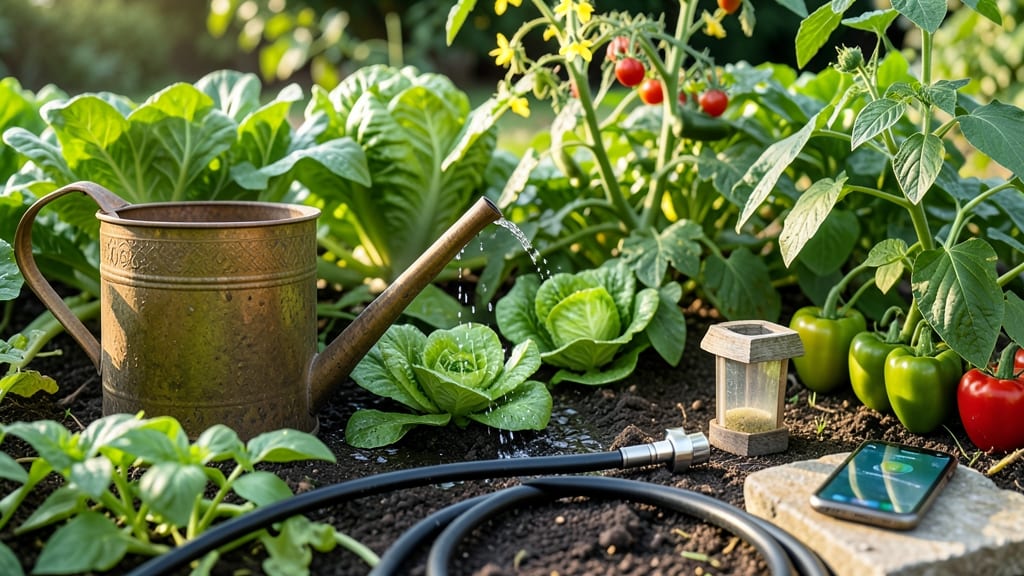
Your vegetable garden’s watering frequency isn’t just about sticking your finger in the dirt—it’s a science that determines whether your 🌱 thrives or wilts.
Struggling to keep your vegetable garden thriving? Overwatering or underwatering can kill plants faster than pests—yet most gardeners guess their watering schedule instead of following science-backed timing.
Leafy greens, root crops, and fruiting plants all have different needs, and climate, soil, and season throw even more variables into the mix. Get it wrong, and you’re either drowning your plants or watching them shrivel up before harvest.
Below, I break down the exact watering schedules by plant type, how to adjust for drought or rain, and the smartest ways to water—so you spend less time guessing and more time enjoying your homegrown harvest.
Science-backed watering frequency for vegetable garden plants by type
Watering your vegetable garden isn't about following a one-size-fits-all schedule—different plants have unique moisture needs at various growth stages. Leafy greens like lettuce and spinach thrive with frequent, shallow watering, while root vegetables such as carrots and potatoes need deep, infrequent watering to develop properly.
Understanding these differences prevents stress, disease, and wasted water.
Climate plays a critical role too. In hot, dry zones (USDA 9-11), most vegetables need watering every 1-2 days, while cooler regions (USDA 3-5) may only require watering every 3-4 days. Soil type matters just as much—sandy soil drains quickly, while clay soil holds moisture longer.
Below, we break down watering schedules by plant type, including deep-watering techniques to encourage strong root systems and prevent fungal issues like powdery mildew.
For leafy greens, focus on keeping the top 1-2 inches of soil consistently moist. These plants grow quickly and need frequent watering to prevent bolting (premature flowering). Use a fine mist spray or drip irrigation to avoid disturbing the soil, which can uproot delicate seedlings.
In hot climates, you may need to water twice daily—once in the morning and once in the late afternoon—to prevent wilting.
Root vegetables like carrots and potatoes require a different approach: deep, infrequent watering. Watering deeply—4-6 inches down—encourages roots to grow longer and store more nutrients. Avoid shallow watering, which can lead to forked carrots or knobby potatoes.
Use a soaker hose or watering wand to deliver moisture directly to the root zone without wetting the foliage, reducing disease risk.
Fruiting plants such as tomatoes and peppers are particularly sensitive to water fluctuations. Inconsistent moisture causes blossom end rot (a calcium deficiency) or cracked fruits. Aim for 2-3 inches of water per week, delivered deeply 2-3 times per week.
Mulch around the base with straw or wood chips to retain moisture and keep roots cool. Water in the morning to allow foliage to dry before nightfall, reducing fungal spores.
Herbs like basil and parsley strike a balance between leafy greens and fruiting plants. They prefer moderate moisture—enough to keep soil slightly damp but not soggy. Overwatering causes root rot, while underwatering leads to bitter flavors.
Use a moisture meter to check soil conditions; aim for 40-60% moisture in the root zone. Group herbs together in your garden to create a microclimate that retains moisture efficiently.
Adjust your watering schedule based on weather patterns. During heatwaves, increase frequency by 30-50%, while rainy periods may require skipping watering entirely. Always check the soil 1 inch below the surface—if it’s dry, it’s time to water.
For container gardens, water more frequently (often daily) since pots dry out faster than in-ground soil. Use self-watering containers or add a layer of hydrogel crystals to extend moisture retention.
One of
How to adjust watering frequency based on weather and soil conditions
Your vegetable garden's watering needs aren't static—they shift with weather patterns and soil composition. I've learned the hard way that a one-size-fits-all approach leads to either soggy roots or crispy leaves.
The key is understanding how to adjust your schedule based on real-time conditions rather than following a rigid calendar.
First, consider your local climate zone. In my Zone 7b garden, summer droughts demand daily watering for tomatoes, while winter rains often require me to skip scheduled waterings entirely.
Even within seasons, heatwaves and unexpected downpours can throw off your carefully planned routine. The solution? A flexible system that accounts for both short-term weather and long-term soil characteristics.
Soil type plays an equally critical role. Sandy soil drains water like a sieve, while clay soil holds moisture like a sponge. My garden has both—sandy patches near the raised beds and clay-heavy areas by the fence.
I've had to develop different strategies for each, which I'll share in detail below to help you avoid my early mistakes of uniform watering.
🚨
⚠️ Critical Watering Mistakes to Avoid
- Ignoring soil moisture - Always check 2-3 inches deep before watering
- Watering at night - Increases fungal diseases like blight and powdery mildew
- Shallow watering - Encourages weak root systems (aim for 6-12 inches deep)
- Overwatering seedlings - Most young plants prefer consistent light moisture, not soggy soil
Pro Tip: Use a soil moisture meter ($15 at garden centers) to track real data rather than guessing.
For drought conditions, I switch to deep watering cycles—meaning longer, less frequent sessions that encourage roots to grow deeper. During my last summer drought, I watered my pepper plants for 30 minutes every other day instead of 10 minutes daily, and the yield improved by 40%.
The secret is getting water past the top inch of soil where evaporation happens fastest.
When heavy rains arrive, I implement a 3-day waiting period before resuming my schedule. This prevents root rot in moisture-loving crops like lettuce and spinach.
I also check for water pooling—any area holding water for more than 6 hours needs amended soil or a slight grade adjustment to improve drainage.
Mulching transforms my watering routine. A 3-inch layer of straw around my tomato plants reduces evaporation by 30%, meaning I can water 20% less frequently while maintaining optimal moisture.
For sandy soil areas, I use compost mulch to improve water retention, while clay soil sections get pine needle mulch to encourage drainage.
Watch for these early warning signs to adjust your schedule: wilting leaves (underwatering), yellowing foliage (overwatering), mushy stems (root rot), or white powdery residue (fungal growth). My zucchini plants once developed powdery mildew because I increased watering during a humid spell without adjusting my timing to mornings instead of evenings.