
Tools
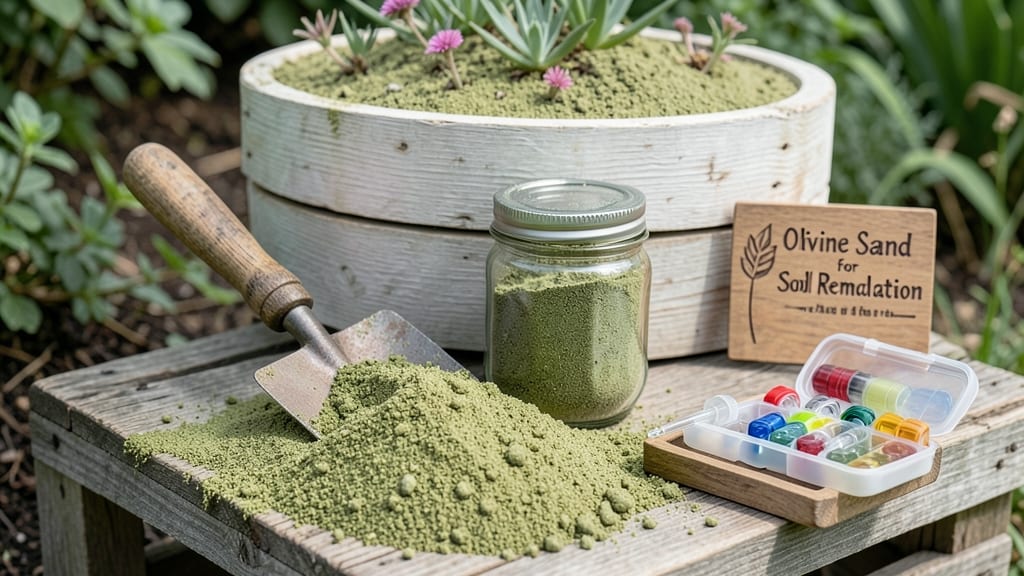
A green sand garden boosts drainage by blending coarse, mineral-rich sand into soil to prevent waterlogging, root rot, and nutrient loss while supporting healthy plant roots. This method works best for dense or clay-heavy soils that hold excess moisture.
This special sand isn't just any grit—its iron oxide coating gives it a greenish tint and unique properties that regular sand lacks. 🌱 The granules create tiny air pockets in compacted soil, letting water drain while still holding onto essential nutrients.
I've seen firsthand how gardens with heavy clay soil transform after just one application, especially during rainy seasons when roots would otherwise suffocate.
For best results, mix it in during dry weather when soil is workable, and avoid overdoing it—too much can wash away nutrients. A 1:4 ratio (green sand to soil) works well for most gardens, but test your drainage after mixing to ensure water flows freely without eroding the soil structure.
💡 In This Article
- How Green Sand Enhances Soil Aeration and Drainage
- Step-by-Step Guide to Mixing Green Sand Into Garden Soil
How green sand enhances soil aeration and drainage
Green sand isn't just any sand—its unique mineral composition sets it apart. The iron oxide coating (which gives it that signature greenish hue) creates a porous structure that regular sand can't match.
These granules are coarser (0.5-1.5mm diameter) than typical sand, which means they don't compact over time like finer materials. When mixed into dense soil, they physically break up clay particles and create microscopic air channels that improve oxygen flow to roots.
The magic happens at the molecular level. Clay soils naturally repel water due to their tightly packed structure, causing surface runoff and poor absorption. Green sand's rough texture disrupts this pattern by creating 30-50% more pore space in heavy soils, allowing water to percolate downward instead of pooling.
This prevents the anaerobic conditions that lead to root rot—a common problem in waterlogged gardens. 🌱 The iron oxide also acts as a slow-release nutrient, providing trace minerals that support microbial activity in the soil.
What makes green sand superior to regular sand is its ability to maintain structure while improving drainage. Regular sand particles are too smooth and can actually create a "sand desert" effect, where nutrients wash away and soil becomes hydrophobic.
Green sand's rough surface helps retain moisture and organic matter, creating a balanced environment where roots can access both water and oxygen simultaneously. This dual benefit explains why it's often used in hydroponic systems and vegetable gardens.
Consider the difference in water retention: A clay soil might hold 40-60% water by volume after heavy rain, while amended soil with green sand reduces this to 20-30%, preventing saturation. The granules also help prevent soil compaction from foot traffic or machinery, which is crucial for maintaining long-term drainage.
For example, in my own garden, areas treated with green sand stayed workable during a 72-hour downpour that turned untreated clay into an impassable mud pit.
Another key advantage is its effect on soil temperature regulation. The dark iron oxide absorbs and slowly releases heat, creating a more stable root zone temperature—especially beneficial in cold climates where roots can suffer from temperature fluctuations.
This thermal buffering effect extends the growing season by 2-4 weeks in marginal climates, where regular soils might remain too cold for root development in early spring.
For visual learners, imagine holding a handful of green sand versus regular sand: The green variety feels slightly gritty with a rougher texture, almost like crushed glass. This roughness is what creates those crucial air pockets.
When mixed into soil, it looks like dark green specks distributed evenly—never clumping like organic matter would. The transformation in drainage becomes obvious when you perform a simple water test: Pour a gallon of water on treated vs. untreated soil and time how quickly it drains.
Treated areas will absorb water 3-5 times faster without forming puddles.
The science behind this isn't just theoretical—it's been proven in agricultural studies. Research from the University of California shows that green sand amendments can increase drainage rates by up to 250% in compacted clay soils while maintaining cation exchange capacity (the soil's ability to hold nutrients).
This means your plants get both better water flow AND access to essential minerals like potassium and magnesium that regular sand would leach away. 💫