
How To
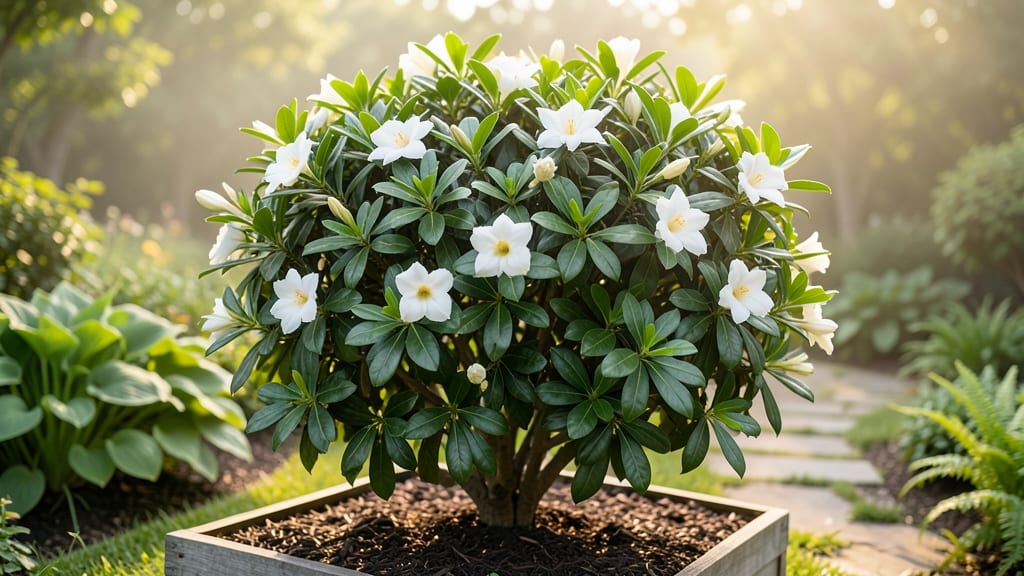
Gardenia bushes grow anywhere from 2 feet to 6 feet tall, depending on the variety and growing conditions, so choosing the right one for your space is key.
If you’re dreaming of fragrant gardenias but wondering how much space they’ll need, the answer depends entirely on the variety—some stay compact while others sprawl like small trees.
For example, the popular Gardenia jasminoides 🌸 typically reaches 4 to 6 feet at maturity, while dwarf varieties like ‘Kleim’s Hardy’ max out at just 2 to 3 feet. Whether you’re planning a container garden or a backyard border, knowing these sizes helps you pick the perfect fit.
Below, I’ll break down the mature dimensions of common varieties, how sunlight and soil affect growth, and simple pruning tips to keep your gardenia looking its best—no matter how big it gets.
Gardenia bush size by popular variety: mature height and spread
If you’re planning your garden layout around gardenias, knowing their mature size is key to avoiding overcrowding or wasted space. These fragrant shrubs vary dramatically—from dwarf varieties perfect for containers to tall specimens that rival small trees.
Each variety has distinct growth habits that dictate spacing, sunlight needs, and even pruning strategies for optimal blooms.
For example, the classic Gardenia jasminoides typically reaches 4-6 feet tall with a 3-5 foot spread, making it ideal for foundation plantings or privacy screens. Meanwhile, dwarf varieties like 'Radicans' stay under 2 feet tall, perfect for patio pots or window boxes.
Understanding these differences helps you choose the right variety for your space while ensuring those iconic white blooms thrive.
Here’s the breakdown of mature sizes for 8+ popular gardenia varieties, including growth habits and spacing tips to maximize fragrance and beauty. Use this as your guide to selecting the perfect gardenia for your garden’s layout or container collection.
🌿 Visual Guide: Below is a size comparison table for quick reference, followed by detailed care notes for each variety to help you plan.
| Variety | Mature Height | Mature Spread | Growth Habit | Best For |
|---|---|---|---|---|
| Gardenia jasminoides | 4–6 ft | 3–5 ft | Upright, multi-stemmed | Foundation plants, hedges |
| Gardenia 'Radicans' | 1.5–2 ft | 2–3 ft | Trailing, mounding | Containers, window boxes |
| Gardenia 'Fortuniana' | 6–8 ft | 5–7 ft | Tree-like, upright | Specimen plant, large gardens |
| Gardenia 'Kleim's Hardy' | 3–4 ft | 3–4 ft | Bushy, rounded | Borders, mixed shrub beds |
| Gardenia 'Veitchii' | 2–3 ft | 2–3 ft | Compact, bushy | Patio pots, small gardens |
| Gardenia 'Mystery' | 3–5 ft | 3–5 ft | Upright, spreading | Privacy screens, hedges |
| Gardenia 'Augusta Sue' | 4–5 ft | 4–5 ft | Bushy, rounded | Foundation plantings |
| Gardenia 'Kleim's Hardy Compact' | 2–2.5 ft | 2–2.5 ft | Dwarf, mounding | Containers, balconies |
The Gardenia jasminoides, the most common variety, grows into a medium-sized shrub with a 4-6 foot height and 3-5 foot spread. This makes it perfect for foundation plantings or as a privacy screen when planted in a row.
To achieve its full potential, space these bushes 5-6 feet apart in well-draining, acidic soil with partial shade to protect the delicate blooms from harsh afternoon sun.
For small-space gardens, dwarf varieties like 'Radicans' or 'Veitchii' are game-changers. These stay under 2 feet tall and spread 2-3 feet wide, making them ideal for patio pots or window boxes.
Place them in 10-12 inch containers with drainage holes and use a lightweight potting mix to prevent root rot. Their trailing habit also makes them perfect for hanging baskets on porches or decks.
On the opposite end of the spectrum, 'Fortuniana' can grow into a small tree, reaching 6-8 feet tall with a 5-7 foot spread. This variety thrives in larger gardens or as a specimen plant near entryways. Give it plenty of room—8-10 feet
How to choose the right gardenia size for your garden layout
Selecting the perfect gardenia variety starts with understanding how big do gardenia bushes get—because what fits in a container garden won’t thrive as a privacy hedge.
Compact varieties like 'Radicans' max out at 2-3 feet, making them ideal for balcony planters or window boxes, while standard types like 'Kleim's Hardy' can reach 6 feet tall and need room to sprawl.
Your garden’s layout—whether it’s a small patio, formal border, or woodland garden—will dictate which size works best.
Sunlight needs also play a crucial role in growth habits. Most gardenias thrive in partial shade (4-6 hours of morning sun), but dwarf varieties tolerate lower light conditions better, making them perfect for shady corners.
Meanwhile, larger varieties like 'Veitchii' (up to 8 feet) need bright indirect light to support their height. Before planting, map your garden’s sun exposure to avoid overcrowding or stunted growth.
Compact Gardenias (2-3 ft) vs. Large Gardenias (5-8 ft)
Compact Varieties
- Pros: Perfect for containers, small spaces, and urban gardens
- Pros: Lower maintenance—less pruning needed
- Pros: Faster blooming in small areas
- Cons: Limited fragrance spread (smaller blooms)
- Cons: Shorter vase life for cut flowers
Large Varieties
- Pros: Bold statement plants for hedges or privacy screens
- Pros: Stronger fragrance (larger blooms)
- Pros: Longer vase life for cuttings
- Cons: Requires more space—not for small yards
- Cons: More pruning to control growth
*Tip: Use dwarf varieties in containers and standard types for hedges or border plantings.
For container gardening, stick to dwarf or semi-dwarf varieties like 'Augusta Sue' (3 feet) or 'Kleim’s Hardy' (4 feet). These thrive in 15-20 gallon pots with well-draining soil and benefit from regular pruning to maintain shape.
If you’re planting in borders or hedges, larger varieties like 'Veitchii' or 'Fortuniana' create stunning fragrant barriers but need 3-4 feet of spacing between plants to avoid competition.
Pruning is your secret weapon for controlling gardenia size. Light pruning after flowering encourages bushier growth, while hard pruning in late winter can reset overgrown bushes to a desired height.
For example, if your 'Radicans' starts to outgrow its container, trim back 1/3 of the oldest stems to promote new growth. Always use sterilized shears to prevent disease, and avoid pruning in summer when the plant is actively blooming.
Don’t overlook the role of soil and nutrients in managing gardenia size. Acidic, well-draining soil (pH 5.0-6.0) prevents root stress, while balanced fertilizer (10-10-10) supports controlled growth.
Over-fertilizing can lead to leafy but sparse blooms, so stick to monthly feedings in spring and light applications in summer. Mulch around the base with pine bark to retain moisture and suppress weeds, which compete for nutrients.
If you’re still unsure which size fits your space, start with a test plant in a container. Observe how it grows over one growing season—this will help you decide whether to transplant, prune aggressively, or choose a different variety.
Gardenias are forgiving plants, and with the right size management, you’ll enjoy their fragrant blooms for years to come. 🌿