
Planting
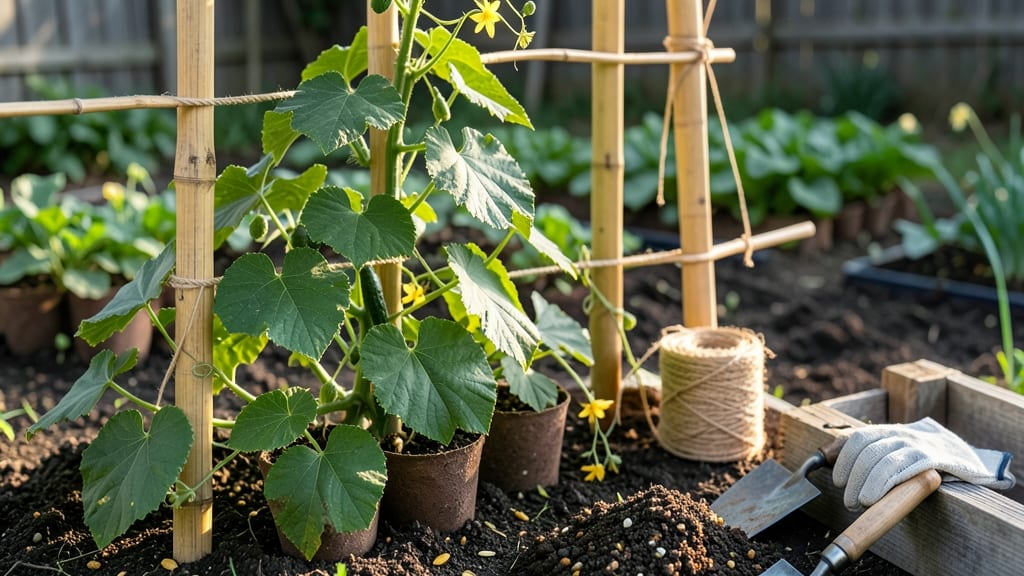
To plant cucumbers in a garden, start with well-draining soil, full sun, and 1-inch-deep seeds spaced 3-4 feet apart—the right setup means the difference between a bountiful harvest and a sad, withering vine.
Nothing beats the taste of homegrown cucumbers—crisp, fresh, and ready to harvest straight from your garden—but planting them wrong can mean bitter disappointment (or worse, no cucumbers at all).
If you’ve ever watched your 🥒 plants sprawl into a tangled mess or bolt before producing fruit, you know how frustrating it can be.
Cucumbers thrive when given the right conditions: loose, fertile soil, 6+ hours of sunlight daily, and consistent moisture. Whether you’re working with a raised bed, in-ground plot, or even containers, spacing and trellising play a huge role in yield and disease prevention.
In this guide, I’ll walk you through the exact steps for planting cucumbers—from soil prep and seed placement to trellising, watering, and early care—so you can go from seed to salad in no time.


Perfect cucumber planting conditions: soil, sun, and spacing for maximum yield
Cucumbers thrive when planted in the right conditions, but many gardeners overlook the details that separate a mediocre harvest from a bountiful one. The secret lies in three key factors: soil quality, sunlight exposure, and proper spacing.
Get these right, and you'll enjoy crisp, productive vines all season long.
First, let's talk soil. Cucumbers demand loose, well-draining soil rich in organic matter. Heavy clay or compacted soil will strangle roots and invite fungal diseases like powdery mildew. Aim for a pH between 6.0 and 6.8—too acidic or alkaline, and nutrients become unavailable.
I always test my soil before planting and amend it with compost or aged manure to improve structure and fertility.
Here's a quick reference for your ideal cucumber planting conditions—this summary will help you visualize the perfect setup before you even break ground:
| Condition | Specification | Why It Matters |
|---|---|---|
| Soil Type | Loamy, well-draining | Prevents root rot and compaction |
| Soil pH | 6.0–6.8 | Optimal nutrient availability |
| Sunlight | 6+ hours daily | Maximizes fruit production |
| Spacing (Vining) | 36–48 inches apart | Reduces disease spread |
| Spacing (Bush) | 24–36 inches apart | Saves space for compact varieties |
| Organic Matter | 3–4 inches compost | Boosts microbial activity |
Now, let's dive deeper into sunlight. Cucumbers are sun-worshippers—they need at least 6 hours of direct sunlight daily, but 8+ hours will give you the best yields.
I planted a test row last year with only 4 hours of sun, and the cucumbers were small, bitter, and sparse. If your garden has shady spots, consider bush varieties like 'Bush Champion' or 'Spacemaster,' which tolerate slightly less light.
Don't overlook spacing, either. Crowding plants leads to poor airflow, which is a disease magnet. Vining varieties need 36–48 inches apart in rows spaced 5–6 feet apart, while bush types can handle 24–36 inches.
I once crammed my cucumbers too close, and by midsummer, powdery mildew had taken over. Since then, I've sworn by the 3-foot rule—any closer, and you're asking for trouble.
For soil troubleshooting, start by checking for compaction. Walk your garden—if the soil feels hard or leaves footprints, it's time to loosen it with a broadfork or add coarse sand. Poor drainage? Amend with perlite or coconut coir to improve aeration.
And if your soil tests too acidic, a sprinkle of lime will bring the pH back into balance. I once had a pH of 5.2 and struggled with yellowing leaves—after adding lime, my plants perked up within weeks.
One final tip: mulch heavily around your cucumbers. A 3-inch layer of straw or shredded leaves keeps roots cool, retains moisture, and suppresses weeds. I mulch immediately after planting and reapply every 4–6 weeks.
The difference in plant health and yield is night and day. Just avoid organic mulches that stay too wet—rot is the enemy of happy cucumber plants.
With these perfect conditions in place, your cucumbers will thrive, producing crisp, flavorful fruit all season. And remember: consistency is key. Monitor your plants weekly for signs of stress, adjust watering as needed, and don't hesitate to prune away diseased leaves to keep your garden healthy.
Ready to dig in? Grab your gloves and soil test kit, and let's get those cucumbers growing like never before! 🌱
Step-by-step cucumber planting guide: when, how, and what varieties to Choose
Timing is everything when planting cucumbers—wait too early, and frost will kill your seedlings; wait too late, and you’ll miss the growing season. Aim to plant after your last frost date, when soil temperatures consistently stay above 60°F (15°C).
For most regions, this means mid-April to early June, but check your local frost dates to be sure.
Cucumbers thrive in warm soil, so if you’re starting seeds indoors, transplant them outside only after hardening off for 7-10 days. If you’re direct sowing, wait until the soil is at least 70°F (21°C)—a soil thermometer is your best friend here.
Cold soil slows germination, leaving you with patchy, uneven growth.
- ✅ Test soil temperature with a thermometer—aim for 60°F+ for germination.
- 🌱 Choose your method: Direct sow seeds (cheaper, easier) or transplant seedlings (faster growth).
- 📏 Space seeds 1 inch deep, 3-4 feet apart (or 1-2 feet for bush varieties).
- ☀️ Plant in full sun—6+ hours daily—and well-draining soil (amend with compost if needed).
- 💧 Water deeply after planting to settle soil, then keep soil consistently moist (not soggy).
- 🌿 Mulch with straw to retain moisture, suppress weeds, and keep fruit clean.
- 🥒 Pick varieties: Slicing (e.g., Straight Eight) or pickling (e.g., Boston Pickling).
Deciding between direct sowing and transplants depends on your goals and timeline. Direct sowing is simpler and often yields better-tasting cucumbers since they adapt to local conditions naturally. Start seeds indoors 2-3 weeks before your last frost if you’re in a short season.
For transplants, buy healthy seedlings from a nursery, but avoid overcrowding—give them extra space to sprawl.
Variety selection makes a huge difference in your harvest. Slicing cucumbers like Marketmore or Lemon Cucumber are perfect for salads and snacks, while pickling varieties like Calypso or National Pickling stay small and crisp.
Bush varieties (e.g., Bush Champion) save space but produce less than vining types. If you’re short on room, opt for a compact vining variety like Spacemaster.
After planting, watering consistency is key—cucumbers need 1-2 inches of water weekly, delivered at the soil level (not the leaves) to avoid fungal diseases like powdery mildew. Use a drip irrigation system or soaker hose for precision.
Mulch with straw or shredded leaves to lock in moisture and keep weeds at bay. Within 5-7 days, you should see sprouts emerging—if not, check soil moisture and temperature.
Pro tip: Train vining cucumbers onto a trellis or fence early to save space and improve air circulation (which reduces disease). Even if you’re growing bush types, a small cage or stakes can help keep fruit off the ground.
With the right timing, soil, and care, you’ll be harvesting crisp, homegrown cucumbers in just 55-70 days!