
Light Requirements
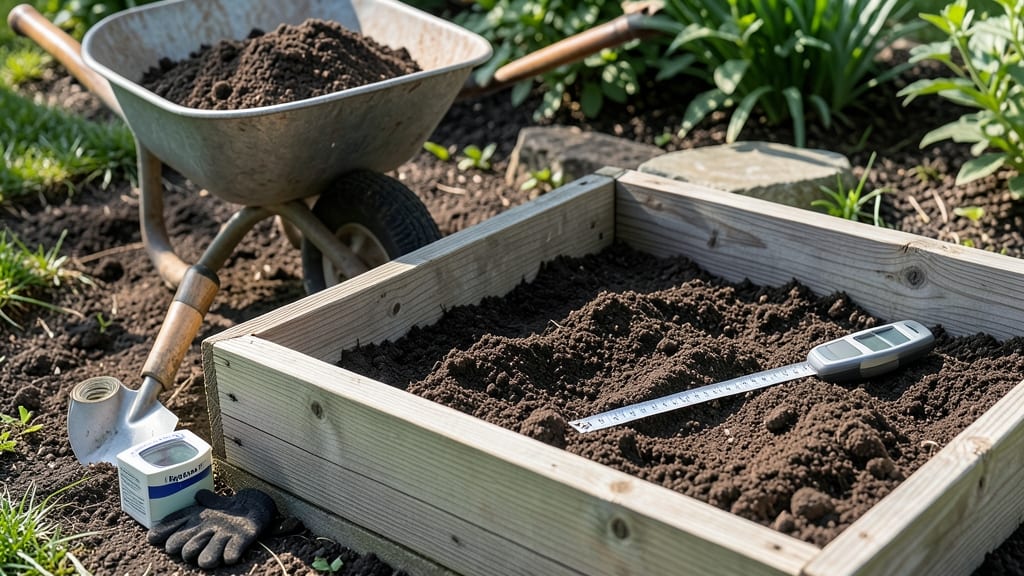
To determine how much soil for a 4x4 raised garden, you'll need 64 cubic feet for a full 4-foot depth (4' × 4' × 4'), or 16 cubic feet for a 6-inch layer—the standard depth for most vegetables. Always buy 10-20% extra to account for settling and drainage.
A 4x4 raised garden's soil needs depend entirely on your chosen depth. 🌱 For example, a 12-inch deep bed (common for root crops like carrots) would require 32 cubic feet, while a 2-foot deep bed (ideal for perennials) jumps to 53 cubic feet.
The key is balancing root space with soil retention—deeper beds need heavier soil mixes to prevent erosion. I always recommend testing your soil's drainage first by filling a container with water and measuring how quickly it drains; this helps adjust your soil blend before filling the entire bed.
When shopping for soil, avoid generic "topsoil" labels—these often lack organic matter.
Instead, look for compost blends or garden soil mixes labeled for raised beds, which typically include perlite or vermiculite for aeration. 💫 For a 4x4 bed, I buy 2 cubic yards (about 54 cubic feet) of pre-mixed raised bed soil to account for compaction, then add a 2-inch layer of compost on top after planting.
Local garden centers often sell bulk bags by the cubic foot, making it easy to calculate exactly what you need without overbuying.
💡 In This Article
- Calculating Soil Volume for Different Raised Garden Heights
- Best Soil Mixes and Where to Buy for a 4x4 Raised Bed
Calculating soil volume for different raised garden heights
The volume of soil needed for a 4x4 raised garden isn't just about the surface area—it's a three-dimensional calculation where depth plays a critical role. Think of your raised bed as a rectangular prism: length × width × height.
For a standard 4-foot square bed, the formula becomes 4 ft × 4 ft × depth (in feet).
At just 6 inches (0.5 ft), you'd need 8 cubic feet, but most gardeners aim for 12 inches (1 ft)—the sweet spot for most vegetables—requiring 16 cubic feet. 🌱
Here's where it gets interesting: deeper beds need different soil strategies. A 2-foot deep bed (53 cubic feet) might seem ideal for root crops like potatoes, but the weight becomes significant—about 3,800 pounds of soil when saturated!
This is why many gardeners use 18-inch depths (27 cubic feet) instead, balancing root space with structural integrity. The soil's texture matters too: heavier clay mixes compact more, while loamy blends with perlite retain structure better over time.
For non-standard heights, convert all measurements to feet first. A 4x4x5 ft bed (common for perennials) needs 80 cubic feet, while a 4x4x1.5 ft bed (ideal for herbs) requires 24 cubic feet.
Pro tip: measure your frame's interior dimensions precisely—many cedar planks have 0.5-inch thick walls that reduce usable volume. I once calculated a 4x4x2 ft bed and found it actually held 50 cubic feet instead of 64 due to frame thickness. 💫
Soil retention is another critical factor. Deeper beds lose moisture faster unless amended properly. A 12-inch deep bed with 30% compost will hold 20% more water than pure topsoil, while a 24-inch deep bed needs 40% compost to prevent compaction.
The rule of thumb: every 6 inches of depth beyond 12 inches requires an additional 10% organic matter to maintain aeration.
Let's talk about practical implications. Most 1 cubic yard bags (27 cubic feet) cover a 4x4x1.5 ft bed perfectly, but you'll need 3 bags for a 12-inch deep bed. For deeper beds, consider buying bulk soil by the cubic foot from local suppliers—it's often cheaper than bagged mixes.
I've found that 1 cubic foot of soil weighs about 40-60 pounds when dry, so a 4x4x2 ft bed requires 3,200-4,800 pounds of soil! That's why many gardeners start with shallower beds and deepen them over time.
Here's a quick reference for common depths:
- 6 inches (0.5 ft): 8 cubic feet (2 bags)
- 12 inches (1 ft): 16 cubic feet (3 bags)
- 18 inches (1.5 ft): 24 cubic feet (4 bags)
- 24 inches (2 ft): 32 cubic feet (5 bags)
Remember: these are minimum requirements. Always buy 10-20% extra to account for settling—especially with organic mixes that compress over time. For the most accurate calculation, measure your frame's interior space and multiply by your desired depth in feet. 🔥